
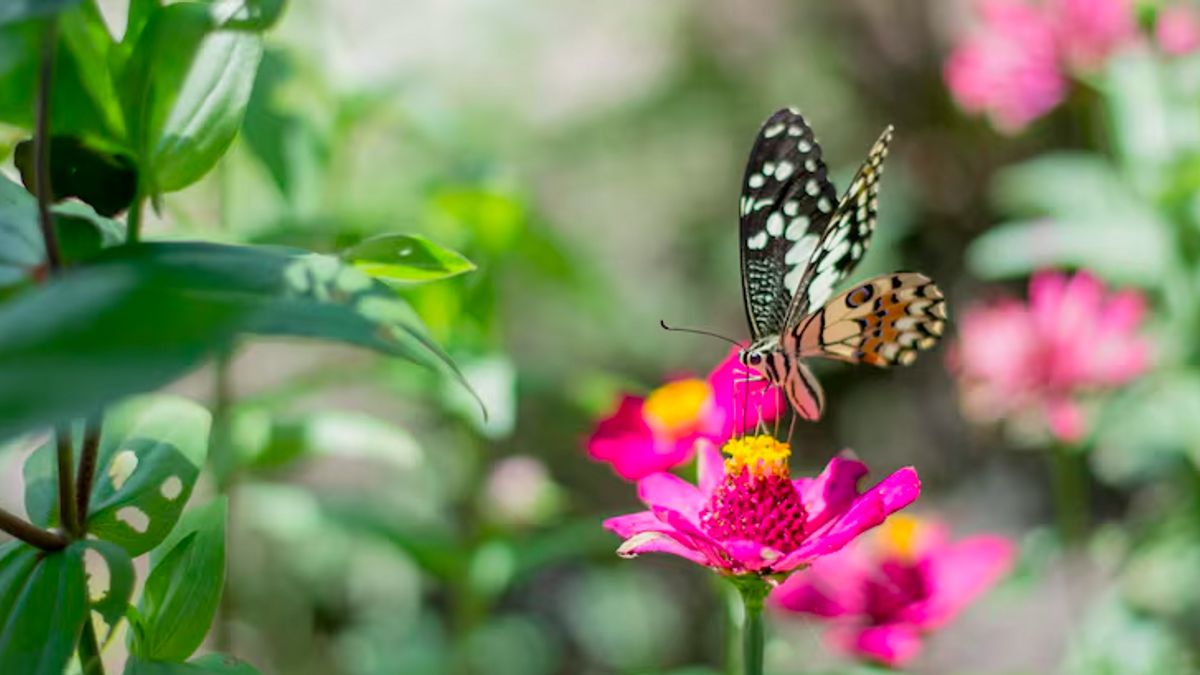


JAKARTA - Butterflies are not only known for their beautiful wings, but also play a vital role in maintaining ecosystem balance. As natural pollinators, butterflies assist various plant species in the reproduction process, especially flowers that can only be pollinated by certain insects.
Their presence is also a crucial part of the food chain, both as nectar feeders and as a food source for other animals. Furthermore, the number and activity of butterflies in an area can reflect the health of the environment in that area.
Butterfly conservationist Yohanes Agus Sunarko of the Negeri Kupu-Kupu Lestari (Nektar) Foundation explained that butterflies are bioindicators of environmental sustainability, given that they are highly sensitive to changes in temperature and habitat.
"The term bioindicator, defined as an organism sensitive to environmental conditions, can be proven by the presence of butterflies engaging in mud puddling or sucking up nutrients from wet soil," said Yohanes Agus Sunarko, Deputy Chairman of the Nektar Foundation, as quoted by ANTARA.
He explained that butterflies would not engage in these activities in ecosystems experiencing significant environmental stress, such as urban areas and agricultural areas where pesticides are used for a long period of time.
"Because of pollutants or disruption of the mechanisms in the water, air, and soil," he added.
Given their role in the ecosystem as pollinators and indicators of environmental conditions, Yohanes highlighted the threat to butterfly populations from climate change.
Extreme temperatures can kill eggs, larvae, and pupae, which are highly sensitive to environmental changes. Furthermore, shifts in flower bloom times due to climate change can also disrupt the butterfly life cycle, when larvae hatch but nectar sources are unavailable.
Another threat comes from natural disasters such as forest and land fires, which can destroy habitats and drastically reduce butterfly populations.
"Not only are butterflies sensitive bioindicators, even as humans, when seasonal shifts occur, our lives are also affected. For example, farmers are directly impacted," he explained.
According to data from the National Research and Innovation Agency (BRIN), of the approximately 17,500 butterfly species worldwide, at least 2,500 can be found in Indonesia. Of these, approximately 25 species are classified as protected species.
The English, Chinese, Japanese, Arabic, and French versions are automatically generated by the AI. So there may still be inaccuracies in translating, please always see Indonesian as our main language. (system supported by DigitalSiber.id)


