
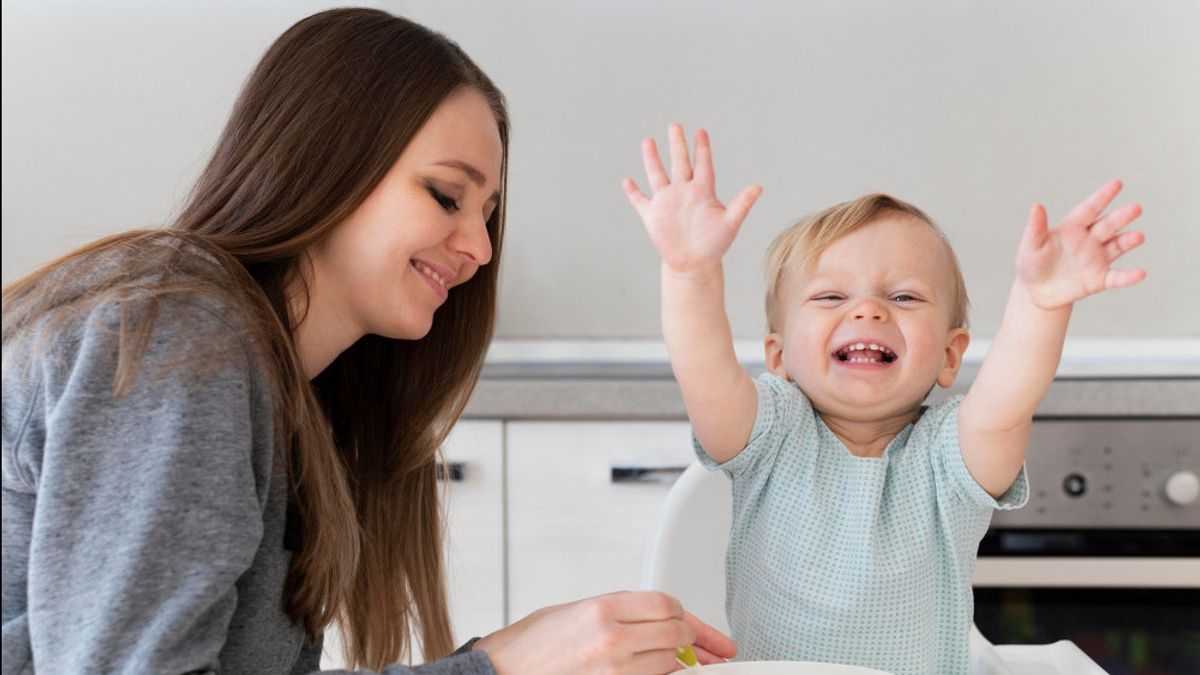


YOGYAKARTA - The moment of eating for babies is not just a time to get to know a new taste, but also a golden opportunity to learn to communicate and understand the environment. Child development expert and author I Can Say Eat, Stephanie Cohen, MA., CCC-SLP., CLC., reported by Motherly, Wednesday, October 22, mentions that meal time can be an interactive session that helps babies hone their communication and motor skills. With a gentle and patience approach, parents can teach various important things to the baby through this simple routine.
One of the most interesting things to teach is baby sign language or baby sign language. For example, babies can learn the signal for the word again, finished, or eating' so they can express their desires before being able to speak. Dr. Joseph Garcia, a baby sign language researcher, explains that this nonverbal communication helps the baby feel more understood and reduces frustration. In addition to strengthening bonds with parents, it also fosters the baby's self-confidence in interacting.
When feeding, you can introduce food names such as 'pisang', 'nasi', or sup' by mentioning it slowly. Babies will learn to associate sounds with objects they see and feel. Repeating the name and texture description help enrich vocabulary and train sensory abilities. So, each bribe is not only a nutrient for the body, but also a exercise for the small brain.
Babies often reject the taste or texture of food that is foreign to them, and this is where you play a role to teach patience. By giving positive time and expression whenever you try new foods, babies learn that tasting new things is a safe experience. Child psychologist, Dr. Laura Markham, mentions that the warm response from parents can foster self-confidence and interest in exploration. This attitude is an important basis for a healthy diet in the future.
Even though they are still small, babies can begin to be taught good habits when eating, such as waiting for their turn or not throwing away food. With a gentle tone and a real example from you, babies will imitate these positive behaviors. This routine helps to form discipline and respect for the eating process. Small things like saying 'thank you' after eating can also be the beginning of a fun lesson of manners.
Eating together is also an ideal moment to teach facial and emotional expressions. For example, when a baby smiles after liking food, you can imitate his expression and mention Enak, huh!. This interaction helps the baby understand the relationship between feelings and facial expressions. This simple emotional stimulation strengthens the affective bond and forms the basis of emotional intelligence at a later date.
SEE ALSO:
-
 | INFO SEHAT
Rekomendasi Vitamin untuk Anak 1 Tahun yang Susah Makan agar Nafsu Makan Kembali
15 Oktober 2025, 23:55 -
 | INFO SEHAT
Bunda Wajib Tahu! Vitamin untuk Anak 1 Tahun yang Susah Makan agar Tetap Sehat
17 September 2025, 06:55 -
 | INFO SEHAT
Panduan Gizi Seimbang untuk Anak Usia Dini, Untuk Cegah Stunting
12 Oktober 2024, 15:44
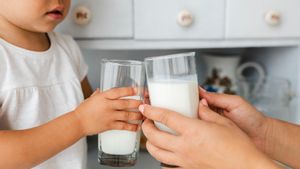
When eating for babies may seem trivial, but behind the small spoon and laughter, there are great lessons that are growing. Through the communication, expression, and positive habits you show, babies learn to understand the world in a gentle and loving way. So, every time you sit together at the dining table, remember that you not only feed, but also instill the foundation for the development of the child's language, emotions, and self-confidence
The English, Chinese, Japanese, Arabic, and French versions are automatically generated by the AI. So there may still be inaccuracies in translating, please always see Indonesian as our main language. (system supported by DigitalSiber.id)
Popular


