



YOGYAKARTA - Local wisdom is one of Indonesia's cultural assets. Each region has noble values inherited from generation to generation as a guideline for people's lives. This value is not just a tradition, but also reflects a perspective in maintaining a balance between humans, nature, and God.
In everyday life, local wisdom often arises in the form of traditions, norms, and habits carried out by the community. This can be seen in the way people solve problems, protect the environment, and build togetherness. In other words, local wisdom is an identity that distinguishes Indonesian people from other nations.
In this modern era, local wisdom still has an important role. These cultural values can be used as guidelines to deal with the current of globalization without losing the identity of the nation. Here are 9 examples of local wisdom in Indonesia.
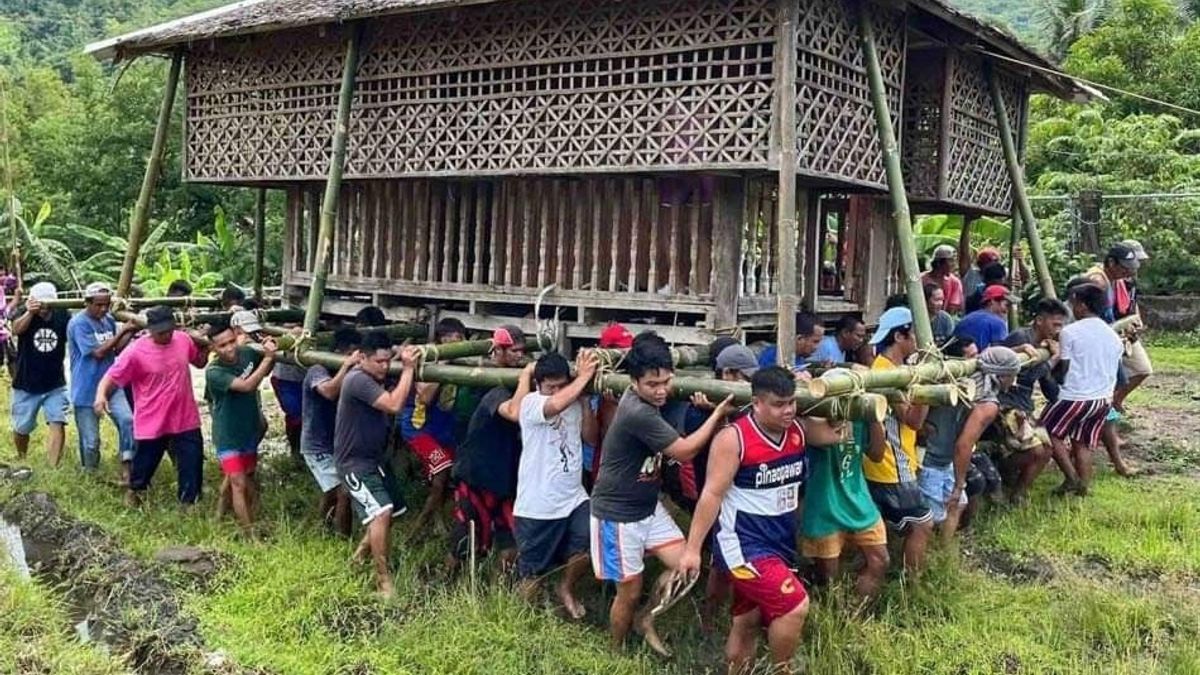
Gotong royong is one of the most popular local wisdom in Indonesia. The community voluntarily works together to complete work, such as building houses, cleaning the environment, or helping neighbors who are holding celebrations. This tradition fosters a sense of solidarity, togetherness, and social concern.
Deliberations reflect the way Indonesian people make decisions fairly. Everyone has the opportunity to express opinions, then agreed together for the common interest. This principle shows that differences can be unified through dialogue and mutual respect.
Subak is a traditional irrigation system used by farmers in Bali. This system not only functions to regulate water distribution, but also reflects the philosophy of balance between humans, nature and spirituality. Until now, Subak has become a world cultural heritage recognized by UNESCO.
Sasi is a customary rule in Maluku to protect natural resources, especially sea and forests. In this tradition, people are prohibited from taking marine products or produce for a certain period of time. The goal is to preserve nature so that it can be used sustainably.
Every traditional house in Indonesia has a philosophy that reflects the cultural values and lives of its people. For example, Toraja traditional houses that have carvings with spiritual and social meanings. Through traditional houses, people maintain cultural identity while adjusting to the surrounding environment.
Banning or customary rules still apply in many areas. For example, people in Kalimantan have a taboo to cut down certain trees that are considered sacred. This indirectly helps preserve the environment while at the same time fostering respect for nature.
BACA JUGA:

People's stories, rhymes, and sayings are a form of local wisdom that teaches moral values. For example, Malin Kundant's story that provides lessons about devotion to parents. This oral tradition has been a means of education that has been easy for the public to understand for a long time.
Apart from Subak, the Javanese people know the stretcher system and the mongso pranoto. Pranoto mongso is a traditional knowledge of the season used to regulate planting patterns. This wisdom shows how people use local knowledge to maintain food security.
Batik, weaving, and wood carving are examples of local wisdom that have high artistic value. These works not only have aesthetic value, but are also full of philosophical and spiritual meanings. Until now, traditional handicrafts have become a cultural identity as well as a source of the community's economy.
The example of local wisdom above shows how rich the nation's cultural heritage is. The traditions and values inherited by ancestors are not only beneficial in the past, but are also relevant in modern life. The values of togetherness, harmony with nature, and respect for others are still important to maintain.
The English, Chinese, Japanese, Arabic, and French versions are automatically generated by the AI. So there may still be inaccuracies in translating, please always see Indonesian as our main language. (system supported by DigitalSiber.id)
Most Popular Tags
#Prabowo Subianto #donald trump #2026 World Cup #Febrie Adriansyah #8791Popular


