


The high need for specialist doctors in various hospitals is the government's main concern. The availability of medical personnel with special competencies is still not balanced with demand, especially in the regions.
To answer these challenges, the Ministry of Higher Education, Science and Technology (Kemdiktisaintek) is preparing acceleration steps through cooperation with the private sector.
Confirmed in Jakarta, Minister of Higher Education, Science and Technology (Mendiktisaintek) Brian Yuliarto emphasized that accelerating the increase in the number of specialist doctors is one of the government's strategic programs.
"We from the Ministry of Education and Technology who oversee universities continue to optimize all efforts to maximize this program. In order for this program to run, we need more hospitals as a laboratory," said Minister of Education and Technology Brian, as quoted by ANTARA.
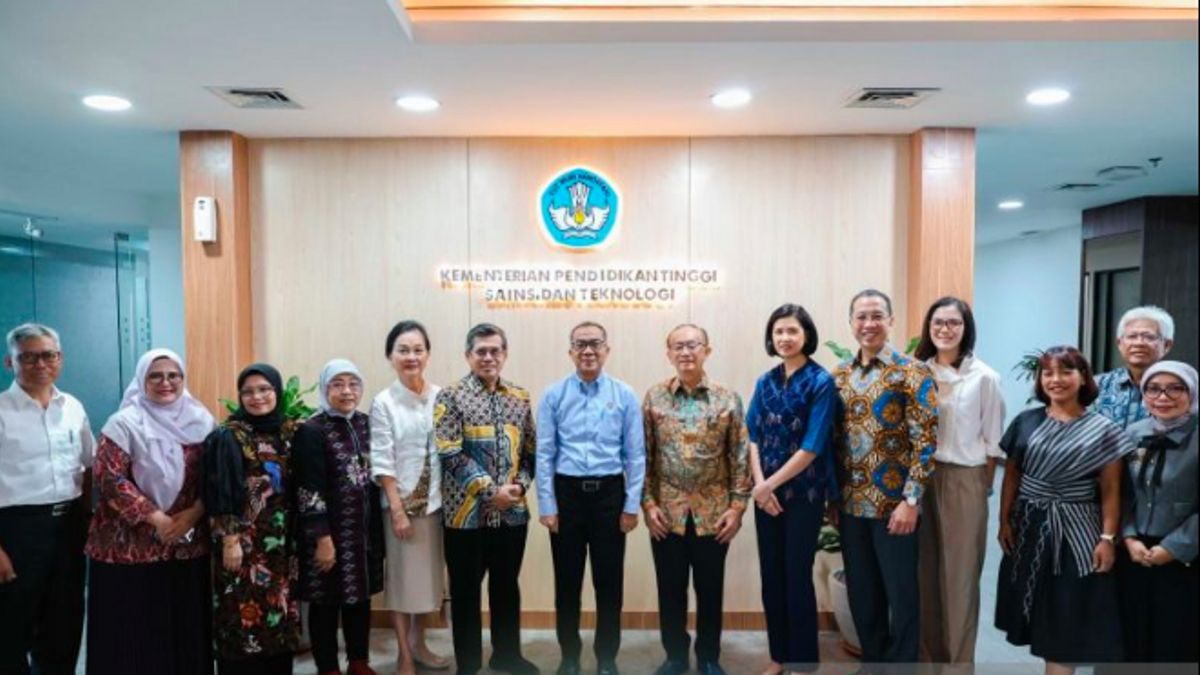
As a follow-up, the Ministry of Education and Technology held a meeting with a number of private hospital managers such as PKU Muhammadiyah Hospital, Siloam Hospital, and Hermina Hospital on Thursday (11/9), to formulate strategic steps in accelerating the increase in the number of specialist doctors in Indonesia.
"Efforts to increase access still have to stick to standardization to ensure quality. The Ministry of Education and Technology will always collaborate with various parties for this effort," said Minister of Education and Technology Brian Yuliarto.
SEE ALSO:
-
 | BERITA
Atasi Krisis Dokter, Prabowo Targetkan Buka 30 Fakultas Kedokteran Baru
27 Agustus 2025, 07:06



The Head of the Medical High Education Policy Study Team, Tri Hanggono Achmad, added that this acceleration program is closely related to hospitals. So far, specialist medical education is more focused on government hospitals.
According to Tri, Indonesia actually has many private hospitals that are widely distributed and both require specialist doctors. Therefore, partnerships with private hospitals are believed to be the key to the success of this program.
Through this collaboration, the Ministry of Education and Technology seeks to expand access as well as maintain the quality of specialist education, which has been facing obstacles, especially in terms of financing.
"Even though it has academic capacity, it is not necessarily possible to access this education because of the cost challenges," said Tri.
To close the gap, the government has prepared additional scholarship programs. However, Tri emphasized that support from private hospitals is also very much needed because scholarships alone are not enough.
The system offered is expected to provide certainty for private hospitals that have been experiencing difficulties in getting specialist doctors.
In addition to scholarships that expand access, hospitals will also benefit from specialist medical personnel who can directly assist with services.
Tri stressed that specialist medical personnel will continue to receive compensation for their services in the form of incentives or wages that are under hospital authority.
The English, Chinese, Japanese, Arabic, and French versions are automatically generated by the AI. So there may still be inaccuracies in translating, please always see Indonesian as our main language. (system supported by DigitalSiber.id)


