


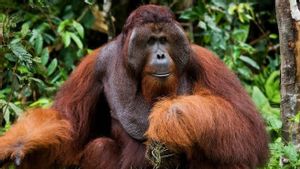
JAKARTA - Orang Utan Tapanuli (Pongo tapanuliensis) is now in the spotlight of the conservation world because of its status as the rarest orangutan species on earth.
Primata, which only lives in the forests of Batang Toru, South Tapanuli, North Sumatra, is estimated to number no more than 800 orangutans. A very small population, coupled with habitat damage, puts their survival at a critical threshold.
Researcher from the National Research and Innovation Agency (BRIN), Dr. Wanda Kuswanda, emphasized that the people of Utan Tapanuli must be a priority for national conservation. He said the natural habitat of 240 280 thousand hectares in Batang Toru is now experiencing serious degradation, increasing the risk of inbreeding (inbreeding) which exacerbates the condition of the population.
"With a very limited number, the Tapanuli Orang Utan needs to be intensively conserved so as not to disappear from the face of the earth," he said in an online discussion as quoted by ANTARA.
In addition to forest damage, other threats come from increased human activity around Batang Toru. The population growth in the last five years has expanded agricultural and plantation areas. Unfortunately, this often triggers conflict, as orangutans are considered pests when eating garden products.
SEE ALSO:
-
 | INFO SEHAT
Belajar dari Orang Utan, Gaya Hidup Sehat Agar Tubuh Tetap Ramping dan Bugar
01 September 2025, 14:55 -
 | LIFESTYLE
Masyarakat Tapsel Bentuk Forum Konservasi Jaga Orangutan Tapanuli dari Kepunahan
07 Agustus 2025, 18:25

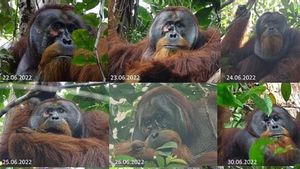

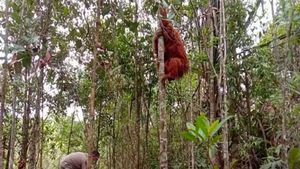
In fact, their role is very important in maintaining the balance of the ecosystem, including distributing grains and maintaining forest sustainability. But instead of being protected, many orangutans are actually expelled from their habitat, some even experience stress that leads to death.
To reduce human conflict, Wanda emphasized the need for habitat restoration and animal corridor development. He also encouraged the community to develop alternative economic sources such as ecotourism, sustainable fisheries, and environmental services, so as not to fully depend on plantation expansion.
In addition, according to him, it is important to revive the value of local wisdom that respects nature. That way, the younger generation can see orangutans not as a threat, but as part of a cultural identity and an ecological support.
"Coexistence can only be achieved if humans realize that meeting economic, social and cultural needs must be balanced with ecological sustainability, including for orangutans," concluded Wanda.
The English, Chinese, Japanese, Arabic, and French versions are automatically generated by the AI. So there may still be inaccuracies in translating, please always see Indonesian as our main language. (system supported by DigitalSiber.id)


