
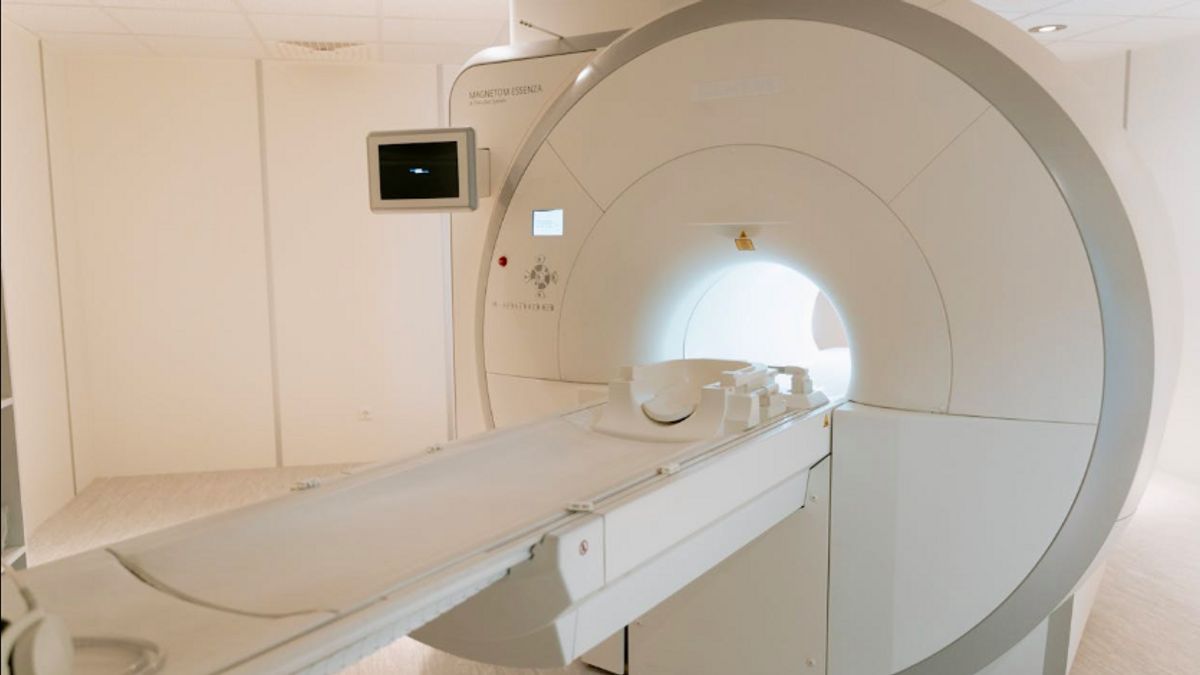


JAKARTA - MRI or Magnetic Resonance Imaging, which is a non-invasive medical procedure to produce three-dimensional (3D) detailed images of the internal structure and organs, such as the brain, spine, joints, and other soft tissues. The use of MRI is urgently needed in the medical world.
MRI helps doctors in diagnosing various medical conditions, monitoring the effectiveness of treatment, and planning further treatment. However, in developing the use of MRI in various countries, including Indonesia, there are still various challenges.
Radiology specialist, dr. Yonathan William, Sp. Rad, said that the first challenge faced in the use of MRI is the supply of helium. In MRI, helium acts as a cooling agent to keep the superconducting magnet cold to very low temperatures, so that the quality of the MRI images is well maintained.
However, the number of helium continues to decrease worldwide even in the last 10 years. The process of separating helium and other natural gas is also very difficult and inefficient, making supply even more difficult.
BBC UK news, the world continues to run out of helium. Now there is a race to prepare for the next shortfall," said Doctor Yonatan during a press conference in Kuningan, South Jakarta, written Monday, August 25, 2025.
SEE ALSO:
-
 | BERITA
Hukum Nikah Siri Tanpa Sepengetahuan Keluarga, Apakah Sah Menurut Islam?
21 Juli 2025, 06:25




The next challenge faced in the use of MRI is the need for a special room. MRI is a giant magnet tool, whose use is limited as much as possible from spreading outdoors, so a large special room is needed.
The room zone is also divided in layers to prevent leaks that can cause damage to other electronic devices, and have an impact on human health.
"We need to limit the magnetic field not to leave the room, so a special room is needed, the size is also special, everything must be measured, not everyone should enter, must be divided into zones as well, and use electronic doors," he explained.
Then, another challenge to use MRI is the very high cost, the vulnerability of water damage, to less Human Resources (HR). As in Indonesia, there is still less number of radiologs that can use MRI.
Therefore, in the future Indonesia must be able to present sophisticated MRI, with a strong system and not vulnerable to situations, such as earthquakes and floods. The chosen MRI device must also offer flexibility in its installation.
Mainly in hospitals that may be in areas that have never had this installation experience. The simpler the installation will be very useful for overcoming our national needs," concluded Doctor Yonathan.
The English, Chinese, Japanese, Arabic, and French versions are automatically generated by the AI. So there may still be inaccuracies in translating, please always see Indonesian as our main language. (system supported by DigitalSiber.id)
Most Popular Tags
#Prabowo Subianto #donald trump #firearm #8791 #giias 2026Popular


