

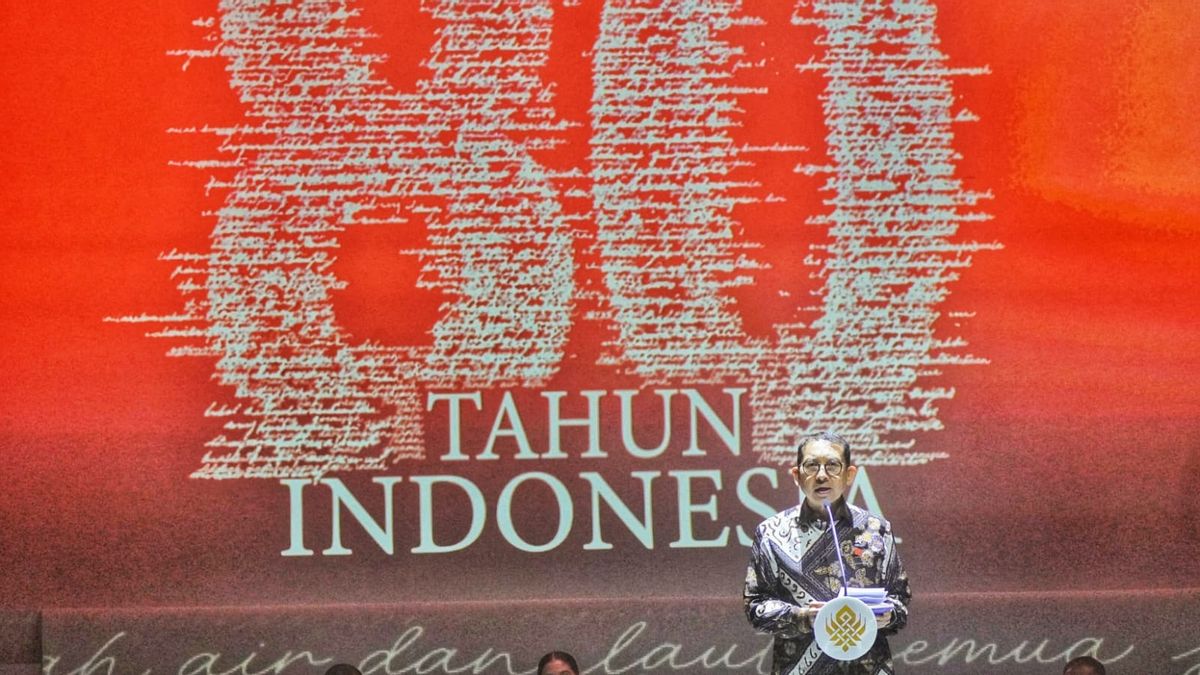


JAKARTA Poems are not just a series of words, but a track record of the nation's journey. The message was emphasized by the Minister of Culture Fadli Zon when opening Sasana Sastra: Reading 80 Years of Indonesia at the Jakarta Theater, Taman Ismail Marzuki, Friday, August 22.
More than 500 cross-generation audiences attended a literary celebration that presented state officials, writers, and artists.
Menbud Fadli Zon reminded, from the era of the Old Pujangga to the 45th and 66th Forces, poetry has always been a witness to Indonesian history. Puisi is a portrait of the nation's journey. Through Sasana Sastra, we pay respect to the leaders who guard the republic with their best expression," he said.
That night, he read his own poem entitled Untuk Bung Tomo, a work written 40 years ago when he was 15 years old.
The atmosphere was even more solemn when the Minister of Religion Nasaruddin Umar sang God's poem, "So Close to the work of Abdul Hadi WM and Sajak on behalf of the work of KH Mustofa Bisri." He also inserted his personal record entitled When the Algorithm Was Stronger Than Wahyu, which was written at the foot of the Kaaba.
A number of well-known writers also appeared, including Taufiq Ismail, Happy Salma, Jose Rizal Manua, Rania Yamin, Iman Soleh, to new generations such as Andhini Puteri and Esha Tegar Putra. They performed poetry with various themes: colonial resistance, proclamation, ecology, to the voices of the digital generation who attended through hip-hop Iwa K. The musicalization of poetry by Reda Gaudimao and the choreography of Siko Setyanto's dance added strength to the performance.
SEE ALSO:
-
 | LIFESTYLE
Lewat CHANDI 2025, Menbud Ingin Budaya sebagai Soft Power Indonesia Semakin Efektif
22 Agustus 2025, 22:40
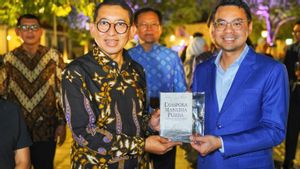
Director General of PPPK Ahmad Mahendra called Sasana Sastra a space in which poetry appeared as the soul of the nation. "From the spirit of revolution to the silent singing of indigenous peoples, poetry continues to illuminate the lines of Indonesianness," he said.
Through this event, the Ministry of Culture affirms its commitment to strengthening the literary ecosystem through the National Talent Management program, strengthening festivals, communities, and laboratories for translators and literary promoters. The hope is that Indonesian literature will grow in strong cultural roots as well as give birth to a new generation that is able to read the past and turn it into creative energy towards Indonesia Gold 2045.
The English, Chinese, Japanese, Arabic, and French versions are automatically generated by the AI. So there may still be inaccuracies in translating, please always see Indonesian as our main language. (system supported by DigitalSiber.id)
Most Popular Tags
#Prabowo Subianto #donald trump #2026 World Cup #Febrie Adriansyah #8791Popular


