


JAKARTA - When atopic dermatitis or eczema recur, it is difficult to think about other things because of itching that continues to appear. Doctors can prescribe drugs, but it's not always enough to relieve them.
Here are some things you can try at home to overcome this condition according to WebMD, Tuesday, August 12.
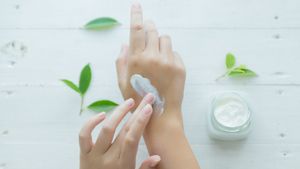
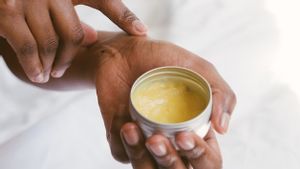
If you are suffering from moderate to severe atopic dermatitis, moisturizers are the best friend of the skin. The best choice is cream or viscous container such as petroleum jelly. Apply at least twice a day, including after bathing. Avoid lotion, which contains more water and is less effective in maintaining skin moisture. Check the list of moisturizers approved by the National Eczema Association online.
Don't shower for too long, at least no more than 10 to 15 minutes. Taking a bath for too long can dry your skin. The water temperature must be warm nails. Use soft soap without fragrance or non-sambun cleaning.
If it contains fragrances, these products can trigger your atopic dermatitis recurrence. Use a fragrance-free product. Avoid products that claim to be flavorless because they may contain disguised fragrances that can worsen your dermatitis symptoms. You should also test all fragrance-free products before using them. Apply a little product on the skin area that does not experience atopic dermatitis. Leave it for 24 hours. If it remains clear, most likely the product is safe to use.
This material does not irritate too much compared to other fabrics and allows the skin to breathe. It is also better to use 100 percent cotton towels and sheets. Avoid tight clothes, and don't wear lime directly on your skin. When buying new clothes, remove all the labels, and wash them before being worn with fragrance-free detergents and dyes.
You can add colloidal oatmeals to the bathtub or apply them directly to the skin as paste to help relieve itching. You can also buy moisturizers that contain oatmeals.
If atopic dermatitis is having a severe relapse, wetting plaster therapy can help relieve itching and make topical drugs work better. Use this plaster after you take a shower and apply to your topical medicine. Wet a clean white cassava cloth with warm water, then wash the moist tape around the affected area. Balut slowly with dry coatings such as urine or sports clothes on top of the wetting layer. (If your atopic dermatitis occurs on your feet or hands, use cotton gloves or socks as a wet layer, and vinyl gloves or plastic plaster as a dry layer.) Let the plaster stay on the skin for a few hours or overnight.
SEE ALSO:
-
 | LIFESTYLE
6 Tips Memilih Pelembap untuk Dermatitis Atopik, Bantu Atasi Kulit Kering dan Gatal
04 Agustus 2025, 17:47 -
 | INFO SEHAT
Kenali Bahan Aktif yang Mampu Cegah Dermatitis Atopik Kambuh Kembali
18 Maret 2023, 12:48



When anxious, the body responds by producing more stress hormones such as adrenaline and cortisol. However, if produced too much, it can cause an inflammatory response to the skin that exacerbates atopic dermatitis. Research has found a link between stress and atopic dermatitis. One of the things that might help is deep breathing. Research has found that when atopic dermatitis sufferers take 8 weeks of meditation courses with meetings once a week for two hours, there is a significant decrease in itching in atopic dermatitis.
Vitamin D is believed to help the body's immune response, suppress inflammation, and strengthen the skin layer, which in turn relieves the symptoms of atopic dermatitis. However, further research is needed to find out the exact amount that must be consumed. Consult with the doctor about whether you need to take supplements and how many doses.
Changes in temperature suddenly can exacerbate itching. Try to avoid the heat-cold-cold cycle as much as possible. At home, keep the room temperature consistent, not too hot or too cold. It will also prevent the air from getting too dry, which can trigger eczema recurrence.
Because water can worsen atopic dermatitis, wear gloves every time you do homework such as washing dishes. In summer, put on cotton gloves behind plastic gloves to absorb sweat, and wear gloves outdoors in winter to protect your hands.
There is some evidence that eating fruit helps protect against atopic dermatitis. Research shows that consuming at least three servings of fruit a week can help relieve symptoms. However, fast food actually worsens atopic dermatitis.
The English, Chinese, Japanese, Arabic, and French versions are automatically generated by the AI. So there may still be inaccuracies in translating, please always see Indonesian as our main language. (system supported by DigitalSiber.id)
Most Popular Tags
#Prabowo Subianto #donald trump #2026 World Cup #Febrie Adriansyah #8791Popular


