
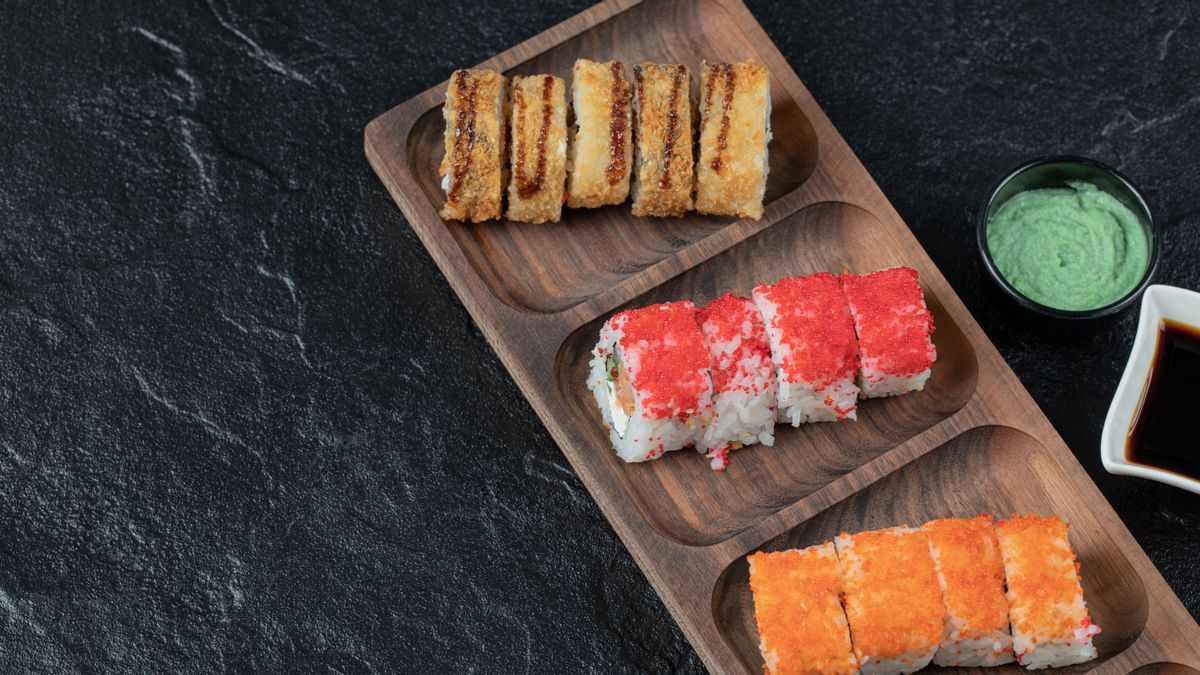


JAKARTA - Sushi does look simple, but is actually an art that relies on precision, engineering, and attention to detail. One of the main keys lies in the right fish selection.
Refreshment is important, but not the only factor. There are fish that are at high risk of containing parasites, their texture is not suitable for raw food, to sustainability problems.
As konsumen's increasing popularity increases, some restaurants actually start using fish types that should be avoided. Starting from labeling wrong fish, digestiveally impaired species, to endangered rare fish.
To learn more, a number of chefs share views, including Chef Marc Spitzer from Okaru, Kazuya Takebe from Saijo, and Joelach from Uchi West Hollywood.
SEE ALSO:
-
 | OLAHRAGA
Crystal Palace Jalani Sidang Arbitrase, Perjuangkan Tempat Liga Europa
09 Agustus 2025, 12:59


Here are five types of fish that should not be used forfocus, as reported by the Tasting Table page on Saturday, August 9, 2025.
1. Salmon That Never Frozen
Salmon are usually used forerates, but never frozen raw salmon can harm health.
"Some fish like salmon should be frozen first to kill parasites, according to the direction of the FDA (US Food and Drug Administration)," said Chef Marc.
Salmon live in freshwater and sea so they are prone to ribbonworms and other parasites. The FDA requires freezing at certain temperatures before it is served raw to kill the parasite.
According to Chef Marc, frozen salmon actually protects consumers without reducing their taste and texture.
2. Catched Fish Using Nets
The fishing method is also an important consideration.
"Never serve fish caught in a net. Catch fish with poor nets for the environment and the fish population," said Chef fire.
Trawling methods or millnetting not only damage marine ecosystems, but also produce by-shots such as turtles, dolphins, and other trapped marine animals. In terms of quality, net catch fish often experience stress, bruises, and decreased feelings.
3. Freshwater Fish
Freshwater fish are also on the Mario's taboo list.
"Rainwater fish is generally the worst choice forfoy. The risk of parasitics is higher and the quality is not suitable," said Chef fire.
Although parasitics can be overcome, many freshwater fish have a soft texture and bland taste. For example, rainbow rot, if it is served raw, it tends to be soft and does not fit to beautic.
4. Red Cap
The red Kakap is famous for its sweet taste and clean texture. However, this fish is among the most often labeled in the market.
"The red back in America is often replaced with other types of big ones that look the same, but actually different fish," said Chef Marc.
This replacement is usually done with cheaper species, such as rockfish, whose quality and safety for raw consumption are not the same as the original red.
5. Bluefin Tuna
The bluefin tuna is the prima donna in thepic world, but it is also a issue of sustainability because it has long experienced excessive arrests.
"The bluefin fruit has been overcast for a long time. The population is indeed starting to recover, but it's still far from the first condition," said Chef Marc.
Some chefs choose bluefin tuna as an alternative that is more environmentally friendly. However, catching bluefin in the wild remains a big problem, so it must be considered again to consume it.
The English, Chinese, Japanese, Arabic, and French versions are automatically generated by the AI. So there may still be inaccuracies in translating, please always see Indonesian as our main language. (system supported by DigitalSiber.id)
Popular


