


JAKARTA - Blue food or blue food is considered to have an important contribution in the preservation of Nusantara's culinary heritage. Not only that, blue food is also a concrete solution in sustainable culinary in the midst of the climate crisis and food security issues.
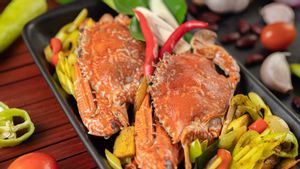
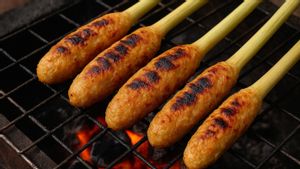
Blue food refers to food sources from water ecosystems such as sea, coastal, river, and lakes, including fish, seaweed, moluska, and crustacean.
Amid the threat of climate crisis and shrinking biodiversity, blue food offers low-emission food alternatives, rich in nutrients, and supports the economy of coastal communities and land waters.
The idea was discussed in the Blue Bites: A Culinary Dive into Climate-Friendly Food Solutions forum held by Climate Works Center, Climate Reality Indonesia, and IPB University on the sidelines of The 5th International Conference on Integrated Coastal Management and Marine Biotechnology at Royal Ambarrukmo, Yogyakarta.
"Blue food is not just a matter of fish or sea. This is a tangible manifestation of climate action that is just, unites feelings, traditions, and transformations," said Etwin Kuslati Sababarini, Oceans Impact Manager Program at the Climateworks Center as quoted by ANTARA.
SEE ALSO:
-
 | LIFESTYLE
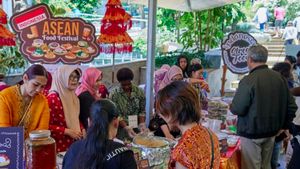
Kekayaan Kuliner Indonesia Semakin Mendunia lewat Festival ASEAN di Kenya
27 April 2025, 14:40 -
 | LIFESTYLE
Makanan Khas Balikpapan: Berikut Beberapa Kuliner yang Tak Boleh Dilewatkan
26 Desember 2024, 15:50
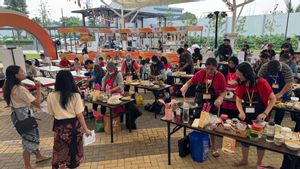
The panel discussion presents cross-field experts. Dr. Tukul Rameyo Adi from IPB University discusses the potential for food system decarbonization through consumption of blue food.
Meilati Batubara, Executive Director of the NUSA Indonesian Gastronomy Foundation, highlighted that blue food has a central role in maintaining the sustainability of Indonesia's culinary tastes and identities.
"Blue food is a bridge between local wisdom and future food innovations," he said.
Meanwhile, Atin Prabandari, Ph.D. from UGM, raised the importance of the role of women in the marine food chain which is often marginalized.
This forum is a collaborative space that brings together real science, culture, and action to encourage a fair, healthy, cultured, and sustainable blue food system, starting from what we choose at the dining table.
The English, Chinese, Japanese, Arabic, and French versions are automatically generated by the AI. So there may still be inaccuracies in translating, please always see Indonesian as our main language. (system supported by DigitalSiber.id)


