


Batik is not just a patterned cloth, but a work of art full of meaning, symbol, and cultural value. Each strand of batik reflects local wisdom, a long history, and a deep philosophy.
The uniqueness of the manufacturing process, ranging from stunting to natural coloring, makes batik an irreplaceable Indonesian cultural identity. Due to its high aesthetic and historical value, UNESCO has recognized batik as World Intangible Cultural Heritage since 2009.
However, in the midst of the times, promotion and preservation of batik requires wider support, including from the government.
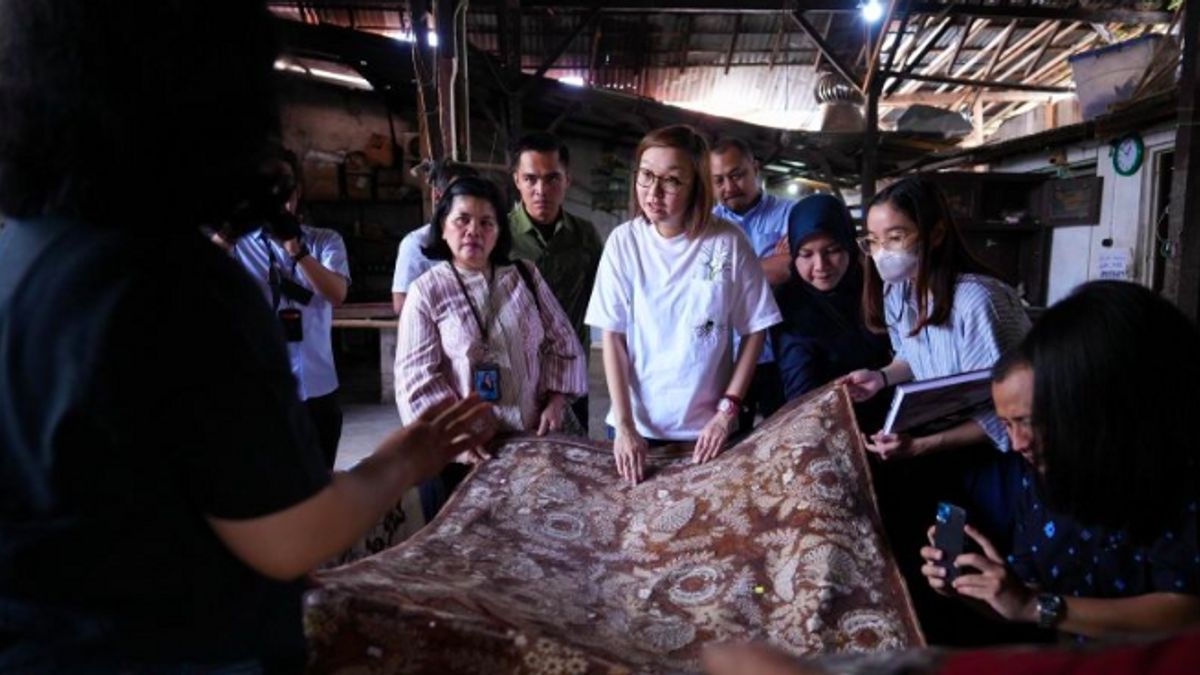
Deputy Minister of Creative Economy, Irene Umar, highlighted the importance of increasing batik promotions to the international market.
During his visit to the Oey Soe Tjoen Batik House in Pekalongan, Central Java, on Saturday, June 28, Irene said that the global scale exhibition was one of the strategies the government would encourage to introduce batik to the world.
"We need to show the world, including the domestic community, how valuable this batik is. Therefore, the government is preparing steps to hold exhibitions to expand the reach of the Indonesian batik market," he said, as quoted by ANTARA.
SEE ALSO:
-
 | LIFESTYLE
Tantangan Pengrajin untuk Menarik Minat Generasi Muda Mengenakan Batik
02 Oktober 2024, 20:25
Irene also emphasized the importance of developing high-quality batik products to be more competitive in the global market. He suggested that batik curators be involved in the promotion process, so that international fashion designers can understand the difference between original and mock batik.
"We have to increase the value of batik, one of which is by presenting a special curator of batik which can explain the uniqueness of authentic batik to foreign fashion designers," he explained.
He also appreciated the commitment of the Oey Soe Tjoen Batik House in maintaining the quality of their batik. This legendary batik business was founded in 1925, initiated by Oey Soe Tjoen and Kwee Tjoen Giok Nio, and is now being continued by their grandson, Oey Kiem Lian or Widiati Widjaja.
The characteristic characteristics of batik from this production house lie in fine scratches, very thorough work, and elegant color combinations. Not surprisingly, the batik made by Oey Soe Tjoen is often the target of collectors because of its high artistic value and history.
The English, Chinese, Japanese, Arabic, and French versions are automatically generated by the AI. So there may still be inaccuracies in translating, please always see Indonesian as our main language. (system supported by DigitalSiber.id)
Popular


