


JAKARTA - The National Commission on Violence against Women (Komnas Perempuan) expressed concern and criticized the statement of the Minister of Culture (Menbud) Fadli Zon who denied the occurrence of sexual violence in the May 1998 Tragedy.
"The survivor has been carrying the burden of silence for too long. This denial is not only painful, but also prolongs impunity," said Komnas Perempuan member Dahlia Madanih as reported by ANTARA.
Komnas Perempuan reminded the results of the official report of the Joint Fact Finding Team (TGPF) related to the May 1998 riots revealed the findings of human rights violations, namely 85 cases of sexual violence, including 52 cases of rape.
Dahlia Madanih added that the findings at that time had been submitted directly to BJ Habibie as the President of the Republic of Indonesia at that time and became the basis for the official state's recognition of the facts of sexual violence against women in the May 1998 Tragedy, which was followed up with the formation of Komnas Perempuan through Presidential Decree No. 181 of 1998.
Komnas Perempuan also reminded that the TGPF document is an official state product.
"So denying the official TGPF document means ignoring the nation's collective efforts in treading the path of justice. Such attitude actually keeps us from a sincere and thorough recovery for survivors," said Dahlia Madanih.
Previously in an interview with media Menbud Fadli Zon said that mass rape in the May 1998 Tragedy never existed.
According to Fadli, the incident was based solely on rumors and there was never any evidence of mass rape in the May 1998 incident.
Fadli Zon admitted that his party had denied the information from the fact-finding team that had provided information about mass rape at the May 98 incident.
"I myself have denied that and they cannot prove it. I mean this is a history that we make is a history that can unite the nation and its tones must be like that," said Fadli Zon.
SEE ALSO:
-
 | BERITA
Propam Polda Gorontalo Tahan Polisi Pelaku Kekerasan Seksual di Sel Khusus
12 Juni 2025, 20:11


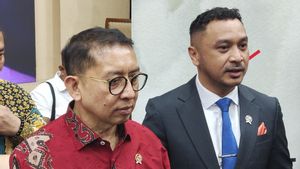
Currently, the Ministry of Culture is planning a rewriting of history. According to him, the rewriting of Indonesian history will prioritize a positive approach and not seek the mistakes of certain parties in a number of historical events.
"So we certainly have a tone in history to unite the truth of the nation. Why do we write history to divide the nation," said Fadli Zon.
The English, Chinese, Japanese, Arabic, and French versions are automatically generated by the AI. So there may still be inaccuracies in translating, please always see Indonesian as our main language. (system supported by DigitalSiber.id)


