
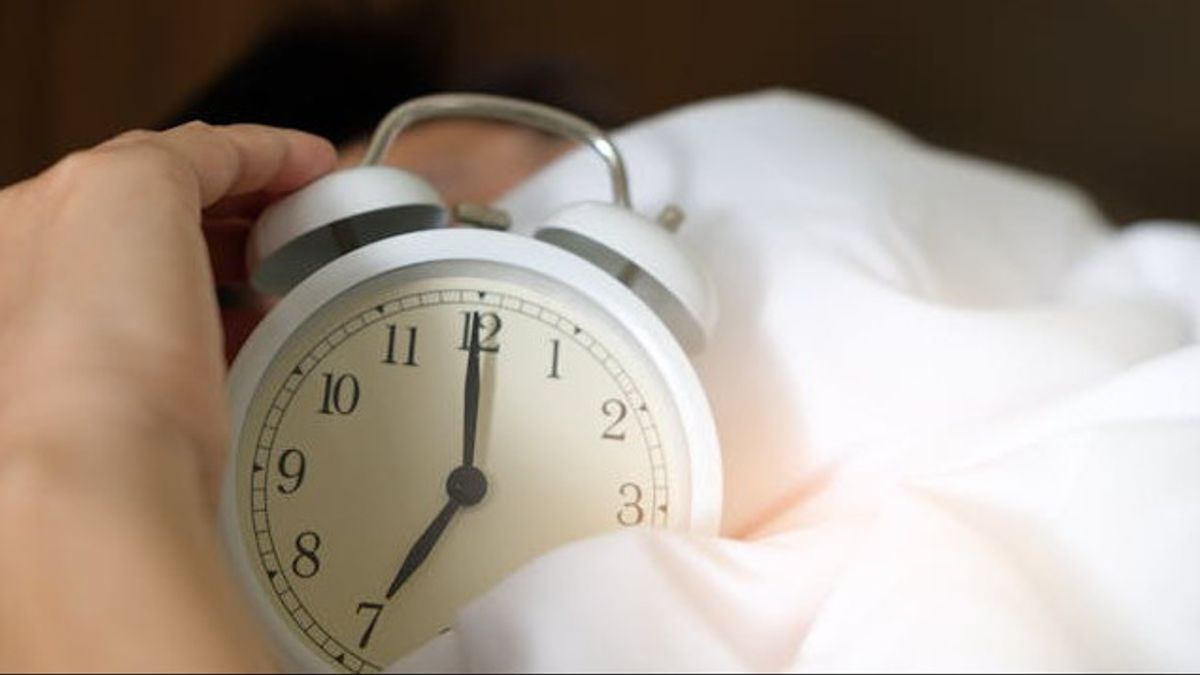


JAKARTA - Getting enough sleep is important to maintain your health, well-being, and ability to do activities throughout the day. During the Holy Month, normal sleep schedules can certainly be disrupted by social gatherings and activities, which often last until late at night.
This can change sleep and eating habits and cause insomnia. In addition, it can also interfere with the body's biological clocks and affect health in general in a number of ways, namely;
Headaches and mood swings
The body maintains a sirkadian rhythm or 24 hours of internal hours that play an important role while sleeping and waking up. Any change in your sleep patterns can interfere with this rhythm, which often results in mood swings such as irritability. And the impact for some people is more prone to headaches and migraines.
Impact on cognitive functions
Getting enough rest is enough to help think clearly, save and remember information, and help make decisions. When you don't get enough sleep, it becomes more difficult for you to concentrate and give full attention, the reaction time slows down, even the creative ability and problem solving can be affected.
Weight gain
The head of the Caretaker's Welfare Program at the Cleveland Clinic Abu Dhabi, Dr. Muneer Alobaidli, said, "lack of sleep causes changes in hormones that control appetite and hunger. Apart from hunger, lack of sleep can affect your decision-making in terms of what to eat, which often causes the desire to eat fatty, sweet, and increase the possibility of gaining weight.
Try to sleep better
Long hours of sleep are more useful than a short nap several times to get enough rest time. Try to sleep at least 4 hours at night after breaking the fast, before waking up for dawn and then back to sleep for a few hours before waking up for the next day.
Try to set a sleep pattern
Try planning a customized sleep routine for Ramadan so you sleep and wake up almost the same time every day. This will help your body get a sounder sleep rhythm.
SEE ALSO:
-
 | LIFESTYLE
Bagaimana Doctor Sleep Padamkan Perseteruan Abadi Stephen King dan Stanley Kubrick
11 November 2019, 14:49


Take a short nap
A short nap for 20 minutes in the afternoon can restore energy and decreased focus levels. Setting an alarm because of excessive sleep can make you feel dizzy and even more sleepy than before bed.
Pay attention to what you eat and drink
Avoid eating heavy, fatty, or sweet foods when breaking the fast. Your sleep can be disturbed because your body works overtime digesting food. Very spicy food can also be bad news for sound sleep because it can cause gas and startups. Avoid caffeine for a few hours before bed can also help you sleep well.
The right sleep environment
The quiet and dark space is ideal for getting started and maintaining sleep. Avoid using electronic devices such as cell phones, laptops, and TVs before bedtime as research shows that the blue light from the screen can interfere with sleep quality.
The English, Chinese, Japanese, Arabic, and French versions are automatically generated by the AI. So there may still be inaccuracies in translating, please always see Indonesian as our main language. (system supported by DigitalSiber.id)
Most Popular Tags
#Prabowo Subianto #donald trump #Febrie Adriansyah #8791 #giias 2026Popular


