
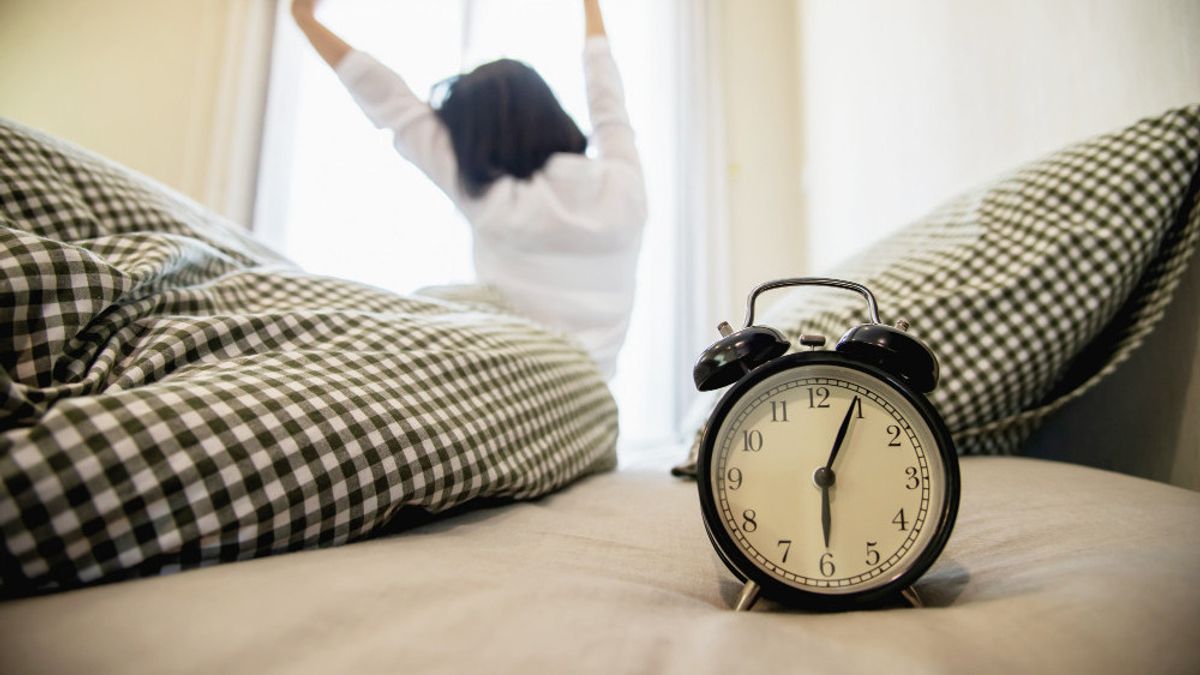


YOGYAKARTA - Many people now find it difficult to manage their rest time due to work demands, so they are looking for ways to improve effective sleep hours so that productivity increases again and the body still feels fit.
The problem is that poor quality of rest is not just a problem of ordinary sleepiness, but a serious threat to heart health and emotional stability if it is left constantly without proper handling and high discipline.
Dilansir VOI dari laman Sleep Foundation, berikut ini beberapa fakta menarik terkait dengan kebiasaan dan jam tidur manusia:
Why Does Sleep Timing Get All Mixed Up?Biologically, humans are creatures of habit. Your body is actually controlled by an internal clock called the circadian rhythm. This rhythm regulates the 24-hour cycle between drowsiness and alertness.
However, this rhythm is very sensitive to external disturbances. Here are some factors that often disrupt your schedule, among others:
Artificial Light Exposure: Blue light from smartphones and televisions sends a "daytime" signal to the brain, thus inhibiting the production of melatonin (sleep hormone). Jet Lag and Work Shift: Changes in time zones or night work demands force the body to stay awake when it should rest. Caffeine or Alcohol Consumption: These stimulants interfere with the body's natural ability to switch to the relaxation phase. Excessive Stress: The racing thoughts at night due to anxiety keep the body in an alert state.Read also the article discussing What is Lucid Dream? Its Meaning, Causes, Benefits, and Risks
Practical Steps How to Improve Sleep HoursImproving sleep patterns cannot be done overnight. According to experts in the Journal of Clinical Sleep Medicine, adults need at least 7 hours of quality sleep consistently. Here are steps to reset your sleep clock:
Consistency Is The KeyChoose the same wake-up time and bedtime every day, even on weekends. If you want to shift the schedule, do it gradually in increments of 15 to 30 minutes each day so that your body doesn't get shocked.
Adjust the Light ExposureLight is the main regulator of circadian rhythms. Seek morning sunlight immediately after waking up to "lock" your biological clock. Conversely, dim the lights in the house and avoid gadget screens at least one hour before bedtime.
Apply Sleep Hygiene RitualsCreate a bedtime routine that signals to the body that it's time to rest. You can try taking a warm bath, reading a physical book (not an e-book), doing a light stretch, or meditating.
Limit the Duration of Afternoon SleepNap is refreshing, but if it's too long or too late, you'll have trouble sleeping at night. Limit naps to a maximum of 20-30 minutes and do it before 3 p.m.
Create the Ideal Room EnvironmentMake sure your bedroom is dark, quiet, and has a cool temperature. The use of aromatherapy such as lavender has also been proven to help calm the nervous system before resting.
The Relationship Between Diet and Sleep QualityWhat you eat greatly affects how fast you fall asleep. Avoid eating large, high-fat or spicy meals before bed as they can cause indigestion.
In addition, limit caffeine intake in the afternoon because the effects can last up to 6-8 hours in your body system.
By finding ways to improve proper sleep is not just about eliminating drowsiness, but about synchronizing the biological clock with the surrounding environment. With a stable schedule, your metabolic function and mental health will improve significantly.
The English, Chinese, Japanese, Arabic, and French versions are automatically generated by the AI. So there may still be inaccuracies in translating, please always see Indonesian as our main language. (system supported by DigitalSiber.id)


