
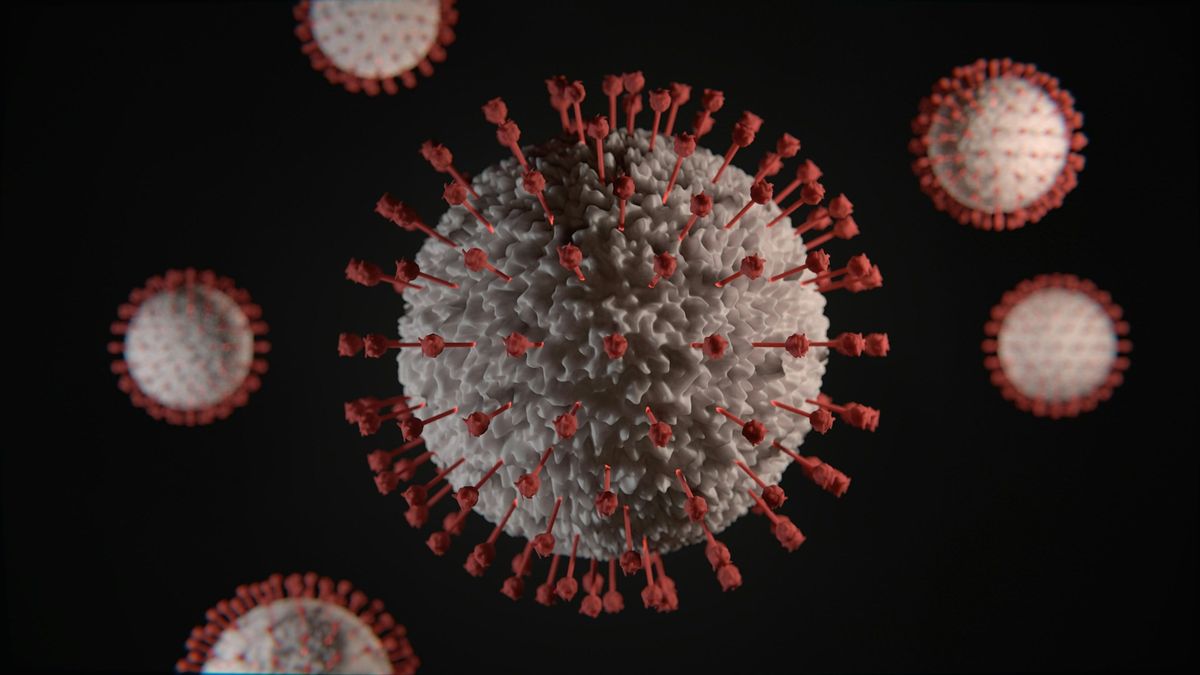


YOGYAKARTA - Until now, scientists are still often debating whether viruses are living beings or just chemical entities. Not without reason, this question arises because viruses have very unique characteristics.
This phenomenon is interesting to study because viruses cannot multiply without piggybacking on living host cells. Let's dissect more deeply the biological constraints that define life.
Are Viruses Living Things?Historically, in the late 19th century, researchers realized that diseases such as rabies are caused by particles that act like bacteria but are much smaller.
Dilansir VOI dari laman Scientific American, karena memiliki efek biologis yang nyata dan dapat berpindah antar-korban, virus sempat dianggap sebagai bentuk kehidupan paling sederhana yang membawa gen.
Viruses have genetic material in the form of DNA or RNA wrapped in a protein layer. When it enters the host cell, the virus is no longer passive. He takes off his protein jacket and instructs the host cell's machine to replicate its genetic code.
This ability to evolve, mutate, and multiply is what makes it difficult for many scientists to fully call a virus a dead object.
Also read the article discussing the Correct Viral Reproduction Lytic Cycle Stages and Explanation
The Reason Why Viruses Are Not Considered Living ThingsThe status of viruses dropped to inert chemicals after 1935, when Wendell M. Stanley succeeded in crystallizing the tobacco mosaic virus. The results showed that viruses are only complex biochemical packages that lack a metabolic system, which is a fundamental function to generate energy to sustain life independently.
Structurally, viruses are aselular (do not have cells). They do not have cytoplasm or organelles such as ribosomes and mitochondria. If living things such as bacteria can generate their own energy, viruses actually borrow life from their hosts.
It is worth noting that without a host cell, viruses are just a bunch of helpless chemical particles.
Modern Science View of VirusesVirology experts often refer to viruses as having a borrowed life. Viruses are in a gray zone; they are similar to plant seeds that have the potential to live but require certain environmental conditions (host cells) to be active.
Then the discovery of Mimivirus in 1992 further blurred this boundary. This giant virus is as large as a small bacterium and contains genes that were previously thought to exist only in cellular organisms. This discovery challenges the traditional boundary between viruses and parasitic organisms.
The Impact of Viruses on the Evolution of Living ThingsRegardless of the debate on whether viruses are living beings, their role in the history of evolution is very massive. Viruses are not just carriers of diseases, but the largest source of genetic innovation in the world. They are constantly discovering new genes through rapid mutations.
Many scientists now believe that viruses contribute directly to the formation of the cell nucleus (nucleus) in eukaryotic organisms, including humans. Viruses exchange genetic information directly with living organisms, making them key players in the life web that is often overlooked in conventional evolutionary studies.
If life is defined as the ability to carry genetic instructions and evolve in biological systems, then viruses are an integral part of the world of life.
So, are viruses living things? The answer depends very much on how we define life. If life requires full biochemical autonomy, then viruses are not living things. They are dynamic bridges between the chemical and biological worlds.
The English, Chinese, Japanese, Arabic, and French versions are automatically generated by the AI. So there may still be inaccuracies in translating, please always see Indonesian as our main language. (system supported by DigitalSiber.id)
Most Popular Tags
#Prabowo Subianto #donald trump #firearm #8791 #giias 2026Popular


