


JAKARTA - Health workers (nakes) play a crucial role in handling emergency situations, especially when disasters strike and medical services become an urgent need.
In the midst of limited access and increasing number of affected victims, the presence of health workers in the field is the backbone of health services for the community.
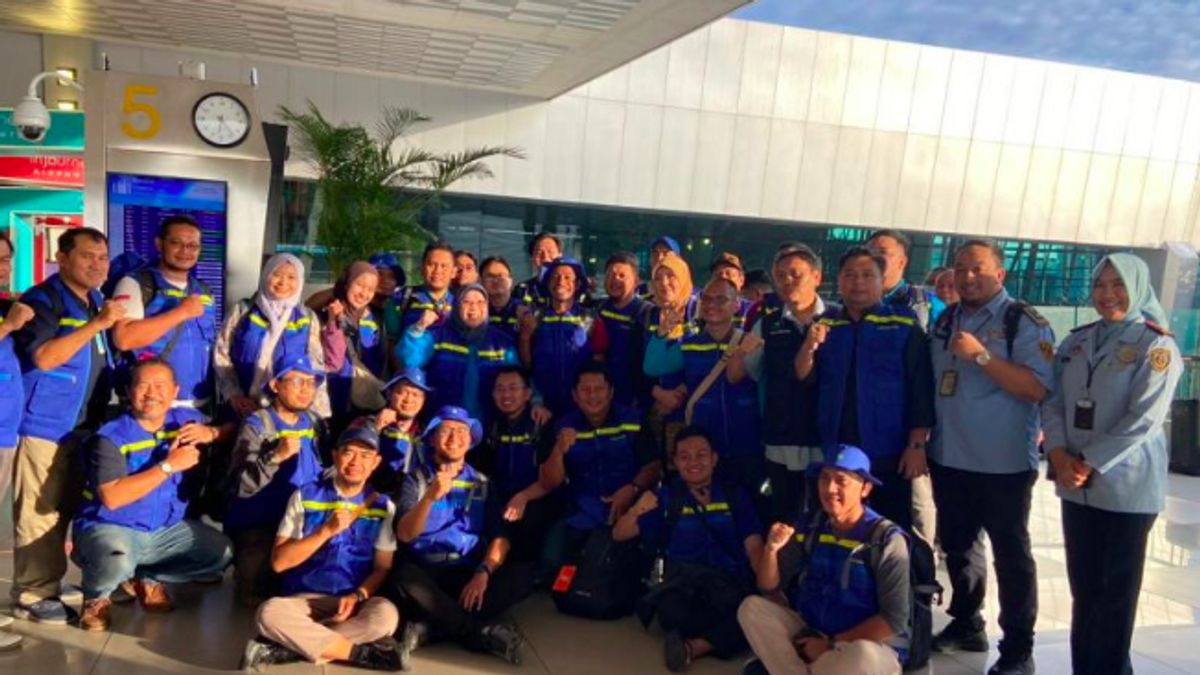
To support these efforts, the Ministry of Health (Kemenkes) has deployed thousands of health volunteers to disaster-affected areas in Aceh Province.
Since the beginning of the emergency response period, 3,719 volunteers have been deployed and distributed through various health service facilities, including hundreds of health posts that reach the evacuation location.
The Head of the Health Crisis Center of the Ministry of Health, Agus Jamaludin, said that all health workers were optimally mobilized so that medical services could reach every region according to the needs in the field.
"We are deploying all the potential health workers (nakes) that exist and continue to monitor the distribution of volunteers so that assistance can reach every area according to its needs," said Agus in Jakarta, as quoted by ANTARA.
He explained that the mobilization and coordination of volunteers was carried out through the Health Emergency Operation Center (HEOC), which worked according to the Ministry of Health's disaster management procedures.
According to him, the HEOC has been formed from the first to the third day after the disaster in all affected areas. This control center is tasked with analyzing the needs of health workers as well as regulating the distribution, placement, and movement of volunteers so that health services can run effectively and evenly.
Based on the cumulative report of the Health Services Sub Cluster, health volunteers are currently spread across 18 districts/cities and the provincial level. Pidie Jaya Regency is the region with the most volunteers, namely 1,065 people, followed by Aceh Tamiang Regency with 923 people.
"Since the second day of the disaster, health volunteers have been deployed at various service facilities. Currently, health services are provided through approximately 309 health centers, 23 government hospitals (RSUD and RS TNI/Polri), and 377 health posts that reach 1,008 evacuation posts," he said.
Agus highlighted the main challenge in managing volunteers is to maintain the smooth rotation system without disrupting the continuity of services at health facilities.
"With an average volunteer service period of 10-12 days, assignments are arranged so that each facility always has health workers at all times," he said.
In terms of composition, volunteers are dominated by field medical personnel. Nurses are the most numerous profession with a total of 923 people, followed by other health workers with 766 people, general practitioners with 736 people, and specialists with 264 people.
In addition, there are 179 pharmacists, 124 midwives, and 350 non-health personnel who support operational services. A number of supporting professions are also involved, such as environmental sanitation personnel, logistics, nutrition, clinical psychology, to health entomologists.
If you look at the origin of the institution, the majority of volunteers come from government elements with a total of 2,399 people. Additional support comes from academics with 780 people, community-based organizations (LSM) with 307 people, and professional organizations with 233 people.
The English, Chinese, Japanese, Arabic, and French versions are automatically generated by the AI. So there may still be inaccuracies in translating, please always see Indonesian as our main language. (system supported by DigitalSiber.id)
Most Popular Tags
#Prabowo Subianto #donald trump #firearm #8791 #giias 2026Popular


