


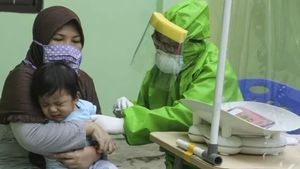
JAKARTA - Immunization is one of the most effective preventive steps in the world of health to protect individuals from various infectious diseases.
In the context of public health development, immunization not only protects one individual, but also creates herd immunity which helps break the chain of disease transmission in the community.
According to data from the West Java Provincial Government, the complete coverage of basic immunization has seen an encouraging increase in the last three years.
From 87.4 percent in 2020, it rose to 89.9 percent in the following year, and even exceeded the target with achievement of 107 percent in 2022. This achievement is an indicator of the success of cooperation between health workers, the government, and the community in supporting the national immunization program.
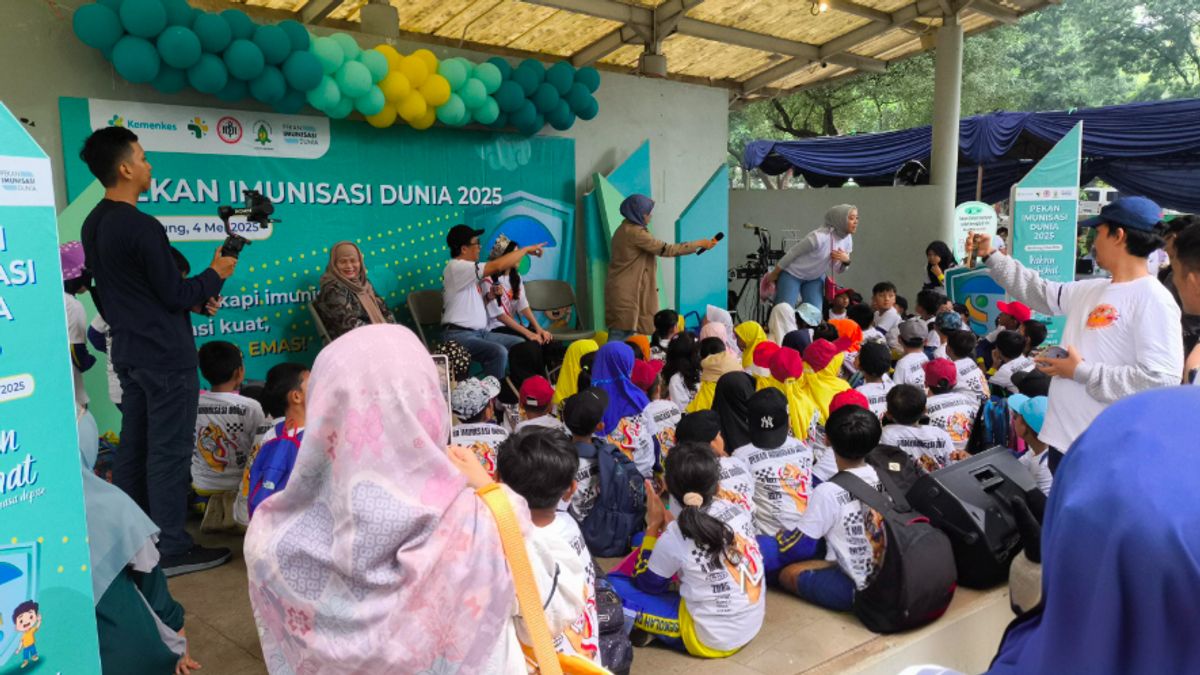
The World Immunization Week, which runs every year from April 24 to 30, aims to increase global public understanding of the importance of immunization.
This year, the international theme Immunization for all is humanly possible highlights the importance of equitable access to immunization for all ages. At the national level, the theme Come on Complete Immunization, Healthy Generation Towards Golden Indonesia emphasizes the strategic role of immunization in producing a strong and healthy next generation of the nation.
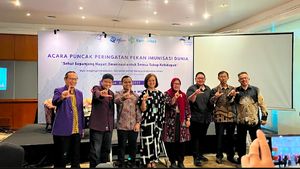
Commemorating the 2025 World Immunization Week (PID), the West Java Branch of the Indonesian Pediatrician Association (IDAI) collaborated with the West Java Provincial Health Office to hold an educational talk show with the theme "Come on Complete Immunization, Healthy Generation Towards Gold Indonesia."
This event was attended by around 200 participants consisting of medical personnel such as pediatricians, midwives, nurses, and the general public.
The chairman of IDAI West Java, Dr. Anggraini Alam, dr., SpA(K), emphasized the importance of immunization as a first step to prevent dangerous diseases that can be prevented by vaccines, such as dengue.
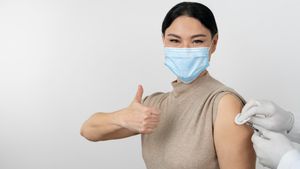
Based on the recommendations of medical associations, dengue vaccination is now recommended to be used both in children and adults, in the age group 6 to 45 years, without requiring a previous history of dengue infection.
However, to obtain optimal protection, a person must get the right dose according to the doctor's instructions, namely two doses given in a span of three months. Dengue vaccinations not only protect ourselves, but also prevent us from becoming a source of transmission to our families and communities, including to our beloved children.
"Completing immunization, including dengue vaccination, is a form of our shared responsibility to maintain a healthier future. Every preventive measure that we take today, no matter how small, will have a major impact on the safety of future generations," said doctor Anggraini.
On the same occasion, the Head of the West Java Provincial Health Office, dr. R. Vini Adiani Dewi, MMRS, highlighted the success of immunization as one of the biggest achievements in public health history.
SEE ALSO:
-
 | INFO SEHAT
Anak Berkebutuhan Khusus Perlu Jadi Prioritas dalam Mendapatkan Imunisasi
09 Oktober 2024, 23:55 -
 | LIFESTYLE
Jenis Vaksin Sebelum Menikah untuk Calon Pengantin Pria Maupun Wanita
03 Desember 2023, 15:14
The success of eradicating diseases such as smallpox and the decline in polio cases is clear evidence of the effectiveness of vaccines. He also explained the concept of "double immunization", which is the provision of more than one vaccine at a time, which can help complete the immunization schedule efficiently.
However, challenges still exist. According to dr. Vini, if public awareness decreases, the risk of disease outbreaks will increase again. Therefore, the implementation of immunization according to schedule is a shared responsibility to protect individuals and communities from potential infectious diseases.
Immunization, said dr. Vini has proven to be one of the safest and most effective public health interventions in history. Dangerous diseases such as smallpox (smallpox), which used to be deadly, have now been successfully eradicated thanks to the success of the global vaccination program.
Then in the Polio case, which used to be the cause of mass defects, is now almost completely eliminated in many parts of the world. Thanks to immunization, now we are also able to prevent various other diseases such ascampus, rubella, diphtheria, tetanus, pertussis, hepatitis, to pneumonia.
"This is an extraordinary achievement that shows the strength of vaccines in protecting human lives. Not only that, we are currently familiar with the term 'double immunization', namely the provision of immunization of more than 1 type/injection simultaneously. This dual immunization is certainly useful in completing the vaccine schedule and reducing the number of visits to health facilities," he said.
Dr. Eddy Fadlyana, dr., SpA(K), Mkes., a pediatrician, explained that the immunization recommended by IDAI was prepared based on a scientific study to provide maximum protection in each stage of child growth and development. The five main vaccines for hepatitis B, polio, DTP, Measles- rublla, and pneumonia must be given, coupled with dengue vaccines which are now also a priority.
He also emphasized that compliance with the immunization schedule is very important in order to create group immunity and prevent the outbreak.
Vaccines are the best form of protection for our children from the risk of disease that can be prevented. This is a wise step as well as a health investment for the future," he said.
As a form of commitment to expanding access to vaccination, IDAI West Java cooperates with the private sector including PT Takeda Innovative Medicines. Andreas Gukknecht, President Director of the company, expressed his support for strengthening the immunization system in Indonesia. He emphasized the importance of cross-sectoral collaboration in building stronger health systems and ready to face global challenges.
"We believe the close collaboration between the government, medical associations, academics, the private sector, and the public is crucial in building a better and more resilient future of health. We believe that through this simple step, we can actually take care of our own health, protect our loved ones, and strengthen community resilience against various threats of serious illness," he said.
The English, Chinese, Japanese, Arabic, and French versions are automatically generated by the AI. So there may still be inaccuracies in translating, please always see Indonesian as our main language. (system supported by DigitalSiber.id)


