



JAKARTA - The development of medicines in Indonesia is increasingly becoming the main focus in improving the quality of health services and the independence of the domestic pharmaceutical industry.
To support this, international collaboration is an important strategy to accelerate technology transfer, knowledge exchange, and regulatory alignment with global standards.
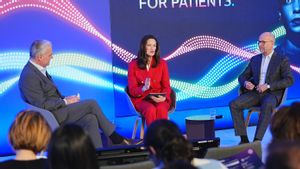
As part of these efforts, the Food and Drug Supervisory Agency (BPOM) established strategic communication with foreign health authorities. One of them is a meeting between the Head of BPOM, Taruna Ikrar, and the Chief Executive Officer (CEO) Health Sciences Authority (HSA) Singapore, Raymond Chua. The meeting took place on the sidelines of the Asian Network Meeting (ANM) agenda which was held in Tokyo, Japan.
HSA is a health product supervisory agency in Singapore that has a similar role to BPOM in Indonesia. These two institutions are both members of the ASEAN Pharmaceutical Product Working Group (PPWG), which plays a role in harmonizing pharmaceutical policies in the Southeast Asia region.
Quoting ANTARA, Taruna Ikrar revealed that the meeting with HSA aims to explore cooperation in the field of evaluation and licensing of innovative drugs.
One concrete form of collaboration that is being discussed is joint assessment or joint assessment. This step is expected to accelerate the process of public access to new drugs that are more effective and secure.
Topics of discussions that surfaced at the meeting included the use of artificial intelligence (AI) technology in health care systems, the development of advanced therapeutic drugs (Advanced Therapymal Products/ATMP), cybersecurity in the pharmaceutical sector, and the expansion of public access to pharmaceutical innovation.
SEE ALSO:
-
 | BERITA
Polisi Selidiki Kasus Pencurian Obat Golongan Narkotika di RSUD Sultra
08 April 2025, 16:03


In addition, the cadets also emphasized the importance of expanding the global cooperation network to support the BPOM's vision to be recognized as the WHO-Listed Authority (WLA) status which shows the reliability and integrity of a country's supervisory system based on standards of the World Health Organization (WHO).
According to him, BPOM has shown significant progress in the regulatory system. Since 2005, BPOM has been at the Maturity level of 3 as a whole, and in 2018, the four main functions are registration, pharmacovaccilans, laboratories, and lot releases have reached maturity level 4. Hopefully, nine other functions will also meet level 4 criteria so that BPOM can be fully recognized as a world-class regulator.
During the meeting, HSA shared their experience in the assessment process to obtain WHO recognition, which is an important reference for BPOM in strengthening its system.
As a follow-up, the two institutions agreed to draw up a Memorandum of Understanding (MoU) which will form the basis for bilateral cooperation in the future in supporting the development of regulations and access to innovative drugs.
The English, Chinese, Japanese, Arabic, and French versions are automatically generated by the AI. So there may still be inaccuracies in translating, please always see Indonesian as our main language. (system supported by DigitalSiber.id)
Most Popular Tags
#Prabowo Subianto #donald trump #firearm #8791 #giias 2026Popular


