
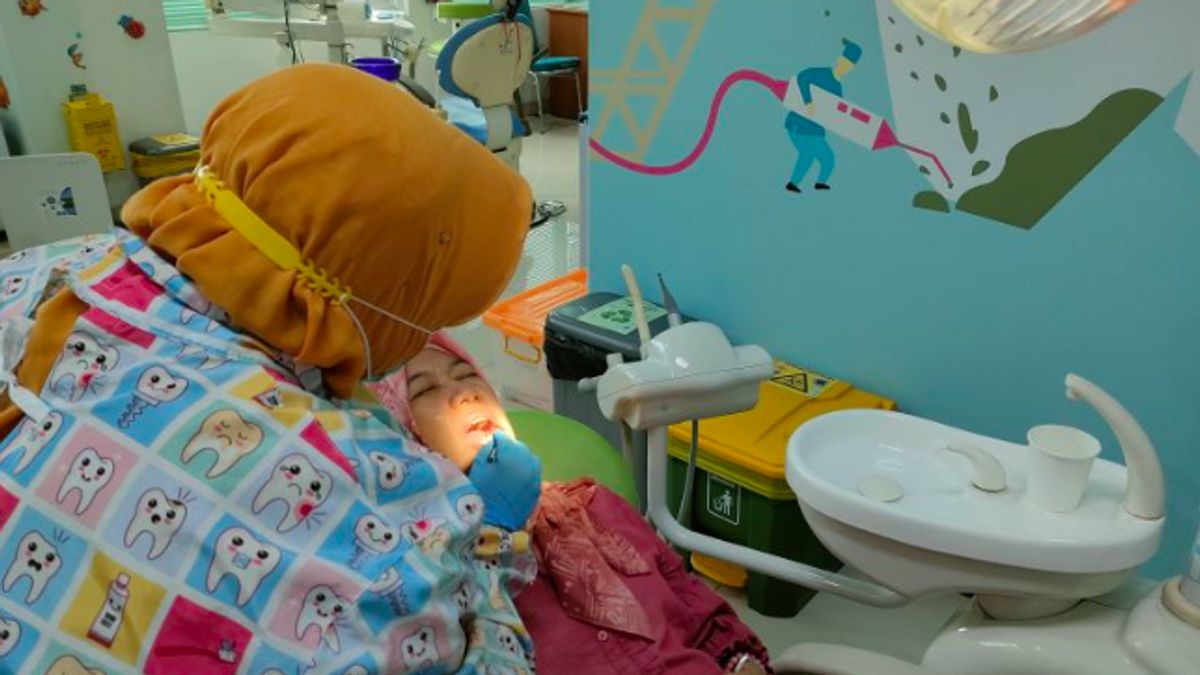


JAKARTA - The problem of dental and oral health is still a big challenge in Indonesia. Based on various national surveys, more than half of the population experience tooth problems, ranging from cavities to gum infections.
Unfortunately, access to dental health services is still not evenly distributed, especially in remote areas. This condition shows the need for concrete steps to improve services and equitable distribution of medical personnel in the field of dental health.
Responding to this situation, the Ministry of Health (Kemenkes) through the Strengthening of Primary Healthcare in Indonesia (SOPHI) program, targets the fulfillment of unit rental needs at 865 health centers by 2025. Of these, around 189 health centers are located in remote and very remote areas.
In an official statement received in Jakarta, Wednesday, the Head of the Communication and Public Service Bureau of the Ministry of Health, Aji Muhawarman, explained that based on data from the ASPAK information system (availability of medical devices) as of August 2024, as many as 6,507 puskesmas have unit rentals. Of the total, about 17 percent are located in remote and very remote categorized areas.
"Through the SOPHI project, we will complete 865 health centers with new unit rentals. About 22 percent of the puskesmas are located in remote and very remote areas, according to proposals from the Health Service and ASPAK data," he said, as quoted by ANTARA.
This step was taken in response to the high number of cases of toothache in the community. Based on data from the Free Health Check (CKG) program, more than 50 percent of Indonesians experience problems with teeth and mouth.
Aji also revealed a number of obstacles in improving dental health services, such as the lack of medical personnel and the lack of adequate facilities in a number of areas. This makes dental and mouth services not run optimally.
He added that there was a shortage of around 10,309 dentists compared to national needs. Currently, the number of dentist graduates per year is only about 2,650 people, far from sufficient to cover the shortage.
Data as of April 2025 noted that 73.2 percent of all public health centers in Indonesia already have dentists, while the remaining 26.8 percent or about 2,737 health centers do not yet have dentists.
SEE ALSO:
-
 | INFO SEHAT
7 Makanan Penyebab Bau Mulut saat Puasa, Baiknya Hindari saat Sahur
10 Maret 2025, 12:30
"Seeing these conditions, a quick and comprehensive breakthrough is needed to improve the quality of dental and oral health services in all levels of society," said Aji.
Other efforts made by the government to meet dentist needs include ending the moratorium on the establishment of the Faculty of Dental Medicine (FKG) in 2022, so that the number of FKGs increased from 32 to 38. In addition, the government has also increased the quota of dental students.
There is also a scholarship program for the sons and daughters of disadvantaged areas who are expected to return and serve in their home areas. In addition, the Ministry of Health has also developed an internship program for dentist graduates and special assignments to areas with high needs. The government is also focusing on improving the competence of the Dental and Mouth Therapists (TGM) as part of a more equitable dental health service strategy.
The English, Chinese, Japanese, Arabic, and French versions are automatically generated by the AI. So there may still be inaccuracies in translating, please always see Indonesian as our main language. (system supported by DigitalSiber.id)


