
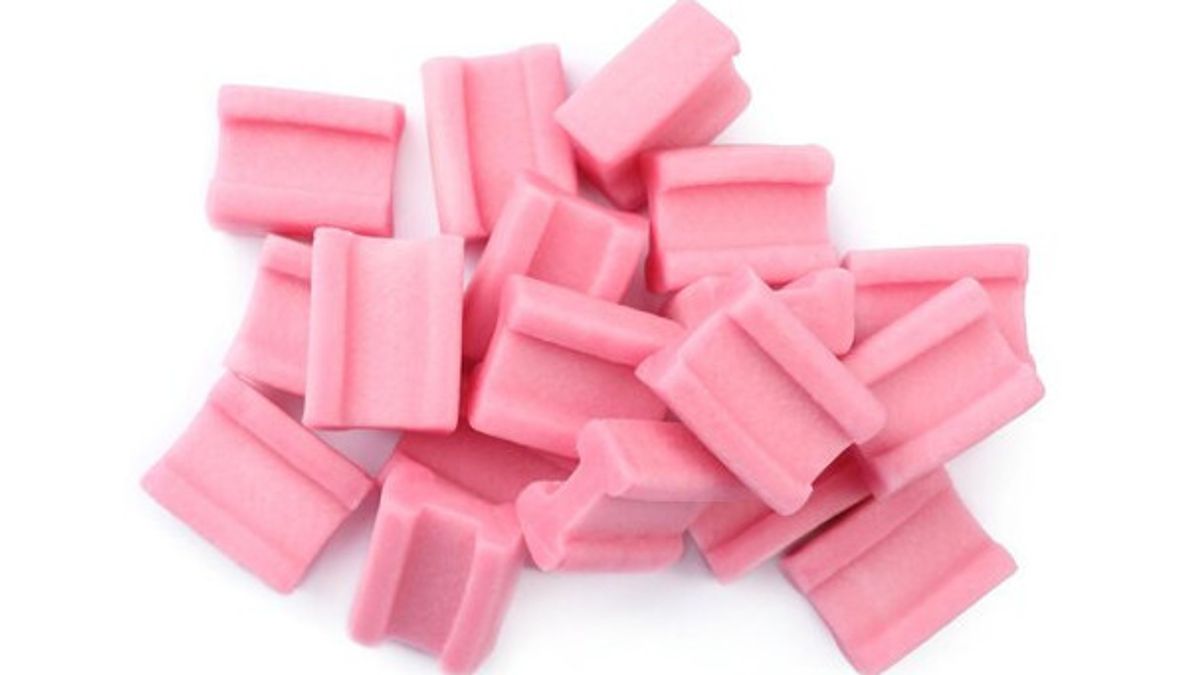


JAKARTA - Microplastics has become a hidden threat behind everyday habits. A recent study reveals certain eating habits, including chewing gums, can trigger the entry of microplastics into the human body. This research further clarifies how much microplastic exposure we experience every day.
Recent research shows that food consumed daily can be a source of microplastics that directly enters the body. One example is rubber candy, which can actually release hundreds to thousands of microplastics into the saliva when pressed.
The research is still in the process of being reviewed by experts and will be presented at the American Chemical Society biennial meeting in San Diego. If approved, the results of this study are planned to be published in this year's Journal of Hazardous Materials Letters.
According to Dr. Sanjay Mohanty, the lead author of this study and professor at the University of California, Los Angeles, the purpose of this research is not to scare the public.
"At this time, scientists don't know for sure whether microplastics is dangerous for humans, because no clinical trial has yet proven its effects. What is certain is that humans are exposed to microplastics every day, that's what this team wants to investigate more deeply," he said, quoted from the CNN page.
Microplastics are small pieces of plastic measuring less than 5 millimeters, while plastics smaller than that are called nanoplastics. These plastics usually come from synthetic polymer materials that are often used in everyday products. In rubber candy, these polymers are used to create a chewy texture and maintain a longer taste.
Microplastics can enter the body through the food, drinks, or air we breathe. In fact, previous research found microplastics in the blood, lungs, placentas, brains, and human testes. Therefore, the research team wants to explore the possibility of rubber candy as a source of microplastic exposure.
"The rubber regulation is interesting for research, because the only food that deliberately uses plastic polymers as raw materials. It is different from other foods that are contaminated with microplastics during the packaging or production process," said Dr. Mohanty.
The study analyzed 10 popular brands of rubber candy in the United States, consisting of rubber candy made from synthetic and natural ingredients. This is because most manufacturers do not clearly list the basic ingredients of rubber candy, the research team cannot confirm the origin of the microplastics in the candy.
The process is quite simple. A participant chews rubber candy for 4 minutes. Every 30 seconds, saliva is collected using a special tube. After that, participants gargling several times with pure water to ensure all microplastics are detected as well. This process is repeated seven times for each type of rubber candy.
The results show that chewing 1 gram of rubber candy can release about 100 microplastics into saliva. In some candy, the amount even reaches 637 microplastics per gram. Interestingly, 94% of microplastics are released in the first 8 minutes of chewing.
Surprisingly, rubber candy from natural ingredients also releases microplastics in almost the same amount as synthetic rubber candy. This is likely due to contamination from the unreported production or use of synthetic additional materials.
Although this study provides an early picture, there are many things that are still not understood. For example, this study is only able to detect microplastics measuring at least 20 micrometers. This means that smaller particles, such as nanoplastics, may be missed, so that the actual number could be larger.
SEE ALSO:
-
 | BERITA
Cek Kesehatan Gratis Mulai Diterapkan 10 Februari, Pelaksanaan Direncanakan Bertahap
09 Februari 2025, 15:54 -
 | BERITA
Soal Efisiensi Anggaran Pemerintah, Menkes Jamin Layanan Kesehatan Tak Terdampak
05 Februari 2025, 18:02 -
 | KESEHATAN
Ada Virus Baru Lagi, Ini Fakta HKU5-CoV-2 yang Bikin Ilmuwan Waspada
25 Februari 2025, 14:52 -
 | BERITA
Dukung Kemkomdigi Batasi Usia Pengguna Medsos, Menkes Singgung Masalah Kesehatan Mental
03 Februari 2025, 01:18
In addition, the reason why natural rubber candy also contains synthetic polymers is still a question mark. This could be due to contamination during the production or packaging process.
The English, Chinese, Japanese, Arabic, and French versions are automatically generated by the AI. So there may still be inaccuracies in translating, please always see Indonesian as our main language. (system supported by DigitalSiber.id)


