


JAKARTA - Kidney disease is now a serious concern for the government, given its broad impact on public health and state financing in the health sector.
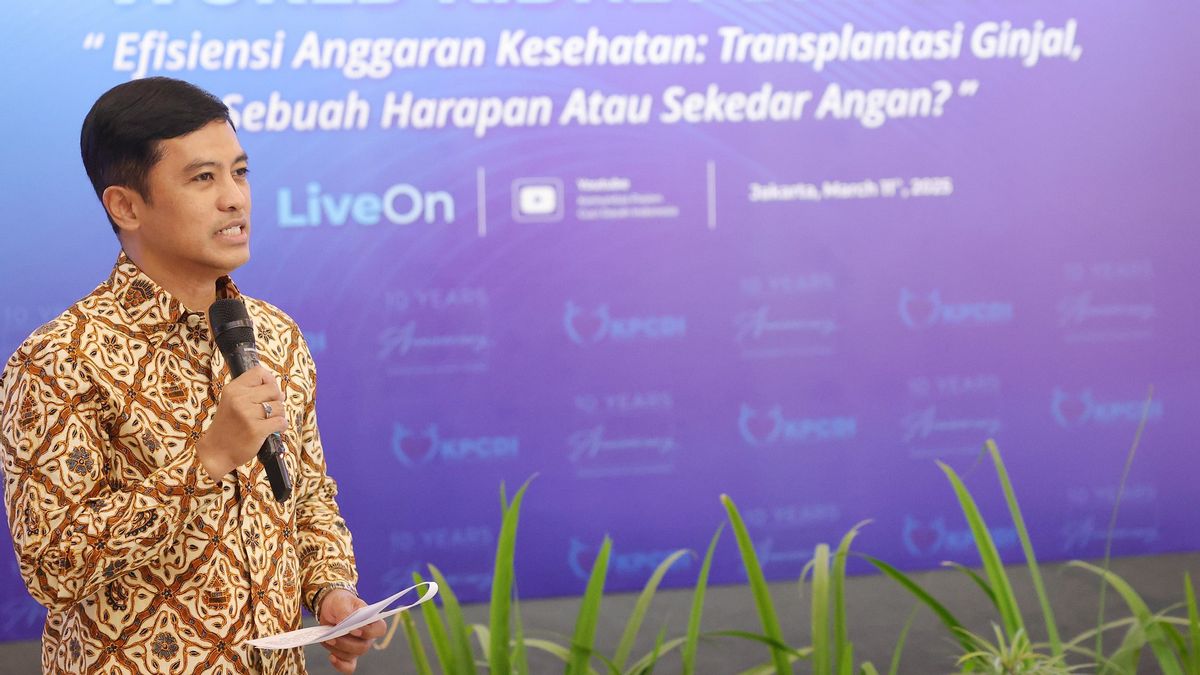
In an effort to find the best solution, various health experts gathered in a public discussion on Tuesday, March 11, 2025 in Jakarta. This discussion is a breath of fresh air for patients who need kidney transplantation, especially those who have had to rely on life-long dialysis procedures.
Deputy Minister of Health, Prof. dr. Dante Saksono Harbuwono, revealed that until now, kidney transplants can be carried out in 19 kidney transplant centers spread across various regions in Indonesia. In the future, the government is committed to continuing to increase the number of facilities in order to expand access for patients in need.
"I promise the number will continue to grow," said Prof. Dante in the discussion, quoted from the Ministry of Health website.
Through a referral health transformation program, the Ministry of Health (Kemenkes) has built a hospital network that focuses on dealing with catastropic diseases, including kidney disorders. Kidney diseases themselves fall into the category of catalyst disease, because if not treated properly, it can cause a significant increase in health costs.
"If we don't handle this kidney disease properly, health financing will continue to increase over time," he added.
Currently, the treatment of kidney failure patients undergoing dialysis costs around Rp. 420 million per year per patient. On the other hand, kidney transplantation which costs around Rp. 300 million to Rp. 350 million is considered more efficient in the long term.
Prof. Dante emphasized that kidney transplantation is not only a medical solution, but also has significant social and economic impacts.
"Genel transplantation is an effective social solution with clear benefits in terms of cost and patient welfare," he explained.
In addition to reducing the country's financial burden, kidney transplantation also improves the patient's quality of life, which previously had to undergo periodic dialysis procedures with various limitations in daily activities.
One of the main challenges in kidney transplant in Indonesia is the lack of organ donor availability. Prof. Dante highlighted that there are still many people who want to donate their kidneys, but do not know the procedures and steps that must be taken.
"Education and socialization regarding kidney donors must continue to be carried out so that people better understand the importance of sharing organs to help others," he said.
The government plans to increase public literacy regarding the importance of organ donors through various campaigns and cooperation with the health community.
With increasing public understanding, it is hoped that the number of kidney donors can increase, so that more patients can get the opportunity to undergo a transplant.
Prof. Dante also expressed his appreciation to the Indonesian Bloodwashing Patient Community (KPCDI) for initiating this discussion. According to him, the involvement of the patient community is very important in designing more inclusive and real needs-based health policies in the field.
"Hopefully this discussion will provide valuable input for us at the Ministry of Health, to continue to improve services and ensure that kidney transplant services can be accessed by more patients throughout Indonesia," he said.
He emphasized that the government will continue to ensure that the quality of health services is maintained, especially in the implementation of kidney transplants.
SEE ALSO:
-
 | INFO SEHAT
Orang Tua Lebih Sayang Anak Sulung atau Bungsu? Penelitian Ungkap Faktanya
22 Januari 2025, 13:55 -
 | LIFESTYLE
Indonesia Nomor 2, Ini Daftar 17 Negara dengan Konsumsi Mi Instan Terbanyak di Dunia
01 Januari 2025, 17:50 -
 | INFO SEHAT
7 Makanan untuk Orang Diare yang Aman Dikonsumsi agar Cepat Pulih
11 November 2024, 21:25

"The transplant of the kidneys will continue to run as it should, and this is a mandate for the Ministry of Health as a health locomotive in this country," he concluded.
The English, Chinese, Japanese, Arabic, and French versions are automatically generated by the AI. So there may still be inaccuracies in translating, please always see Indonesian as our main language. (system supported by DigitalSiber.id)
Popular


