


JAKARTA - Indonesia has extraordinary natural wealth, including in the field of herbal medicine. With more than 17,200 types of medicinal plants identified, this country has great potential to develop drugs based on natural ingredients.
Further development can make herbs an alternative to modern medicine that is safe and efficacious.
In this case, the Food and Drug Supervisory Agency (BPOM) continues to encourage the national pharmaceutical industry to further utilize Indonesian original herbal ingredients to strengthen the independence of domestic drugs. The head of BPOM, Taruna Ikrar, emphasized that although Indonesia has thousands of medicinal plants, only 21 types have been successfully developed into phytopharmaca or scientific standard herbal medicines.
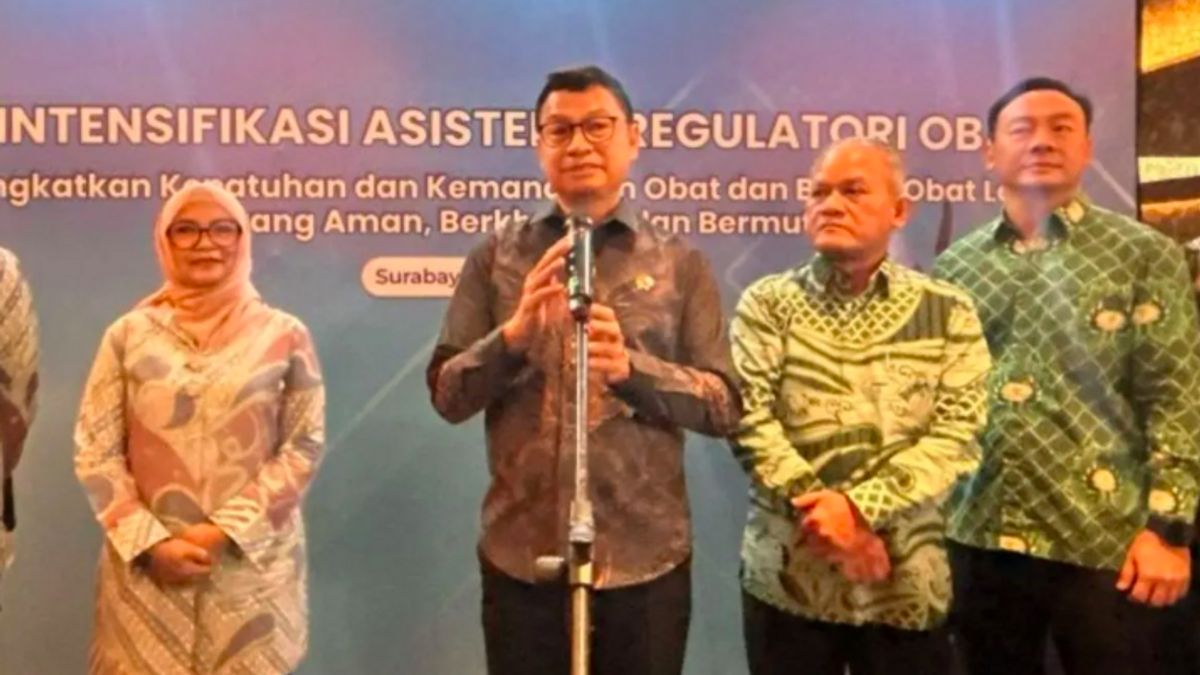
"The government is trying to direct the pharmaceutical industry to take advantage of this great potential, especially because the lifestyle trend of the world community today tends to return to natural medicine," he said at the "Intensification of Drug Regulatory Assistance: Increase Compliance and Independence of Drugs and Local Medicines that are Safe, Efficient, and Quality" in Surabaya, as quoted by ANTARA.
The cadets explained that until now, the use of medicinal plants in the country is still limited. Therefore, BPOM seeks to bridge cooperation between the pharmaceutical industry and academics through the concept of Academic, Business, and Government (ABG).
"BPOM acts as a liaison between academics and industry for research on Indonesian original drugs. Currently, there are 185 universities involved in this collaboration," he said.
Several well-known universities such as the University of Indonesia, the Bandung Institute of Technology (ITB), and the Bogor Agricultural Institute (IPB) have signed a Memorandum of Understanding (MoU) with BPOM in order to support research and development of medicinal plants.
Of the approximately 4,000 universities in Indonesia, BPOM targets around 500 best campuses to actively participate in herbal medicine research.
"Through the BPOM Goes to Campus program, we want to strengthen the synergy between academics, industry and the government in order to accelerate the development of phytopharmaca," he added.
With the increasingly close collaboration, Taruna is optimistic that the acceleration of drug plant research in Indonesia can increase the number of phytopharmaca extracts circulating in the market.
"Currently, only 21 phytopharmacas are available, this number is still very small. In the future, we hope that more quality herbal extracts can be developed into modern drugs based on natural ingredients," he concluded.
The English, Chinese, Japanese, Arabic, and French versions are automatically generated by the AI. So there may still be inaccuracies in translating, please always see Indonesian as our main language. (system supported by DigitalSiber.id)
Most Popular Tags
#Prabowo Subianto #donald trump #firearm #8791 #giias 2026Popular


