


JAKARTA - In recent years, the phenomenon of overthinking or overthinking has become one of the psychological issues that is increasingly spreading among the people of Indonesia, especially the younger generation.
This problem not only has an impact on mental health, overthinking also gives rise to unique social responses among young people, one of which is the "endover" trend which has recently gone viral on social media.
Just running away can first be described as a form of temporary escape from the reality that is felt increasingly unfriendly to their future.
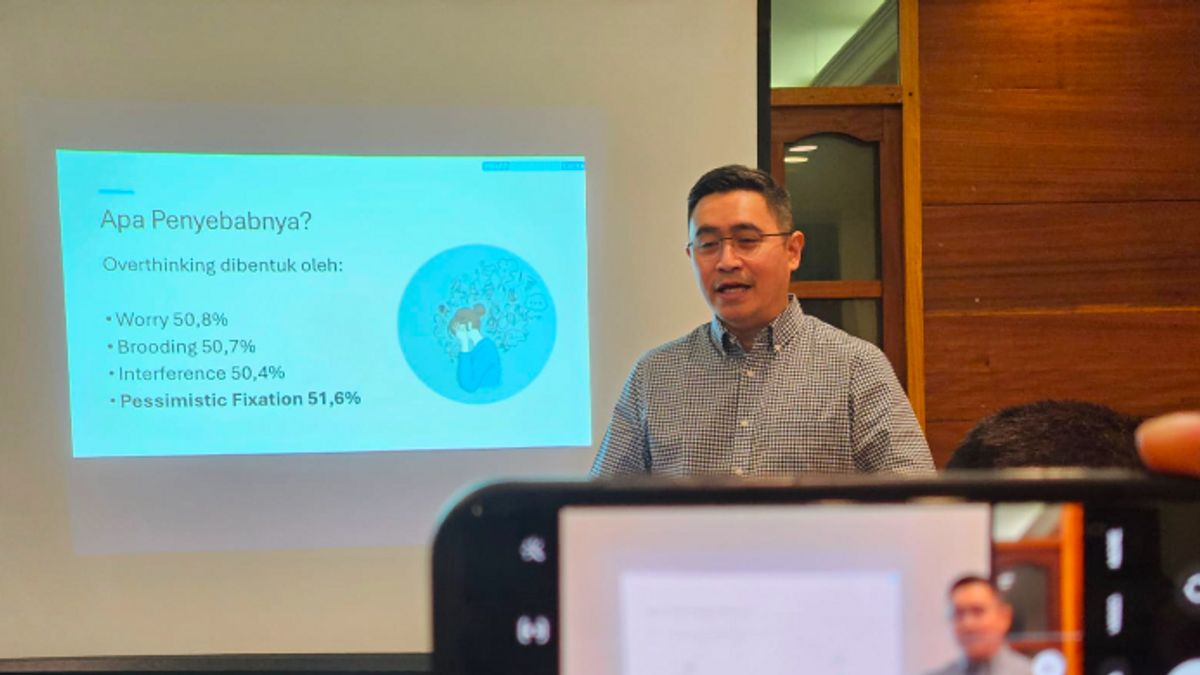
In this regard, the latest study from the Health Collaborative Center (HCC) led by Dr. Ray Wagiu Basrowi revealed that almost half of Indonesians experience repetitive negative thinking or a tendency to think negatively or overthinking, which may underlie the trend of "Just go away first".
This study involved 1,061 respondents from 29 provinces from January to February 2025, noting that 50 percent of respondents were overthinking, while the other 30 percent were stuck in the ruminations given past negative events without a solution. Only 19 percent of respondents showed a healthier reflective mindset.
"The phenomenon of running away first includes overthinking, some even say they don't want to spend productive time in Indonesia, that means they (young people) want to run away from the facts, when we talk a lot with respondents, the majority are dissatisfied with the current condition of Indonesia, it's better to run away first," said Dr. Ray in his presentation in Jakarta, Monday, February 24, 2025.
This study identified various external factors that triggered a spike in overthinking in Indonesia. Among them are the increase in the price of basic necessities, the high cost of health, to the flow of confusing political information.
"Unstable economic conditions and erratic political dynamics make it increasingly difficult for the younger generation to plan the future. This increases the risk of overthinking to double," explained Dr. Ray.
In addition, women are found to be more vulnerable to overthinking. This can be caused by the double burden as a wife, housewife, as well as workers make women more depressed. If they lose their jobs, the risk of overthinking increases dramatically.
Many young people feel that government policies, ranging from education, employment, to basic necessities prices, actually complicate their path to a bright future. Instead of getting support, they feel burdened by uncertain social-economic realities.
"Tren just 'go away first' is a social alarm. This shows the existence of a gap between the expectations of young people and the existing policy realities," continued Dr. Ray.
SEE ALSO:
-
 | BERITA
Menkomdigi Meutya Nilai Tren #KaburAjaDulu Bentuk Kebebasan Berekspresi
20 Februari 2025, 18:13 -
 | LIFESTYLE
Disebut Bisa Merugikan Negara, Apa yang Dimaksud dengan Brain Drain?
19 Februari 2025, 23:25 -
 | EKONOMI
Ramai #KaburAjaDulu, Menteri P2MI Ingatkan untuk Bekali Diri dengan Skill
19 Februari 2025, 14:05 -
 | EKONOMI
Minta Tagar #KaburAjaDulu Diubah, Menteri Karding: Lebih Produktif
19 Februari 2025, 19:32
Overthinking not only affects individual mental health, but also productivity and quality of life. Individuals trapped in recurrent negative mindsets are more prone to stress, anxiety, and even depression.
As an effort to mitigate, HCC recommends that the government start including mental health indicators in social and economic policy making, to improve the clear flow of public communication so as not to further worsen the situation.
"The mental health literacy must be improved, but what is more important is policies that really respond to the needs of the community, especially the younger generation," said Dr. Ray.
Economic stability, transparency of public information, and guarantees of affordable access to mental health are concrete steps to reduce the level of overthinking in society. In addition, further research needs to be done to get a more comprehensive picture of the social and psychological impacts of this phenomenon.
The English, Chinese, Japanese, Arabic, and French versions are automatically generated by the AI. So there may still be inaccuracies in translating, please always see Indonesian as our main language. (system supported by DigitalSiber.id)
Most Popular Tags
#Prabowo Subianto #donald trump #Febrie Adriansyah #8791 #giias 2026Popular


