
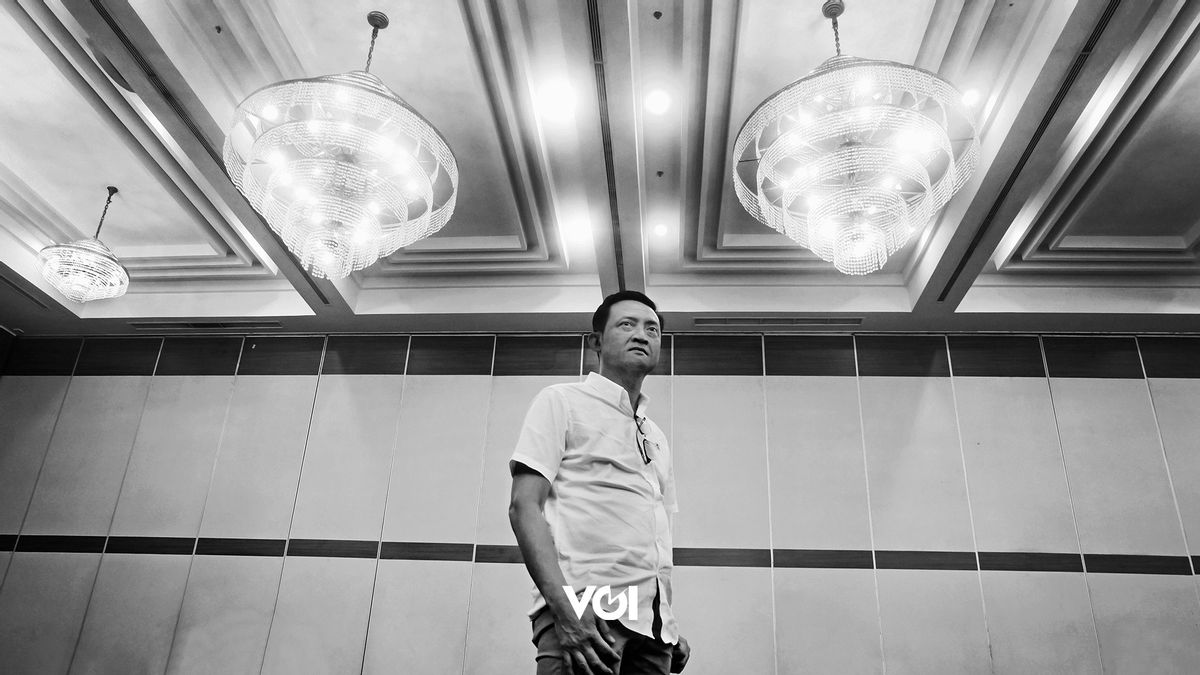


Indonesia is the fourth largest tobacco producer in the world. However, according to the Deputy Chairman of the National Leadership Council (DPN) of the Indonesian Tobacco Farmers Association (APTI) Wisnu Brata, the country's leaders are not confident with this reality. What happened, he said, was the emergence of regulations on tobacco that undermined the national cigarette industry and tobacco farmers.
***
According to data from the Food and Agriculture Organization (FAO) in 2021, China is the largest tobacco producer in the world with a total of 2.1 million metric tons. In second place is India with 0.75 million metric tons, and third Brazil 0.74 million metric tons. Then, in fourth place is Indonesia with 0.23 million metric tons. Meanwhile, the fifth is the United States with a production of 0.21 million metric tons.
With this fact, the Indonesian government should actually be confident as a producer country. With its typical natural and geographical conditions, Indonesian tobacco has a distinctive taste. However, according to Wisnu Brata's suspicions, the government's bias towards tobacco farmers is very low.
The peak was since the emergence of PP 81 in 1999 which regulates the limit of tar which must not be more than 30 mg and cigarette nicotine 1.5 mg. "Since then there has been a shock to tobacco farmers. The cigarette industry has innovated and farmers have started to be affected. The problem is that the rules refer to international standards, not based on the products we produce," he said.
Still according to Wisnu, it is suspected that before the IMF disbursed financial assistance, Indonesia must regulate its cigarette industry to be in line with international rules on tar and nicotine. "Our government should be confident that the tobacco we produce is unique because of its geography and natural conditions. Our tobacco is the best. The regulation (PP 81 Year 1999) should not be needed. Because there is regulation, tobacco imports enter, and in 2012, it reaches 150,000 tons," he said.
Tobacco imports occur because cigarette factories need raw materials. Meanwhile, Indonesian tobacco, because of its high nicotine and tar levels, said Wisnu, cannot meet the needs of cigarette factories. "At times like this, the state should be present as a defender of the people," he said.
Most recently, Finance Minister Purbaya Yudhi Sadewa issued a policy on a new layer in the Tobacco Excise Tax (CHT) tariff which came into effect in June 2026. This rule is designed as a transition path to curb the circulation of illegal cigarettes by providing space for small producers to operate legally. "This rule will be good if it is targeted. Now, illegal cigarette producers also produce machine kretek cigarettes (SKM) and mild cigarettes. So, if this rule is purely for MSMEs, we support it," he told Edy Suherli, Bambang Eros, and Irfan Meidianto from VOI who met him in Jakarta not long ago.
Now is the time for the government, said Deputy Chairman of the APTI DPN Wisnu Brata, to side with tobacco farmers and the cigarette industry, which continue to be depressed. (Photo: Bambang Eros VOI, DI: Raga Granada VOI)
There is a new policy regarding the "new layer of people's cigarette tax". Broadly speaking, do you see this as "fresh air" for small industries, or is it just a new trap that is burdensome?
This rule will be good if it is targeted. Now, illegal cigarette manufacturers are also producing machine kretek cigarettes (SKM) and mild cigarettes, where to produce these cigarettes using expensive machines. The strong buyers are big businessmen, not home industries which the Minister said were MSMEs. So, if this rule is purely for MSMEs, we support it.
Now how is it supervised in the field? If it doesn't go well, the big entrepreneurs will break their companies into several parts so that it seems like an MSME. If left alone, this will damage the market. The big industry will collapse, even though until now they are the ones who absorb the tobacco of farmers. Because there is a big disparity, the second and third groups will fall. In fact, the second and third groups also absorb quite a lot of tobacco farmers.
So, is this new layer a breath of fresh air for farmers or not?
Fresh air if this new layer is dedicated to hand-rolled cigarettes (SKT). However, if it is allowed to produce mild cigarettes, then it will be a different story. The reason is that the composition of mild cigarettes is more than 80% imported tobacco. The content of nicotine and tar for mild cigarettes is very low. While the average production of Indonesian farmers has high nicotine and tar (above 2 mg).
"Can this new layer be realized logically?
It depends on the goodwill of the government. If you accommodate illegal cigarettes from MSMEs and are dedicated to SKT, it is good for tobacco farmers because there is absorption of tobacco production. But, if you accommodate SKM and mild cigarettes, this is a new trap and burden on farmers. So, this rule has no benefit for tobacco farmers.
How far has the socialization of this policy touched the grassroots? Are farmers in Temanggung, Madura, or Lombok already understand the impact on the price of their tobacco absorption?
"Until now we only know from the media, there is no invitation for direct socialization from the relevant ministries about this new layer. Or we farmers are considered unimportant, the big cigarette industry players are invited. So, this socialization has not touched us tobacco farmers.
"Even though this rule will be implemented soon?"
He said that, but we don't know how it will be realized on the ground.
What is the impact for farmers?
"Later we will see in this regulation that SKT or SKM is given the opportunity. The next parameter is from August to October, when the tobacco farmers harvest. We already know the rules from the media, but the details and what the application in the field is not detailed.
The government often carries out raids and destruction of illegal cigarettes. How does APTI see it, is there any benefit for farmers?
Talking about profits there. With the proliferation of illegal cigarettes, it makes the producers of class 1 and 2 cigarettes erode their market. But, if the razianya is in the store, it is not a solution. It should comb it at the source, not downstream. The reason is for farmers, if the producers of cigarettes in groups 1, 2, and 3 survive, the absorption of tobacco is large.
What else can the government do to reduce illegal cigarettes?
First education, then law enforcement. Whoever makes illegal cigarettes will be prosecuted, there must be no selective. If the government is consistent, I believe it can be eradicated.
Tobacco is often called "green gold", but why do farmers often feel that they are not prosperous? Is it true that farmers' bargaining position is always defeated by the "game" of the pulper or big trader?
"The welfare of farmers depends on government regulations. Before there were many government regulations on tobacco, that was the golden age of tobacco farmers. After the emergence of PP 81 in 1999 which regulates the limit of tar which must not be more than 30 mg and the nicotine of cigarettes 1.5 mg, since then there has been a shock to tobacco farmers. The cigarette industry innovates and farmers begin to be affected. The problem is, this rule refers to international standards, not based on the products we produce.
"Our government should be confident that the tobacco we produce is unique because of its geography and natural conditions. Our tobacco is the best, there is kretek there. Regulation should not be needed. Because there is regulation, tobacco imports come in, and in 2012 it reached 150,000 tons.
So, is there a motivation behind this regulation?
That's right. The reason is that when the IMF comes in and wants to provide assistance, one of the conditions is that cigarettes must refer to international rules that regulate tar and nicotine.
So, the issue of health is wrapped up?
Yes, they are hiding behind it to smooth out their agenda. In fact, our tobacco farmers and the cigarette industry are greatly affected. So, regarding the welfare of farmers, if the government goes back to the way it was before 1999, farmers will be prosperous. The government should protect its people, not submit to international rules that make people suffer.
Compared to other farmers, are tobacco farmers more prosperous?
If the comparison is with other commodities such as cash crops, yes. If the regulations are supportive, farmers will be more prosperous. I see the government's regulations on tobacco want to kill Indonesian tobacco farmers. So far, cigarettes have always been the "black sheep" cause of death in Indonesia.
"The government should be able to see other sectors. Goods that are restricted from circulation such as alcohol, why the government does not want to make rules that alcohol circulating should not be more than 2%? Sweetened drinks also have no rules. Come on, don't just shoot tobacco, the country must be fair. It should learn from Australia and France which protect wine farmers very much. Regarding cigarettes, we are guided by Singapore and Thailand, although they are not tobacco producers, so the rules on tobacco must be stricter.
"But this is about health, does the government always stand on that?
"We respect health. So what is regulated is the ethics of people smoking, not the level of tar and nicotine. Regarding the age limit for children to smoke, we agree. What needs to be enforced is the enforcement of the law. Strict sanctions for violators, we agree. Smokers should not smoke carelessly, agree, but provide a human smoking place.
Regarding the Tobacco Excise Revenue Sharing Fund (DBHCHT) which amounts to trillions. To be honest, is the fund really "trickling" into the farmers' pockets or is it just spent on bureaucracy and irrelevant programs?
This is what makes me and my fellow tobacco farmers disappointed. The birth of the Tax Law that is now in force is one of them because of our struggle in 2003-2004. Our struggle asks that the tax collected can be returned to tobacco farmers, because tobacco farmers are one of the elements that can make the tax exist. It was discussed in the DPR and the result was DBHCHT. We were very happy at that time.
But the implementation is reversed. As much as 50% of the DBHCHT is used for health. Then another 25% for eradicating illegal cigarettes. The question is, the eradication of illegal cigarettes has already been carried out by the relevant ministries and uses state funds, why must DBHCHT be used again? The 25% fund is very large. Then 10% for socialization of DBHCHT. And only 15% for farmers. This also still has a problem of authority to use the existing budget for the Governor and Regent. Well, are they pro farmers or not? That's what makes us disappointed. If this is the case, it's better not to have DBHCHT.
So, DBHCHT is a contest while tobacco farmers can only hope?
Yes, that's the condition. At the Ministry of Agriculture, the funds for tobacco farmers are zero. We hope that many from DBHCHT can help farmers, but now that hope is just a hope.
There is an incentive for farmers to diversify crops due to health issues. In your opinion, are there other crops that can really compete economically with tobacco?
This should actually be answered by the government. Try the relevant ministries to examine and share the results with us. Are there other commodities that are also good economically? So far, in tobacco-producing areas there are not many plants that can survive during the dry season. If the government has researched, let us know so that it can be considered for diversification.
Now the trend is switching to vape or electric cigarettes. Will this affect tobacco farmers?
If I don't worry about vaping and e-cigarettes. The reason is, the increase is not significant and the price is still too expensive. However, we want the same rules as conventional cigarettes.
Now there are SKT, SKM, and mild cigarettes, as well as e-cigarettes. Which is the most dominant?
The most dominant at this time is SKM, 90% more. The reason is that SKT continues to fall, now only 8%. The rest is only e-cigarettes. SKM mild which always grows because the regulation is supportive. The Smoke-Free Zone (KTR) makes people want to smoke but with a fast duration. Initially people smoked mild cigarettes, it felt like cotton. After a while, because they are used to it and the duration is fast, it is also used. Regular SKM takes 15 minutes per stick, while mild cigarettes are less than 5 minutes. So, the regulation can change someone's habits and tastes.
Cigarettes are always discussed by two different poles: health and the other side (economy, farmers' livelihood, etc.). How to find the common ground?
"Existing regulations cannot be immediately enforced, they must be seen objectively in terms of what the conditions on the ground are. The health and welfare sides are discussed the most. How can the two go but not harm each other? It's hard, but there are formulations that can be tried.
"I once discussed with one of the experts from Unibraw Malang. According to him, fair research on cigarettes has not really been done. Now, the conclusion that cigarettes make you sick always comes from a doctor's (clinical) recommendation, not a thorough research.
The association is accused of only being a 'tameng' for the interests of the big cigarette industry in the name of farmers' fate. How do you respond to the accusation that farmers are only used as political commodities when the tax issue rises?
When we have a common threat, we must unite. The reason is that the regulation on tobacco threatens farmers as well as the cigarette industry. However, when there are restrictions on imports, we are actually the opposite. Farmers ask for imports to be regulated, while the industry is not. If imports are not regulated, farmers are destroyed.
The question is, why is the cigar not regulated? Even though the nicotine is above 7 mg, while kretek cigarettes are around 2 mg. Why can Cuba produce tobacco with such high nicotine? Because of its specifications and geography. Indonesia is also like that, its tobacco has about 2 mg of nicotine. This should be a specialty, and it should be maintained and protected by the state.
In this situation, what are your expectations and tobacco farmers from the government?
First, the government must be more confident. We are a tobacco producing country. Existing regulations should not kill, but regulate - regulate the ethics of people smoking. Then, there must be an Agricultural Law that regulates the import of agricultural products so that farmers are protected. Equally important, the government must be present fairly, both on the health side and on the side of the cigarette industry / farmers. Don't be biased, it must be fair.
The Other Side of Wisnu Brata, Former Kades who faithfully guards the pulse of tobacco farmersSince becoming the Village Head, Wisnu Brata has become more aware and aware of the great potential of tobacco. (Photo: Bambang Eros VOI, DI: Raga Granada VOI)
Since he was a child, Wisnu Brata has been no stranger to tobacco. However, when he became the Head of Campursari Village, Bulu District, Temanggung Regency, Central Java, his interest in tobacco was even greater.
"When I was the Village Head, there was no Village Law where every village received annual funding from the central government. The Village Head was purely paid from the 'bent' land owned by the village. During the tobacco harvest season, that is the moment most anticipated because the results are quite good," said the man who spent his youth often demonstrating to Jakarta to fight for the fate of tobacco farmers.
The reason, said Wisnu, is that during the rice planting season the results are ordinary. However, when it is the turn of the tobacco planted, he can save. "From the tobacco harvest, I as the village head have savings for the village office operations and working as a village leader until the tobacco harvest again the following year. It's not bad, because the tobacco harvest can be 20 times the rice," said Wisnu, who served as village head for two periods.
Knowing that the sale of tobacco crops is indeed large compared to other crops, Wisnu still continues to plant tobacco after no longer serving as the Village Head. "So I was the head of the village for two periods, then my wife continued for one period. Well, when I was no longer the head of the village, I still continued to plant tobacco, but my profession was purely as a tobacco farmer," said this alumnus of the Faculty of Economics, University of Indonesia (UII) Yogyakarta.
He planted the land inherited from his parents, plus another two hectares that he bought himself. "So the land I have is optimized for tobacco cultivation," said Wisnu. Now he can no longer demonstrate, so the struggle to defend the fate of tobacco farmers he channels through the Indonesian Tobacco Farmers Association (APTI).
Tobacco Farmers' Welfare in TemanggungIn fact, according to Wisnu Brata, tobacco farmers were more prosperous before the family regulated tobacco such as; PP 81 of 1999 which regulates the limit of tar which must not exceed 30 mg and cigarette nicotine 1.5 mg. (Photo: Bambang Eros VOI, DI: Raga Granada VOI)
Tobacco is indeed a flagship commodity and attracts the attention of almost all farmers in his village, as well as other villages in Temanggung. The reason is that the results are quite good compared to planting other commodities. "In the dry season, farmers generally plant tobacco, then in the rainy season they are interspersed with rice and or other vegetable crops, then plant tobacco again. So on and so forth the cycle that farmers do," he said.
Is the welfare of tobacco farmers good with this type of cultivation pattern? "Alhamdulillah," he said full of gratitude.
"Prosperous or not it is relative, and it also depends on how large the land he has and can be planted with tobacco. The more land he has, the more results he gets. However, another fact that can be seen, every farmer has a two-wheeled motor vehicle, his house has a floor, has a television, and can send his children to college. That is an indicator of prosperity that can be seen," he explained.
But compared to the price increase of the industry, according to Wisnu, tobacco farmers are still not prosperous. "Tobacco farmers are still far from being prosperous, especially with various regulations that have a heavy impact on tobacco farmers," he lamented.
Wisnu and other tobacco farmers are not unwilling to switch to other crops, but until now the most profitable commodity is tobacco. Especially in the dry season, not many crops can survive with minimal water supply. "In the dry season there is no choice, the crops that can grow well in our area are tobacco. If you don't grow tobacco, what do you eat?" he said rhetorically.
Even Busy, Still Sharing Attention for FamilyEven though he is busy, Wisnu Brata still divides his attention to his family. The memories of his children's childhood remain eternal until they grow up. (Photo: Bambang Eros VOI, DI: Raga Granada VOI)
Even though he is busy with various activities as a farmer, organizing, and used to be the Village Head, according to Wisnu he still divides his attention to the family. "Family is where we return. After being busy with various affairs, go home, go back to the family, play with children and wives. In the midst of the busy, I also take the time to share my attention by calling just to share news," said the man who was young in the hobby of kempo and badminton. Now because of age, his favorite sport is cycling and walking.
"When the children were small, at least once a month he went out of town with his children and wife. No need to go far, just to Magelang, Jogja, Semarang, or Wonosobo. "But now that the children are big and have their own lives, they can't anymore. The memories of going and staying together are still eternal until now," said the father of two children.
From the bottom of his heart, Wisnu Brata actually wanted to have grandchildren. However, he could not force his children to get married immediately. "Children are different now than in the past. If you talk about love, he says why are you in a hurry, hehehe. They still want to go to school, after the S1 is completed, continue to S2. So I'm just waiting for when it's time for them to get married," he concluded.
"The government must be more confident, we are a tobacco producing country. The existing regulations are not killing, but regulating. Regulating the ethics of people smoking. Then there must be an Agricultural Law that regulates the import of agricultural products so that farmers are protected. No less important, the government must be present on the side of health and the cigarette industry / farmers. Don't be biased, be fair,"
Wisnu Brata
The English, Chinese, Japanese, Arabic, and French versions are automatically generated by the AI. So there may still be inaccuracies in translating, please always see Indonesian as our main language. (system supported by DigitalSiber.id)
Most Popular Tags
#Prabowo Subianto #donald trump #firearm #8791 #giias 2026Popular


