
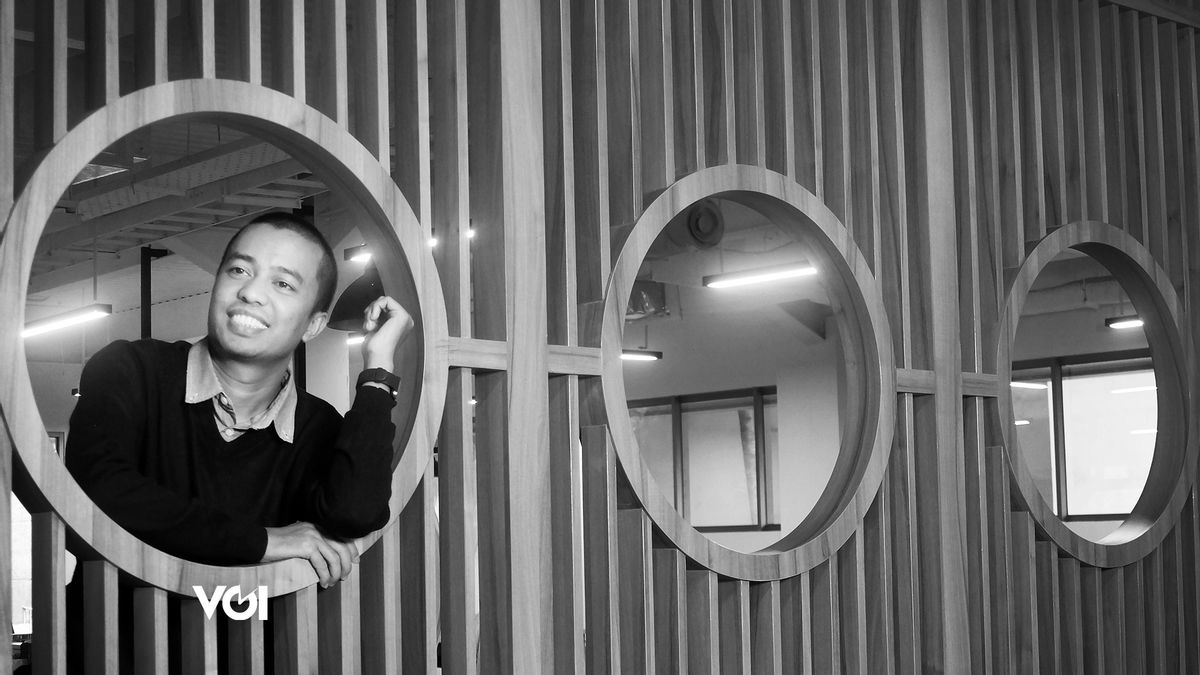


After being shocked by President Donald Trump's reciprocal tariff, Indonesia and the United States (US) then negotiated, and on February 19, 2026, the Agreement on Reciprocal Trade (ART) was signed. According to Dr. Media Wahyudi Askar, Director of Fiscal Justice at CELIOS, this is Indonesia's worst trade agreement with foreign parties in recent years.
***
The contents of this trade agreement have been dissected and scrutinized by various parties including CELIOS, which also revealed its study on ART. According to CELIOS' records, there are seven crucial points in the agreement that have the potential to cripple the national economy:
Balance of Payments Deficit: The risk of flooding in food, technology, and oil and gas imports that can suppress the rupiah exchange rate. Poison Pill Clause: Limiting space for Indonesia to cooperate freely with other trading partners. Threat of Deindustrialization: The elimination of the TKDN (Domestic Component Level) rule that is fatal to local industries. Foreign Dominance in Mining: Absolute ownership rules of foreign companies without divestment obligations. Geopolitical Ties: Indonesia is forced to follow the standards of US trade sanctions against other countries. Closure of Transshipment Opportunities: Obstruction of Indonesia's transit logistics and trade routes. Data Sovereignty: Threat to the digital ecosystem due to rules for transferring personal data abroad.Media Wahyudi Askar said, the US successfully trapped Indonesia until it finally signed the ART. However, shortly thereafter, the Supreme Court (MA) of the United States actually canceled Donald Trump's reciprocal tariffs. All trading partner countries were equalized to 10%.
"We should review this agreement that is detrimental to Indonesia. ART is the worst trade agreement that Indonesia has ever made with other countries in recent years," he said to Edy Suherli, Bambang Eros, and Irfan Meidianto, when they stopped by the VOI office, Tanah Abang, Central Jakarta, March 2, 2026.
In the ART agreement, said the Fiscal Director of CELIOS Media Wahyudi Askar Indonesia, there was more loss than profit. (Photo: Bambang Eros VOI, DI: Raga Granada VOI)
US trade relations with global partners have been turbulent since Donald Trump implemented reciprocal tariffs with subjective criteria. How do you see this reality in the context of internationally healthy trade relations?
"In international trade, there are principles that must be upheld. That trade agreements must be based on a common agreement (rule-based system). The WTO has also explained that there are principles that must be agreed upon: Most Favored Nation (MFN), transparency, and a rule-based system. If we look at the Indonesian and American trade agreements yesterday (ART), it is closer to a power-based system.
"In international trade, the tariff system is a correction of market distortions to improve the market to be efficient. What we see now, America is intimidating other countries, including Indonesia. The direction is now more on geopolitics and political pressure than on the economy.
So more dominant is the political pressure that enters the trade?
Indonesia is one of many countries trapped in this condition, where Trump's political pressure in trade makes us fall into a trap. The WTO principle is clear: prohibit political intimidation in trade. If that happens, the strong country will control the weak country. The implication is uncertainty in the global economy, businessmen are confused, and prices no longer reflect market conditions. The end result is an economic crisis that harms small people.
Is this pattern that America is doing a new model of colonialism?
Yes, this can be said to be a new model of colonization. We are no longer colonized militarily, but intervened economically.
"Does it mean that Indonesia and America are not aligned, one side is pressing the other?
Yes, it is very visible, the subordination is too strong. In ART there are more languages "Indonesia will be committed", "Indonesia will buy", so there is unequal exchange. Where we give more and open ourselves from this trade agreement. That's what many people, international relations experts, trade experts, and others criticized. They assess this is the worst trade agreement Indonesia has made in recent years.
Indonesia managed to negotiate a tariff reduction from 32% to 19% in the initial phase and then 0% for some products, how do you see this negotiation?
The government said it had succeeded in lowering the tariff from 32% to 19%. The question is, is this 19% figure heavy or not? Yes, it's very heavy. Later, the world trade tariff led to 0%. Don't forget, the same product competes with other countries. If their tariffs are lower than ours, we are not competitive. This is a very severe defeat in trade negotiations.
If world trade goes to 0%, does it have to be equal?
The fact of global trade today is that there is asymmetry capacity. All countries do not have the same trade capabilities. This means that if we are subject to the same tariffs, it is detrimental. Therefore, in international trade agreements there is a process of Special and Differential Treatment.
Developed countries are not the same as developing countries. They are high technology, mass production, efficient, and so on. While developing countries are more on raw commodities. With that, tariffs cannot be made equal. If you want to be fair, developing countries like Indonesia must be given room to protect their economies. That's what China did in the 1980s. They only opened their markets after the industry in China developed well.
President Prabowo agreed to an ART worth USD 33 billion (Rp577 trillion). Why do many parties, including CELIOS, consider this jumbo-valued deal to be detrimental to Indonesia?
Politically, this is very easy to convey, as if the money would come in Rp. 577 trillion, even though that was only a commitment. The value includes the purchase of imported goods, the opening of investments, and others. If we look closely at this ART, we buy and import more goods from the US. If the import flow is greater than exports, the cash is in deficit. So it's not a profit, but a loss.
"We have to see the quality of imported and exported products. The products we export are not high value-added, but commodities and raw materials. Meanwhile, the products that come in are high value-added. This can hit domestic industries such as processed food products, milk, and so on. This is what needs to be watched.
CELIOS yesterday released a statement that behind ART Indonesia and America there is an economic trap, what is the indication?
The economic trap is at least visible from several indicators. First, we are forced to import on a large scale. Second, we are forced to reduce domestic protectionist policies. Third, this agreement is more beneficial to America. What we love is that other countries are not as bad as Indonesia. Look at how India and Malaysia are smart with America.
China we see is very calm in facing the trade war with America, how do you see this?
People who don't know anything usually panic. Smart people will think calmly. Other countries have read Donald Trump's tricks. What Trump did violated the principles of international trade. They chose to wait and see, waiting for things to change.
What our government does is defensive, then reactive, and "hit left and right". We seem to be panicking about this issue back and forth to America. This is what I love. Finally, we were surprised by the decision of the Supreme Court (MA) of the United States to cancel Donald Trump's reciprocal tariffs because it was considered to be beyond his authority as president. Trade tariffs with partner countries were also leveled back to 10%.
Do you predict that the Supreme Court will overturn Donald Trump's tariffs?
The legal system in the United States is strong. The Supreme Court saw that there were parties who were harmed by the implementation of the heavy-handed reciprocal tariffs. People and entrepreneurs there also objected to the implementation of these tariffs. It can be read that Donald Trump's tariff policy is indeed wrong. Unfortunately, we misread the situation from the beginning, and this is very unfortunate.
What President Prabowo did by calling Trump has no influence. The proof is the result of ART like that. A good friendship with Trump is okay, but technically the trade agreement is at the level of technocrats; diplomacy between Indonesian and US envoys. So, it is proven that the survey says Indonesia is the country that is the easiest to be fooled. We have been cleverly deceived by the US.
So this ART has a lot of holes and harms Indonesia?
Neutral experts and academics see many weaknesses and losses from the clauses in this ART. They say we are missing in many ways.
Does President Prabowo's team not understand the details of the ART clause?
I don't know how the negotiation process was until the ART was signed. But it is interesting what Dino Patti Djalal said; he said that our Ministry of Foreign Affairs was not much involved. If that's true, why is it like this? In such important matters, the Ministry of Foreign Affairs and trade attachés must be involved. Then the WTO experts - especially in the field of dispute settlement - geopolitical experts, international law experts, and industry experts in the country should also be involved.
The question is, were there experts involved before the ART was signed? If so, who are they? The point is that Airlangga Hartarto appeared; although he is the Coordinating Minister, he comes from a political party, not a legal expert, WTO expert, or international trade expert. Then there is Lieutenant Colonel Teddy Indra Wijaya, he also has no experience in international trade. The point is that this is not a negotiation to buy chili at a traditional market. It requires flying hours, precision, and intelligence in seeing the points in the agreement.
"Indonesia has to buy oil and gas from the United States with a significant price difference, what about this?"
"Because the distance is far from Indonesia, there is a difference in the transportation factor. The transportation costs can reach 2 to 3 US dollars per barrel. Who should bear if there is an excess cost? Yes, the state through the APBN which is heavier, and in the end the people bear it. Because there is an agreement that Indonesia must buy oil and gas from the US, even though it is more competitive out there.
"Now with the global situation heating up, fuel prices are predicted to rise, especially if you buy it at a high price. At a time when we are already squeezed, we are even more squeezed. The details of the ART can be accessed by the public. This can be discussed in schools and campuses; see how carelessly we make trade agreements with other countries. This is a valuable lesson for us and future generations.
Apart from the security issue (737 Max track record), is the decision to buy 50 Boeing units still economically competitive compared to other options such as Airbus, Comac, and others?
If commercially it is more profitable to buy Boeing, it doesn't matter. But because this is a political decision after the ART was signed, it is almost certain that the price is no longer competitive. I am afraid that the coercion to buy a number of products from the US does not pass through a strong analysis, whether it is really needed in the current global situation. Then who will bear the cost? Yes, again Garuda Indonesia whose condition is already shaky.
Before this ART is in force, it must be ratified by the DPR of each country within 90 days after being signed yesterday. Can we cancel it if it is considered harmful?
In the WTO there is the principle of Rebus Sic Stantibus (clausula rebus sic stantibus); an agreement can be canceled if the fundamental structure of the agreement has changed. The current condition is that the Supreme Court cancels the tariff because something is wrong, namely the president exceeds his authority. Any country has the right to review the agreement. Now, are we brave enough not to review the agreement that has been signed?
The question is, we are dealing with a leader who is prestigious and does not want to admit his mistakes. The changes that have taken place in the United States should be a bargaining chip that we cannot continue this agreement. Another reason, there is an overwhelming rejection from the Indonesian people for the agreement. And one more, the DPR has never been involved in this, even though they are people's representatives. However, I see that until now there has been no intention from the government to cancel the ART.
One minister said ART must continue even though the reality is different from before it was signed. What is your response?
If there is a forum or meeting of ministers from around the world, I am sure Indonesia will be laughed at for making ART with America. We signed the agreement just a few days before the Supreme Court overturned Trump's reciprocal tariffs. Where is Indonesian intelligence? They can't read this situation. Remember, this ART will have an impact on the trade deficit and those affected are our state budgets, which means that the public will also be affected.
The United States and Israel attacked Iran, what is the impact on the Indonesian economy?
War anywhere makes many people injured; the victims on both sides are already very many. The economic impact has also begun to be felt by other countries. The most affected countries are those whose economic capabilities are weak and their dependence is too strong, for example Indonesia. The most felt commodity is oil because the Strait of Hormuz is closed. Remember, 20% of global oil trade comes from here. When will this war end? The longer the war, the more people are harmed.
Rising oil prices can put pressure on the rupiah and foreign exchange reserves will be eroded. People are affected because inflation increases and purchasing power decreases. The president, ministers, or members of the DPR may not feel this situation. They can still be happy, but the people are stuck. This is what is most feared.
What else is the impact?
Another thing that needs to be noted is the issue of our fiscal governance which is very difficult. If economic turmoil presses the Indonesian economy very hard, there will be systemic risks. Global investor confidence will decline, and investors can move their investments to more conducive countries. Indonesia is far from the location of the war, but the impact is huge due to the war.
ART and war have disrupted the Indonesian economy. The government may not realize that many experts here can scrutinize the ART clause because the information is open and everyone can access it. Not to mention experts, students can also analyze the contents of ART.
For the world, what is the impact of the Israel-US war against Iran?
The world will be affected, many countries whose economies are disrupted. China, for example, their economic structure will be disrupted because they still need oil and gas from the Gulf region which is in a war. The European Union countries are also disrupted because their energy supply also depends on global stability. Now inflation has soared; if the war continues, their conditions are also heavy. Purchasing power decreases, and the impact of Indonesian commodity exports will also decrease. This world is like a string that is connected to each other.
Before the ART was signed, QRIS was already a concern for the Americans because it eroded the MasterCard and Visa markets. Is this digital payment also regulated?
One of the clauses in the ART is that there must be no data domestication. This means that financial transaction data can be accessed by platforms from the US. Until now we want Indonesian financial data to be managed independently. Now with this ART, that can no longer be. So my guess is, QRIS will also be disrupted. We'll see the fight ahead. If we follow their narrative, QRIS could disappear. VISA and MasterCard will not stay silent with this situation because they are the ones who are most affected.
From this ART with America, what lessons can be learned?
First, the strategic position in the government must be filled by the right person. Do not hand over important trade agreements or agreements to people who are not credible and incompetent. What will be affected is the entire Indonesian people if ART is detrimental to us. In fact, we have many competent experts who can be asked for their opinions. However, the government did not open a discourse to experts or the DPR before the ART was signed.
Second, the trade agreement is an economic activity, do not make it a political commodity. We must be careful dealing with Trump. He can praise, then "stab in the back"; this is what is happening now through ART. America is very happy with this ART because this is a big victory for them. Remember, Indonesia is one of the largest markets in Asia as well as the largest Muslim country. This can actually be a bargaining chip, but in the end we just become a market for their products.
So, who benefits and who suffers if ART with America is implemented?
The winners are the US, especially aircraft factories, oil companies, the food sector, and Donald Trump. The losers are Indonesia, MSMEs, local business actors, and the Indonesian people. The reason is that US brand goods will enter Indonesia massively. Local commodities are hit and local businesses can collapse. The promise of 19 million jobs during Gibran Rakabuming's campaign could be just an illusion.
Wahyudi Askar and Suka Duka Media Become ResearchersHonestly, Dr. Media Wahyudi Askar admitted that as a researcher he had many likes and sorrows. When compared between the two, he admitted that he had more likes. What are the likes and sorrows of being a researcher are specifically told to VOI.
Outside of being busy as a lecturer and researcher at CELIOS, Media Wahyudi Askar has a hobby of playing football and watching football matches, both nationally and internationally. However, often busy at the campus and office makes him unable to carry out his hobby.
He admitted that this time to divide the time was not an easy job. "Ideally, there is a balance between work, sports, and other hobbies. But in reality, it is more often chaotic, everything is a mess. In the end, there is no weekend off because the work that must be completed is hunted," he laughed.
He then reconciled with the situation. "Well, what can I do about it. I have to be flexible so that everything can run. The implications are that health is a little disturbed if there is chaos in managing time," he said.
Between Yogyakarta and JakartaEven though he is busy, Media Wahyudi Askar tries to do his hobby of playing football with friends. (Photo: Bambang Eros VOI, DI: Raga Granada VOI)
As a lecturer and researcher, Media Wahyudi Askar spends a lot of time reading and writing his analysis on a problem being observed. Sometimes he has to be in Jogja to meet his students at the campus, and sometimes in Jakarta for CELIOS affairs - an independent research institution that focuses on analyzing economic, legal, and sustainable development policies.
For matters to Jakarta, he does not have a special schedule. "I don't have a special schedule to Jakarta, just random. Because for matters of research and research, after all the materials are collected, for me wherever I can think. It doesn't have to be in Jakarta, Jogja, or other cities. Even in the room, the living room, even the kitchen can," continued the man who likes to play Tamiya with his only child who is now 7 years old.
Even though he is busy, he doesn't want to miss the golden moment of his child's growth. When asked if there were plans to add more children, he confidently answered yes. "God willing, I want to have another child if God allows. Pray," he asked.
Love and Sorrow as a ResearcherWahyudi Askar media shares tips for success; wake up early, network and never stop reading. (Photo: Bambang Eros VOI, DI: Raga Granada VOI)
According to Media Askar, once he was often called, being a researcher was more of his pleasure than his sorrow. One thing he thought was important was that a researcher must be honest and brave. "We can express our research results honestly and courageously. The point is that we are protected by law. And what I say is based on data, so it is not biased. If it is good, I will say it is good, and vice versa," he said.
"The sadness is when it's stuck, what else to write. If that's the case, you have to stop for a while," he continued.
Sometimes, what he says honestly sourced from his research makes certain parties feel uncomfortable. "As a result, I was attacked by the buzzer. It turns out that the figure who felt cornered deployed his buzzer to attack me. It was an unpleasant experience. But what can I do, this is the risk of conveying the truth, there are always those who don't like it. They think what I am saying is disinformation, slander, and hatred, even though what I am saying is what it is," he said.
Facing this, Media Askar must provide explanations and clarifications. "Sometimes when there is a lot of work, this takes time, it's annoying, and it makes you stressed. But what can you do," he continued.
He is very concerned about those who try to get a degree but in an dishonest way. "Recently, there was a case of a jockey for S3 at a famous campus in Jakarta. In fact, those who get it with the right path have to work hard," he said softly.
Media Askar's advice is that if you want to be successful you have to wake up early. "Because in the morning our minds are fresh. In addition, you have to network and don't stop reading. That there is a wider world besides social media and AI chatbots. So the literacy must be improved," he concluded.
"The economic trap is at least visible from several indicators. First, we are forced to import on a large scale. Second, we are forced to reduce protectionist policies in the country. Third, this agreement is more beneficial to America,"
Wahyudi Askar Media
The English, Chinese, Japanese, Arabic, and French versions are automatically generated by the AI. So there may still be inaccuracies in translating, please always see Indonesian as our main language. (system supported by DigitalSiber.id)


