
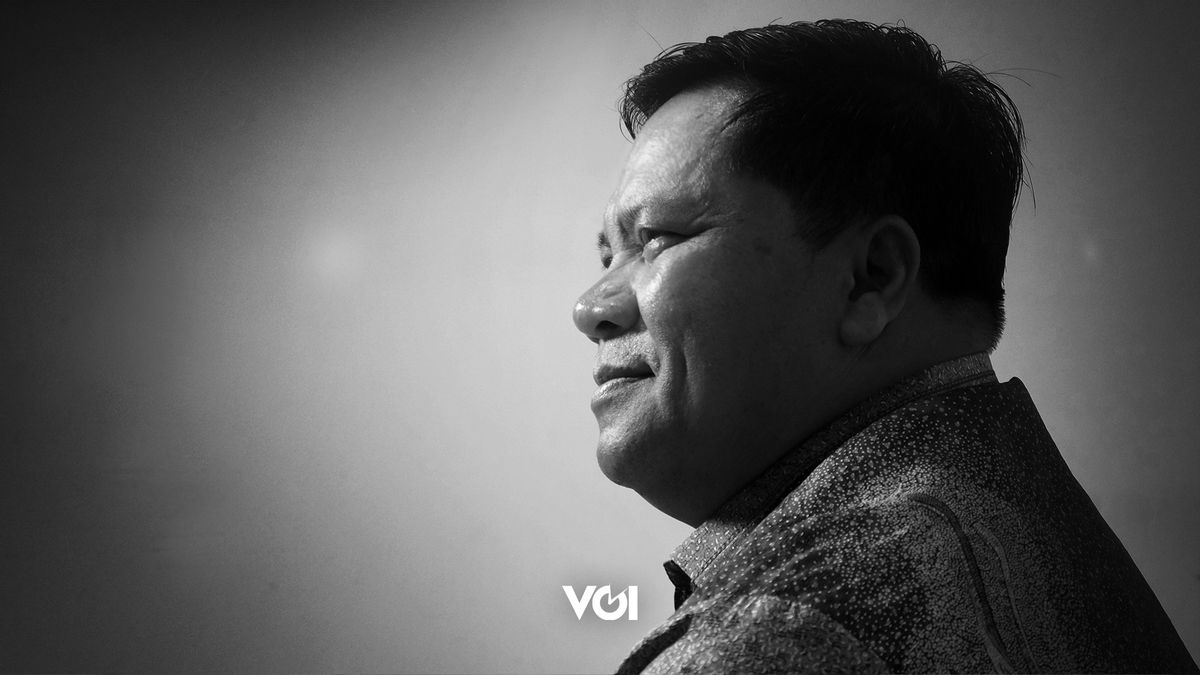


During 2025, more than 25,000 people were recorded to have died due to transportation accidents. According to the Chairman of the Indonesian Transportation Society (MTI) for the period 2025-2028, Dr. Ir. Haris Muhammadun, ATD., M.M., IPU, the average death toll was at a productive age.
***
"If each victim who dies leaves behind a wife and two children, then there are already 75,000 people who have the potential to be included in the new poverty list," he said. In fact, one of the government's priority programs is poverty alleviation. Therefore, reducing the accident fatality rate will actually help reduce poverty in Indonesia.
Removing the number of traffic accidents on highways, shipping, and flights is not an easy matter. The most rational effort is to reduce the number of accidents and the number of fatalities. According to Haris, maintaining transportation safety is not the task of one party alone, but a collective responsibility involving the government, transportation industry players, and service users. All must collaborate and synergize.
In his view, there are three crucial levels that must be done simultaneously to improve transportation safety:
Community Education: For road users and drivers of transportation vehicles. Engineering Improvement: Improve the technical side and transportation infrastructure. Law Enforcement: Strictness of rules in the transportation sector.After being elected as the General Chairman of MTI on November 15, 2025, Haris has many programs that will be realized. One of the most interesting is MTI's effort to make the transportation sector a mandatory basic service.
"In Law No. 23 of 2014 concerning Regional Government, there are mandatory affairs of basic services such as Education, Health, and Public Works. However, transportation is still included in the mandatory affairs of non-basic services," explained Haris Muhammadun to Edy Suherli, Bambang Eros, and Irfan Meidianto when visiting the VOI office in Tanah Abang, Jakarta, Wednesday, December 24, 2025.
According to him, the current position of transportation has an impact on limited budget adjustments. "How can transportation survive and be comfortable if its budget is not a priority? Therefore, we propose that transportation be raised to the basic service order. All aspects of life need transportation," he said.
How is your analysis of the Indonesian transportation sector report for 2025? Does it show the direction of a safer transformation?
During 2025, transportation accidents still occur frequently. This should be a concern because accidents should not happen in a row, whether it is traffic accidents, accidents at railway crossings, or in the waters. Somewhat reassuring, the air sector is relatively safe. Hopefully it can continue to be maintained. However, what is very worrying is the bus accident on the Krapyak Toll Road, Yogyakarta, yesterday. The victims died instantly, reaching 15 people, and continued to increase to 18 people.
Maintaining transportation safety is certainly not the task of one party alone. What do you think?
There are levels in transportation safety efforts. First, education. How to educate the public, road users, and drivers. Because education about traffic safety is often considered trivial, there are so many violations committed. Going against the flow of traffic is considered normal and a culture, even though it is very dangerous.
The second is about engineering, both in terms of transportation facilities and infrastructure that are not all smooth. There are still very sharp turns and signs that are not complete. Including at railway crossings; it should be in accordance with the law, there should be no more cross-section (direct). This can be circumvented by building a flyover or underpass.
The third and most crucial is from the law enforcement (law enforcement) side. Law enforcement in the traffic sector is still a big homework. The Korlantas policy which limits manual (direct) fines is quite risky if electronic fines (ETLE) are not evenly distributed in all places. As an illustration, in one month in Jakarta there were 10 million violations that were caught by the camera, and those that were not caught were certainly much more. However, from that number, only 0.11% was processed. So, all levels must be improved: education, engineering, and law enforcement. I hope that by 2026 the number of accidents can be suppressed.
What about air and sea transport?
Not long ago, an accident occurred in the Strait of Madura. Around Jakarta, the shipping safety facilities still need to be improved, especially in remote areas in the Indonesian archipelago. The function of transportation is two: safety and services. These two things must go hand in hand.
For air transportation, we are grateful that throughout 2025 there have been no notable incidents. However, small incidents should not be taken lightly, such as a few days ago when a national airline plane left the runway at Soekarno-Hatta Airport. Pilot fatigue factors must be considered because they are the front line of air safety. There is no tolerance for safety; its success rate must be close to absolute.
Throughout 2025, what is your record regarding traffic accident victims?
Throughout 2025, the death toll from accidents reached 25,000 people. On average, they are the fighters for the family's livelihood at a productive age. This means that if one victim dies, leaving a wife and two children, the accident has the potential to make three people fall into poverty. This should be a serious concern for the government. On the one hand, the government wants to alleviate poverty, but on the other hand, accidents actually increase the number of poverty.
After being elected as the General Chair of MTI, what are the strategic programs that will be realized?
MTI is a strategic partner of the government that is critical and provides solutions. For example, when a disaster occurs, we communicate with the government and BNPB. When transportation routes are cut off and food supplies are hampered until looting occurs, we propose that the government buy individual food stocks to be distributed to residents. The important thing is that the residents are safe first. That is why our focus is also on disaster logistics.
In addition, three of President Prabowo's Asta Cita focus on villages. Food self-sufficiency and its supporting infrastructure are in the village. The President wants to build from the village. Rural transportation problems can be overcome by allocating Village Funds for the procurement of multipurpose electric cars, both for goods and people transportation. Villages in one sub-district can collaborate in this program. If the Red and White Cooperative is not ready to manage, they can partner with DAMRI for management.
So far, according to MTI Chairman Haris Muhammadun, law enforcement in the transportation sector in Indonesia is still weak. (Photo: Bambang Eros - VOI, DI: Raga Granada - VOI)
What are the other important programs of MTI?
In addition, we ask the government to make transportation a mandatory basic service. In Law No. 23 of 2014 concerning Regional Government, there are mandatory basic service affairs, namely Education, Health, and Public Works. There are also non-basic service mandatory affairs, such as transportation and assistance.
Currently, transportation is still in third place. The impact is that the budget is adjusting to that order. If this is the case, how can transportation be safe and comfortable? Therefore, we propose that transportation be raised to the second level (basic services). All sectors need transportation, so it should be included in the basic services sector.
Regarding the fatal accident on the Krapyak Toll Road in Yogyakarta, what is your analysis?
This incident caught attention because it happened during the Christmas and New Year period. Indeed, the Ministry of Transportation, the Police, and Jasa Raharja are involved in ramp checks, but they are usually only carried out at terminals. Beyond that, is it done? What about tourist vehicles, travel, or shuttles that do not enter the terminal?
So, the aspects of education, engineering, and law enforcement cannot be separated. They are all one unit to realize transportation safety. Our current problems are complete: education is lacking, the engineering aspect is not perfect, and law enforcement is still weak. In addition, the position of transportation is still in third place (not a basic service). This is our big problem. How can we be safe and comfortable if the system is still "loose".
The incident has happened, what can be done to minimize accidents in the future?
First, in the current MTI management, we ask that the members of the Board of Trustees come from the legislative element (DPR) and senator (DPD). Local government affairs and changes to Law No. 23 of 2014 hopefully can get attention through this channel. If the previous management was more focused on the executive, now we will embrace the legislature and the senator as well. We will also communicate with village, district, and city government associations.
MTI's tagline is still the same: "Synergy Paints Transportation Progress". What we strive for will not be realized without synergy with executives, legislators, senators, business actors, and the community. We also launched the "Transportation Santri Melek" program through the Ayo Mondok movement, in collaboration with one of the pondok pesantren caregivers in Jombang. Young generations must understand transportation. We must collaborate so that we can complement each other.
Why is the collaboration targeting pesantren?
The pesantren usually has a large area that can be collaborated for the terminal point. If you have to find a new land, the price is certainly expensive. From the terminal, economic activities will move, ranging from food and drink needs, to snacks.
In the past, whenever there was a market, there was a terminal nearby. The same is true for river ports, there must be a market around it. Now all of that is starting to disappear. Then, the terminal in the middle of the city is often protested because it is considered a cause of traffic jams. The only option is relocation or revitalization. Unfortunately, after being relocated, many terminals are not integrated with economic centers, so they end up being stuck.
What is the prediction for the transportation sector in 2026?
In 2026, the direction will still be the same as before, namely efficiency. We call on all stakeholders to do mapping. Once there is a means of transportation that has high commercial value, the state budget should not enter. This can be collaborated with the private sector.
When mapping, it was found that the facility had medium commercial value, the scheme could be 50:50, where the state budget was a stimulus. Meanwhile, for facilities that do not have commercial value, the state must be present entirely through the state budget. In that way, our use of the state budget is more appropriate.
According to the World Bank, the cost of transportation for the community is a maximum of 10% of income. Yesterday it went viral that the cost reached 30%. How do you manage income if the cut is that big? That's why our community is "less picnic", because the budget is spent only on transportation.
Of the three pillars that exist: the government, transportation entrepreneurs, and the community, what must be improved (upgraded)?
The three must be done simultaneously. MTI has always been a partner of the government to run transportation programs. Academics and entrepreneurs must also increase their capacity; look at business practices elsewhere. Abroad, the terminal does not have to be big, the important thing is its function. Here, many are majestic and iconic, but the function is less optimal. It can be functional in other forms or developed into TOD (Transit Oriented Development).
How is law enforcement to minimize accidents?
"This is a state of law, there is no compromise in the transportation sector; the rules must be enforced. If not, it can be chaotic. It was viral that people who went against the flow were scolded, but they were more aggressive, this is dangerous. Law must be the commander so that it is orderly and accidents can be minimized. Electronic ticketing (ETLE) must be implemented consistently.
"We will do a roadshow to stakeholders, entrepreneurs, campuses, and transportation actors. Hopefully it won't be too busy after Christmas, because it's close to Eid. Currently, pilots, drivers, and captains are considered professions with neat career levels. We will encourage public transportation drivers to have the same standards, as in Japan and other developed countries. TransJakarta drivers have started to implement it; the salary of a tandem bus driver is different from that of a single bus. This is a good example.
What else will MTI do for the advancement of our transportation world?
MTI will continue to voice and collaborate on solutions; where it is clogged, we will make it smooth. In overcoming the crossing of a piece of railway, if the local government does not have funds, it can collaborate with the private sector to build flyovers, underpasses, stations, and other facilities.
This has been done by BSD for Jatake Station and Cicayur underpass, as well as the construction of a flyover by Podomoro in Tenjo. Furthermore, cooperation with Perumnas to build stations and flyovers in Parung Panjang (Lumpang). We will always be present, remain critical, but always bring solutions.
Haris Muhammadun: Traveling, Silaturahmi, and CulinaryIn between his busy work as a practitioner and professional in the field of transportation, Dr. Ir. Haris Muhammadun, ATD., M.M., IPU, who in November last year was entrusted to become the General Chairman of the Indonesian Transportation Society (MTI) for the period 2025-2028, has a hobby of traveling. However, his journey is not just a normal walk; he always takes the time to socialize with friends in the city or country that he visits, not forgetting to travel while eating.
What makes him really like traveling? "I like to travel. If I travel out of town, I usually drive myself," he said. "The farthest, I have driven from Jakarta to Surabaya. When I was on duty in Sulawesi, I used to drive from Makassar to Polewali Mandar to East Luwu," he continued.
Why do you like driving yourself? "When you're behind the wheel, it feels good and you have to be alert. Yes, that's the spirit of transportation that is in me. Not only enjoying transportation, but also feeling the dynamics directly," explained Haris.
Through traveling, he feels he can get fresh and get a new feel from every experience he encounters. "With traveling, we can see 'another world' besides the routine that is usually done every day," he said.
Socializing Makes You Live LongerAccording to Haris Muhammadun, with the silaturahmi he could strengthen the relationship that had been established and another thing he believed, silaturahmi could make you live longer. (Photo: Bambang Eros - VOI, DI: Raga Granada - VOI)
When traveling to various cities, Haris Muhammadun always uses it to socialize. "Before leaving, I remember, in the destination city there are people who can be visited. I also asked my wife - because she also has a hobby of traveling - if there are friends who can be visited," he said.
Haris recalled his experience in Riau in 2006 when he was surveying jobs in Kuantan Singingi Regency, an area that went viral because of the Pacu Jalur attraction. "I drove from Pekanbaru to Kuantan Singingi. Because my wife has friends there, we all went to visit. People say that brotherhood makes you live longer," he said. This is what motivates Haris to continue to connect the brotherhood.
It's incomplete to travel without food. "It's less good if you don't enjoy the local cuisine. It's challenging to taste the local flavor while bringing souvenirs," said Haris, who often stores souvenirs from the areas he visits neatly.
Digital Payments Launch TransportationAs a figure who also served as Chairman of the Jakarta City Transportation Council (DTKJ), Haris gave recommendations for Jakarta to transform into a Global City. "The condition of becoming a global city is that the city must be easily accessible by residents from other cities or countries, and the transportation is friendly for anyone to use," said a transportation consultant in a number of Jakarta satellite cities.
He often studies abroad to try public transportation. "When I went to London and Edinburgh, I tried the transportation. It turns out that there is enough with a bank card from within the country, as long as it is connected to Visa or Mastercard, it can be used. It's easy," said the man who likes to exercise walking.
Haris hopes that one day the QRIS electronic payment model (owned by Bank Indonesia) can be applied to Europe and America. "I hope QRIS can be global, just like Visa and Mastercard. It becomes a global payment that is easy and cheap. In Malaysia, Singapore, Thailand, and other ASEAN countries can already do it," he hoped.
He is also actively discussing with his colleagues at Bank Indonesia regarding the digitization of payments. "Digital payments in the transportation world have started to run and are very easy, just tap and go. In the future, the hope is not just a card-free, but a touch-free. Just a barcode and a smart phone," concluded Haris Muhammadun.
"Law enforcement in the traffic sector is still a big homework. The policy of Korlantas which limits direct (manual) fines is risky if electronic fines (ETLE) are not evenly distributed in all places. In one month in Jakarta, there are 10 million violations that were caught by the camera, and those that were not caught were certainly much more. However, of that number, only 0.11% was processed. All levels must be improved: education, engineering, and law enforcement. I hope that by 2026 the number of accidents can be suppressed,"
Haris Muhammadun
The English, Chinese, Japanese, Arabic, and French versions are automatically generated by the AI. So there may still be inaccuracies in translating, please always see Indonesian as our main language. (system supported by DigitalSiber.id)
Most Popular Tags
#Prabowo Subianto #donald trump #Febrie Adriansyah #8791 #giias 2026Popular


