
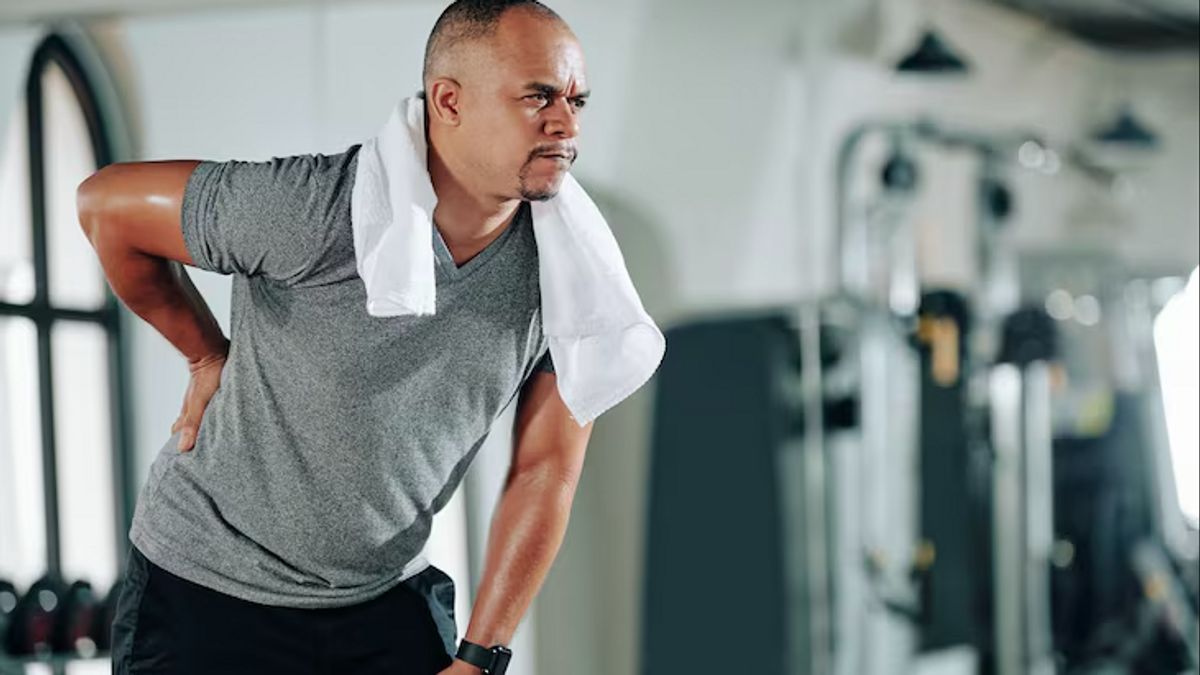


JAKARTA - Injuries or tension in the pelvic area often occur during exercise, especially when the exercise is performed with high intensity without proper technique.
This condition is often not realized from the beginning, even though it can affect the comfort of moving to the overall function of the body. Excessive pressure on the core and pelvic muscles can trigger pain to other disorders if not handled properly.
Personal trainer Toby King explains that too heavy muscle-toning exercises, including weight lifting, can put too much pressure on the pelvic floor muscles, especially in men.
"If these muscles are constantly tense or overloaded, then it can limit blood flow and suppress nerves that are important for healthy sexual function," he said.
He added, several types of exercises such as leg press, ab rolling, hanging leg raises, to plank can increase the tension on the core muscles. If done continuously without balance, this condition can make the pelvic floor muscles too active.
The impact is not only on the performance of training, but can also trigger disorders such as pelvic pain, discomfort, to certain body function problems.
In addition, activities such as cycling for a long time are also risky if the position or saddle arrangement is not right. Constant pressure on the area can affect the nerves and muscle tissue around the pelvis.
King also highlighted the importance of proper technique when exercising. According to him, the use of heavy weights without supporting posture and proper breathing patterns can actually exacerbate the pressure on the body.
"If your posture is wrong and your breathing is not right, then that pressure has to be channeled somewhere, and often ends up in the pelvic floor," he added.
He reminded that concerns about symptoms that appear can actually worsen the condition, because it increases muscle tension and creates an unhealthy cycle.
As a preventive measure, he suggests re-evaluating the exercise routine, especially if complaints start to appear. Exercises that involve too much of the groin, inner thighs, and hips should be reduced temporarily.
In addition, it is also important to train pelvic muscle relaxation through stretching and breathing techniques. Some simple movements such as Child's Pose and Happy Baby Pose can help reduce tension in the area.
If the complaints continue, consulting a physical therapist or professional is recommended to get the right treatment, especially related to mobility and hip flexibility exercises.
The English, Chinese, Japanese, Arabic, and French versions are automatically generated by the AI. So there may still be inaccuracies in translating, please always see Indonesian as our main language. (system supported by DigitalSiber.id)
Most Popular Tags
#Prabowo Subianto #donald trump #firearm #8791 #giias 2026Popular


