

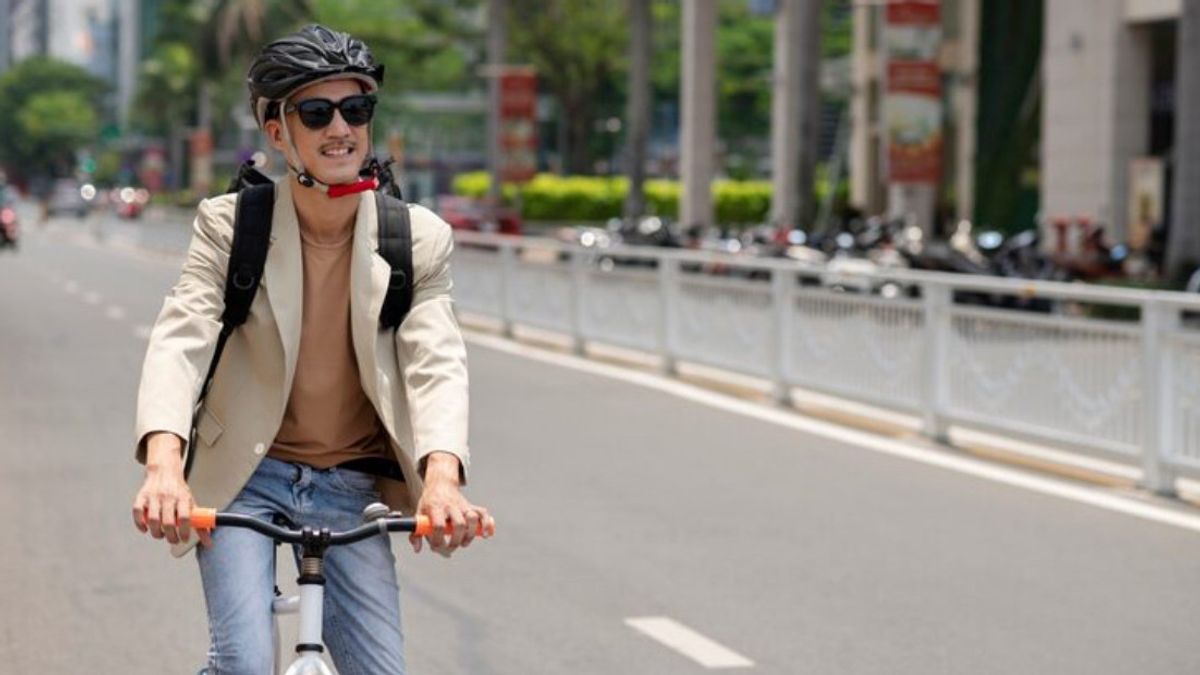


JAKARTA - Many people exercise by cycling to maintain fitness. Some of them join a cycling group to pedal with high resistance. However, there are cases of people feeling pressure around the prostate that appears throughout the day.
Even so, research and clinical experience show that cycling rarely damages the prostate or sexual life. Problems that arise are usually related to sitting position, saddle shape, and body adaptation, not the bike itself.
The prostate is located just below the bladder, above the perineal area (between the scrotum and the anus). Sitting for a long time or excessive pressure in this area can cause prostate pain, even though the prostate gland is healthy.
"Cycling presses the perineal area where important nerves and blood vessels are located. The burning, depressed, or bruised sensation is real, but it does not mean that the prostate or nerves are damaged," said Dr. Brian Steixner, a urologist at the Medical University of South Carolina, quoted from the CNN website on Saturday, January 3, 2026.
The narrow saddle of the saddle can put extra pressure. This sensation often makes men worry, even though it is actually only the surrounding tissue that is depressed, not the prostate itself. The pain usually comes from tight pelvic muscles, sensitive nerves, stress, or sitting for a long time, not an infection.
"Cycling can worsen these symptoms, especially for beginners or those who sit for a long time. But that doesn't mean the prostate is in trouble," said Dr. Steixner.
Many men are concerned that erections are disrupted after feeling pressure or numbness in the pelvic area. Early research had linked cycling to reduced blood flow to the penis. However, recent studies show that regular cycling does not increase the risk of long-term erectile dysfunction.
"Many cyclists report better sexual function because exercise improves heart and vascular health," said Dr. Steixner.
The sensation of numbness or tingling is usually temporary and disappears after the position changes or the pressure is reduced.
Erections depend on blood vessels, nerves, hormones, and psychological factors. Chronic diseases such as diabetes, high blood pressure, high cholesterol, and heart disease are much more common causes of erectile dysfunction than cycling. Testosterone affects arousal, but is rarely the main cause of erectile dysfunction.
The uncomfortable sensation usually arises due to several factors, such as the sitting position and the shape of the saddle seat, the posture while pedaling, and the pelvic muscles that are not accustomed to holding pressure for a long time. All three can make the pelvic area feel tense or depressed, especially for beginners or those who have just started a regular cycling routine.
Static bikes keep the body in one position for a long time, unlike outdoor bikes that move more. Beginners usually feel it more often.
How to Protect Pelvic Health
Here are some tips to make you comfortable when cycling.
1. Use a saddle with a central hole or a divided design
2. Adjust the height and slope of the saddle of the seat and the position of the handlebars
3. Stand up for a few minutes every 10-15 minutes
4. Wear foam-lined pants
5. Add mileage gradually
If symptoms persist, pelvic physical therapy can be very helpful. The goal is not to stop cycling, but to make it comfortable and safe.
Immediately see a doctor if you experience numbness or pain that lasts a long time, painful erections, or changes when urinating. Usually, these problems can be overcome with adjustments to the device, a short break, or simple therapy, so that they do not pose a long-term risk.
The English, Chinese, Japanese, Arabic, and French versions are automatically generated by the AI. So there may still be inaccuracies in translating, please always see Indonesian as our main language. (system supported by DigitalSiber.id)


