


JAKARTA - Eye health is an important aspect of the quality of human life, especially in the midst of an increase in the number of retinal diseases that can cause blindness.
Modern lifestyle, population aging, and increased prevalence of diabetes contribute to the risk of serious visual impairment due to aging (Age-related Macular Degeneration/AMD) and swelling in the retinal center (makula) due to complications of diabetes (Macula Diabetic - Diabetic Macular Edema/DME), to eye stroke.
In Indonesia, it is estimated that 5 to 6 million people experience visual problems, making this issue one of the priorities of public health.
In an effort to strengthen understanding and handling of retinal diseases, eye experts from within and outside the country gather within the Roche Retina Summit 2025. This scientific forum is a forum for exchanging knowledge and discussing the latest clinical findings that can help prolong patient vision and reduce the burden of therapy.
"Through the latest discussion facilities around Faricimab data, we not only share leading scientific innovations, but also emphasize our commitment to transforming retinal care standards. We are dedicated to providing solutions that are not only effective, but also really ease the burden on patients and strengthen the health service system," explained Sanaa Sayagh, President Director of Roche Indonesia in a statement to VOI.
SEE ALSO:
-
 | INFO SEHAT
Jangan Anggap Sepele, Ini Penyebab Mata Terasa Pegal dan Cara Mengatasinya
10 Oktober 2025, 08:55 -
 | INFO SEHAT
Bisakah Mengobati Mata dengan Kembang Telang? Yuk Cari Tahu Jawabannya di Sini
07 Oktober 2025, 07:55


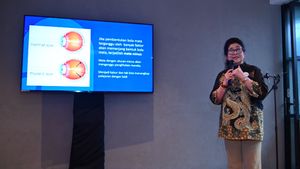
This year, the event highlighted a number of important achievements in the retinal field, including approval of Faricimab's new indications for Retinal Vein Occlusion (RVO) under conditions often referred to as eyestrokes' and being one of the most common causes of blindness in Asia.
Eye stroke is a popular term for Retinal Vein Occlusion (RVO), which is a condition when a venous blood vessel in the retina is clogged, similar to a stroke in the brain. As a result of this blockage, the flow of blood and oxygen to the retinal tissue is disrupted, causing swelling, bleeding, and decreased vision that can occur suddenly.
The main causes are often associated with high blood pressure, diabetes, high cholesterol, and blood clotting disorders. If not treated immediately, RVO can cause permanent damage to the retina and even blindness.
Handling usually includes injection of drugs into the eyes to reduce swelling and prevent further damage, as well as control comorbidities such as hypertension and diabetes.
In addition, clinical data updates to Vasculopatihy (PCV), nAMD, and DME Choleoidal Polypoidal showed positive results in maintaining patient vision with a less frequent treatment frequency.
In one of the sessions, Dr. dr. Elvioza, SpM(K), Head of Vitreo-Retina Service and Chief Medical Director at JEC Eye Hospitals & Clinics, presented the results of a SALWEEN study published at the EURETINA Retina Congress in Paris in September 2025.
"Study SALWEEN in Asia provides strong evidence in handling PCVs, namely polyp bumps in blood vessels around the retina. With this latest data, it is hoped that patients will get improved vision with a lighter treatment burden because they are less frequent to the hospital," said dr. Elvioza.
In this Salween Study, Faricimab can eliminate 61 percent polyp (polyp regression) and about 83 percent of injection intervals can be extended for three months or more.
In addition to the results of the study, the discussion also highlighted the importance of cross-sectoral collaboration to strengthen the retinal service ecosystem in Indonesia. retinal diseases such as AMD and DME are still the main causes of blindness in the world, with great social and economic impacts.
The Indonesian government is targeting a 25 percent decrease in vision problems due to diabetic retinopathy by 2030, which can only be achieved through the cooperation of various parties, ranging from medical personnel, the health industry, to policy makers.
Recent global findings also suggest the therapy was able to extend the treatment interval to four months in most patients, giving new hope in the management of chronic retinal diseases.
From an international perspective, Dr. Yuen Yew Sen, a Retina Surgeon Specialist from the University of Uveitis Singapore, highlighted the importance of quick handling of cases of eye stroke.
"Early treatment is very important for eye stroke blockage. Delaying treatment can result in permanent vision damage, or a sharp improvement in vision that is not optimal even though the swelling eventually heals," said Dr. Yuen.
This event was closed with an invitation to strengthen long-term collaboration in research, education, and access to innovative therapies in the field of ontalmology. Acceleration of progress in the field of retinal health can only be achieved through collaboration of stakeholders.
"We support collaboration to build a strong retinal health service ecosystem in this country, so that together we can reduce the burden of loss of sight due to retinal disease," said dr. Referano Agustiawan, SpM(K), General Chairperson of INAVRS.
The English, Chinese, Japanese, Arabic, and French versions are automatically generated by the AI. So there may still be inaccuracies in translating, please always see Indonesian as our main language. (system supported by DigitalSiber.id)


