
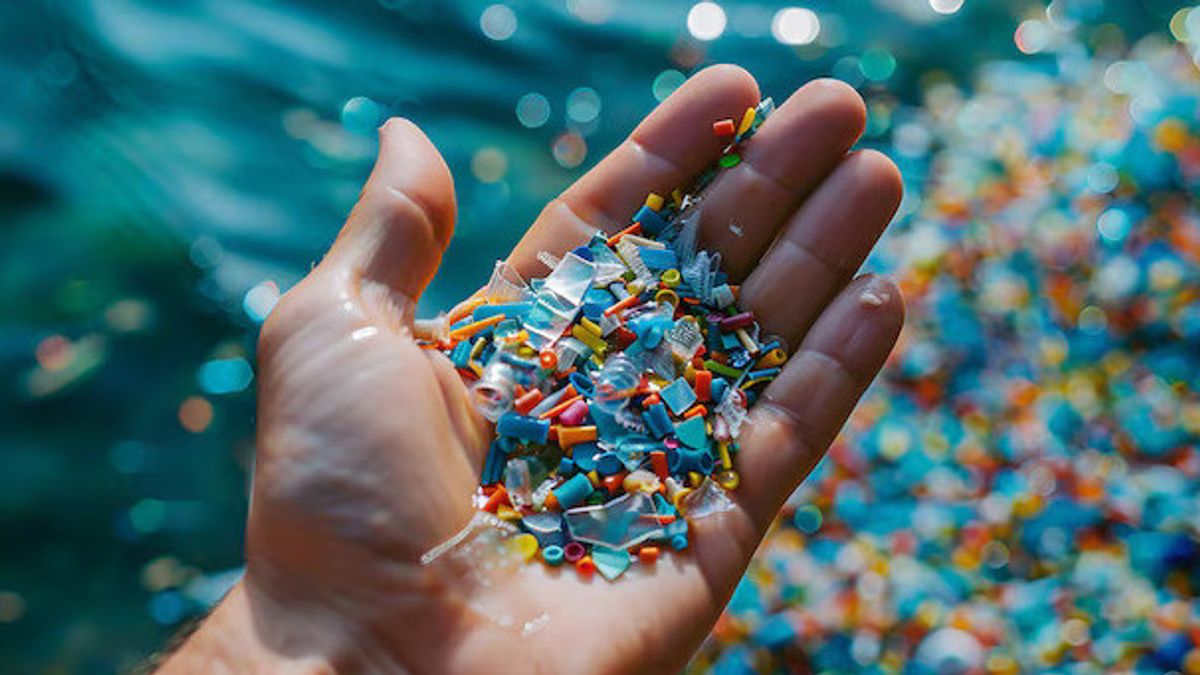


JAKARTA - Microplastics are now found in almost all aspects of life. These tiny particles are in the air that is inhaled, in the sea and river, into the bodies of marine and plant animals. Even more surprising, microplastics also exist in the human body, ranging from blood, brain, to reproductive organs.
One of the main routes for the entry of microplastics into the body turns out to be through everyday drinks. If previously research has proven that microplastics are in tap water and packaged water, recent research shows that hot drinks actually contain microplastics in a larger amount than expected.
Research conducted by a team from the University of Birmingham tested 155 popular drinks, both hot and cold, to find out how much microplastic exposure was received through daily consumption. As a result, hot tea and hot coffee became the highest concentrations of microplastic beverages.
"Our findings strongly suggest that the material from disposable glasses is the main source of microplastics in hot coffee samples," the research team said in its report, quoted from the page of The Independent.
Research data shows:
- Hot tea: 4981 microplastics (MPs) per liter
- Hot coffee: 29,57 MPs per liter
- Cold Tea: 2438 MPs per liter
- Cold coffee: 3143 MPs per liter
- Jus buah: 1941 MPs per liter
- Energy drink: 1436 MPs per liter
- Soded drinks: 1321 MPs per liter
The heat tea in disposable glasses is recorded to be the highest in microplastic content, an average of 22 particles per cup. In fact, expensive branded tea bags actually release more plastic, which is 24 to 30 particles per cup.
Previously, research from the same team in 2024 found microplastics in tap water (2456 MPs per liter) not much different from bottled water (2648 MPs per liter). However, this latest study proves that focusing solely on drinking water can be misleading.
SEE ALSO:
-
 | LIFESTYLE
Hindari Kandungan Mikroplastik, Ini Bahan Pakaian yang Aman di Tubuh dan Lingkungan
19 Agustus 2025, 19:25 -
 | LIFESTYLE
Penelitian Ungkap Manusia Hirup 70 Ribu Partikel Mikroplastik Setiap Hari
01 Agustus 2025, 19:55

"We found microplastic presence in all drinks, both cold and hot. This is quite worrying. From a scientific point of view, we can't just see water, but we have to expand research because other sources are also very significant," said Professor Mohamed Abdallah, co-author of research.
"We consume millions of tea and coffee every morning. Governments and international organizations should take legislative steps to limit human exposure to microplastics, as they are everywhere." he continued.
The research writers emphasized that this research is an important step to understand the extent to which humans are exposed to microplastics in real daily conditions. They also call for the need for more comprehensive research so that risk assessment can be more accurate, as well as the basis for environmental intervention and public health.
The English, Chinese, Japanese, Arabic, and French versions are automatically generated by the AI. So there may still be inaccuracies in translating, please always see Indonesian as our main language. (system supported by DigitalSiber.id)


