



JAKARTA - Maintaining the right sleeping position plays a major role in spinal health. Not only does it affect comfort when waking up, the sleeping position also contributes to preventing various spinal disorders, such as chronic back pain and discus hernation.
According to Dr. Vignesh Jayabalan, senior spinal surgery consultant at SIMS Hospital, Chennai, there is a close relationship between a person's sleeping posture and sleep quality.
"How important sleeping position is, not only affects how you feel when you wake up, but also in slowing down the development of certain spinal conditions such as discus hernation, spinal cordization, and chronic lower back pain," he explained, quoted from the Hindustan Times.
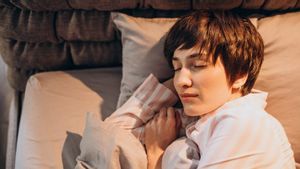
One of the recommended sleeping positions is supine. In this position, the body is in a neutral and weight condition spread evenly, so that the pressure on the back is reduced. You can put the pillow below your knee to reduce the pressure put on the lower back," suggested Dr. Jayabalan.
Lutut yang sedikit dipukuk dalam posisi ini menciptakan lebih banyak ruang di antara tulang yang memungkinkan peningkatan aliran darah dan pemulihan alam.
Sleeping sideways is also another healthy option, especially with a fetal posture without bowing too much. This position helps maintain spinal alignment and is effective for people with sleep apnea or lower back pain.
However, not all sleeping positions are good for the spine. Sleeping on your stomach is one of the least recommended. This position causes an unnatural neck rotation and suppresses the lower back arch.
Most of the people who come to the spinal cord surgeons with stiffness on their necks do not realize their long-term habit of sleeping face down, said Dr. Jayabalan.
SEE ALSO:
-
 | LIFESTYLE
Mana Posisi Tidur yang Baik untuk Kesehatan, Telentang atau Miring?
29 Januari 2025, 11:20 -
 | INFO SEHAT
Bagaimana Posisi Tidur Paling Tepat? Begini yang Baik Sesuai Kondisi Kesehatan Anda
03 Desember 2021, 00:25 -
| INFO SEHAT
Bagaimana Posisi Tidur Paling Tepat? Begini yang Baik Sesuai Kondisi Kesehatan Anda
03 Desember 2021, 00:25

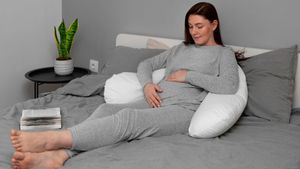
Likewise with the position of the fetus which is too convex. According to him, this posture can limit deep breathing and cause stiffness in the knees and hips.
Meanwhile, sleeping positions such as sea star lying with hands on the head or under the pillow have the potential to cause discomfort in the shoulders and upper back due to pressure on nerves and blood vessels.
Dr. Jayabalan also emphasized that the selection of pillows and mattresses plays an important role in maintaining spinal health.
Pillows that are too high or very low can affect the alignment of neck positions that may be at risk of experiencing muscle tension.
Making adjustments to the sleeping position as early as possible can significantly prevent future operating risks and can undoubtedly improve quality of life.
In line with that, Dr. Karunakaran, senior consultant at the backbone surgery department of MGM Healthcare Chennai, explained the benefits of using additional pillows.
Tensions in the waist can be reduced by placing a small pillow below the knee, as it helps increase optimal pelvic alignment.
He also suggested sleeping side by side with a fetal position accompanied by pillows between the knees to keep the spine straight.
"This is very useful for those who experience stenosis of the spine or discus herniation because it widens the intervertebral space," he said.
Furthermore, he emphasized that sleeping on the stomach was not recommended at all. In this position, there is a fairly large dolphin hyperextension and a cervical rotation that causes an increased risk of lower back pain and worsens existing conditions such as spondyllalysis.
Finally, he suggested choosing ergonomic pillows and mattresses with moderate violence as an additional solution. With a combination of the right sleeping position and supportive sleeping equipment, spinal health can be optimally maintained throughout the night.
The English, Chinese, Japanese, Arabic, and French versions are automatically generated by the AI. So there may still be inaccuracies in translating, please always see Indonesian as our main language. (system supported by DigitalSiber.id)
Most Popular Tags
#Prabowo Subianto #donald trump #Febrie Adriansyah #8791 #giias 2026Popular


