
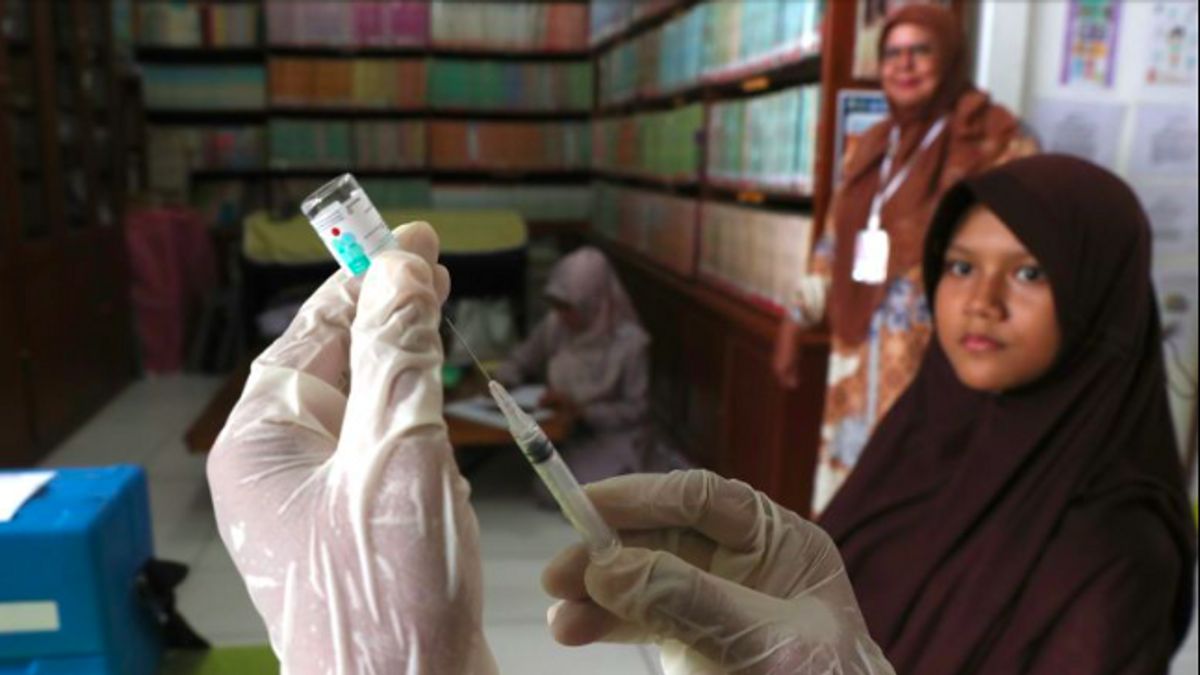


JAKARTA - Many people think cervical cancer is the final verdict, when in reality this disease can be prevented and even cured, especially if detected from the early stages. The main key is awareness of the importance of vaccination and routine checks that can save lives.
Director of Prevention and Control of Infectious Diseases from the Ministry of Health, dr. Siti Nadia Tarmizi, explained that cervix cancer is one of the most medically intervening types of cancer. In a press conference held in Jakarta, she stated that the government had implemented two main strategies: HPV vaccination and periodic servical screening.
"If found earlier, the cure rate is much higher," explained Nadia. Human Papillomavirus (HPV) vaccination works as the main protection against viruses that cause cervical cancer, while early detection through examination can prevent abnormal cells from developing into cancer.
Data from the Ministry of Health shows that cervical cancer occupies the second position as the most common cancer in women in Indonesia. Every year, more than 36,000 new cases are recorded, but ironically, about 70 percent have only been diagnosed when they enter advanced stages, which of course reduces the chances of recovering significantly.
SEE ALSO:
-
 | INFO SEHAT
Skrining HPV, Langkah Awal Menuju Hidup Sehat Bebas Kanker Serviks
24 April 2025, 20:25 -
 | INFO SEHAT
Deteksi Dini HPV Ampuh Lindungi Kesehatan Perempuan dan Tumbuh Kembang Anak
23 April 2025, 10:55


As a concrete step, the government launched the National Action Plan for Cervical Cancer Elimination. This program includes HPV vaccination for girls and boys aged 15, as well as HPV DNA screening for women aged around 39.
Medical treatment for patients who have had invasive cervical cancer is also increased according to national health service standards.
Prof. Dr. dr. Aryati, MS, Sp.PK(K), Chairman of the Association of Indonesian Clinical Pathology Specialists, emphasized the importance of early detection and intervention. If cancer is known earlier and handled quickly, the chances of survival can reach the next two decades, he said.
Meanwhile, Jhypiego Indonesia, through collaboration with the Ministry of Health, Roche, and Biofarma, runs a pilot program for cervical cancer screening in several areas in East Java. This program targets around 5,500 women in the Surabaya area and 1,300 women in the Sidoarjo area.
This effort is part of a systematic step towards eliminating cervical cancer in Indonesia, as well as emphasizing that this disease is not the end, as long as there are preventive, early detection, and proper treatment efforts.
The English, Chinese, Japanese, Arabic, and French versions are automatically generated by the AI. So there may still be inaccuracies in translating, please always see Indonesian as our main language. (system supported by DigitalSiber.id)


