
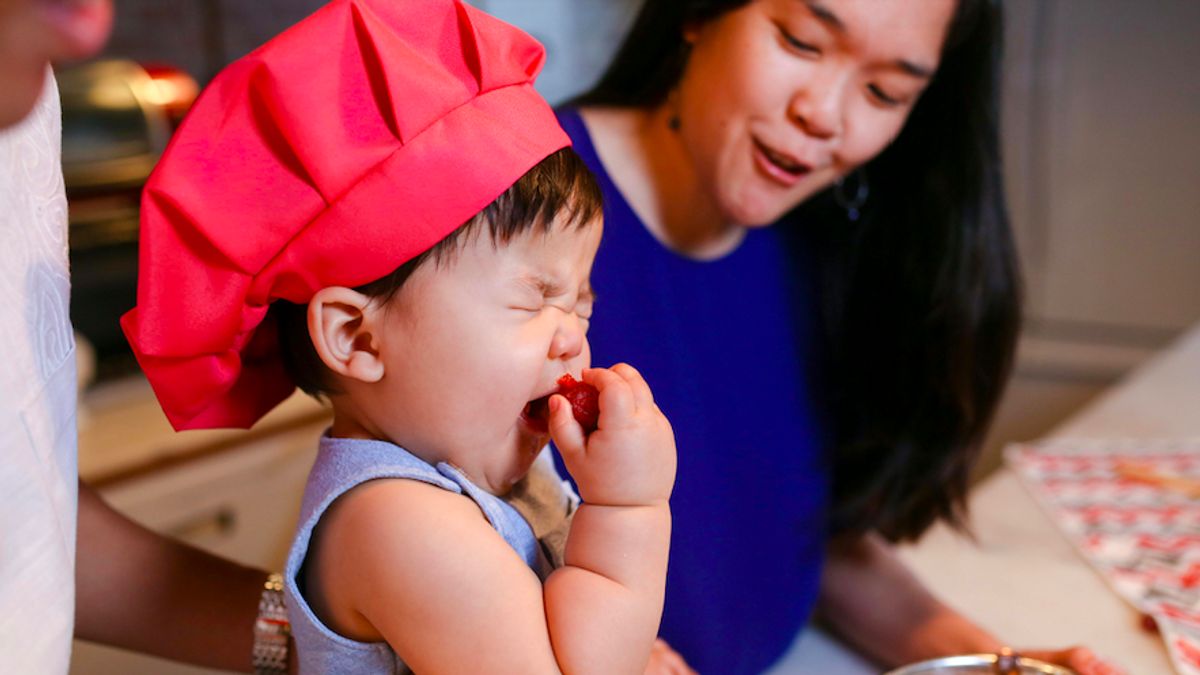


JAKARTA - Providing proper breast milk Assistance Food (MPASI) during the First 1000 Days of Life (HPK) is a crucial step to prevent malnutrition and support children's optimal growth.
The Indonesian Pediatrician Association (IDAI) emphasizes the importance of parents' role in ensuring that their children's nutrition is fulfilled in this early phase of life.
According to Dr. Meta Herdiana Haninduta, SpA(K), a member of the IDAI Nutrition and Metabolic Disease Coordination Work Unit (UKK), giving MPASI must be done properly, from the right time to the nutritional content.
The MPASI provided must meet the needs of children's macronutrients and micronutrients, which include carbohydrates, proteins, fats, vitamins, and minerals. This aims to prevent nutritional imbalance in the child's body, both in the form of deficiencies and malnutrition.
"In principle, to prevent malnutrition in 1000 HPK, you can give exclusive asyma and continue the MPASI given on time, strengthen (all adequate nutrition), be safe, hygienic, and be given in the right or responsive way," said the Meta doctor as quoted by ANTARA.
Malnutrition, according to Dr. Meta, not only refers to nutritional deficiencies such as wasteing, stunting, or malnutrition, but also includes malnutrition such as obesity. In addition, there are also conditions called "hidden hunter," namely micronutrient deficiency such as lack of iron, zinc, or vitamin A whose symptoms are often not seen directly.
The provision of strong MPASI is a solution to prevent malnutrition. Dr. Meta explains that quality MPASI must contain carbohydrates as a source of energy, protein that ideally comes from animal protein, and fat to support child's brain growth.
In addition, micronutrients such as vitamins and minerals are very important for the body's metabolism and maintaining the child's resistance to disease.
SEE ALSO:
-
 | INFO SEHAT
Bukan Pusing Biasa, Kenali Ciri-Ciri Penyakit Vertigo dan Penyebabnya
07 Februari 2024, 15:42 -
 | INFO SEHAT
IBI Dorong Peningkatan Peran Bidan untuk Identifikasi Kasus Anemia Ibu dan Anak
26 November 2024, 20:55 -
 | INFO SEHAT
Hati Ayam Direkomendasikan Jadi Menu Bergizi untuk Atasi Anemia
26 November 2024, 07:25 -
 | BERNAS
Mari Kenali Anemia Aplastik, Penyakit Langka yang Diderita Babe Cabiita
12 April 2024, 16:30
Nutrition balance in MPASI must be accompanied by routine monitoring of child growth. This evaluation involves measuring weight, length, and height using standardized tools, which are then compared to the growth curve of WHO.
If there are signs such as stagnation in weight or height that is not age-appropriate, parents are advised to immediately consult with medical personnel to get the right treatment.
Dr. Meta also emphasizes the importance of parents understanding the nutritional needs of children according to their development stages. MPASI is not only providing additional food, but also an important foundation to ensure physical growth, cognitive development, and long-term health of children.
Providing correct MPASI at 1000 HPK is a big investment for the future of children. By prioritizing the fulfillment of appropriate nutrition and regular monitoring of growth, the risk of malnutrition can be minimized, and children can grow optimally.
The English, Chinese, Japanese, Arabic, and French versions are automatically generated by the AI. So there may still be inaccuracies in translating, please always see Indonesian as our main language. (system supported by DigitalSiber.id)


