

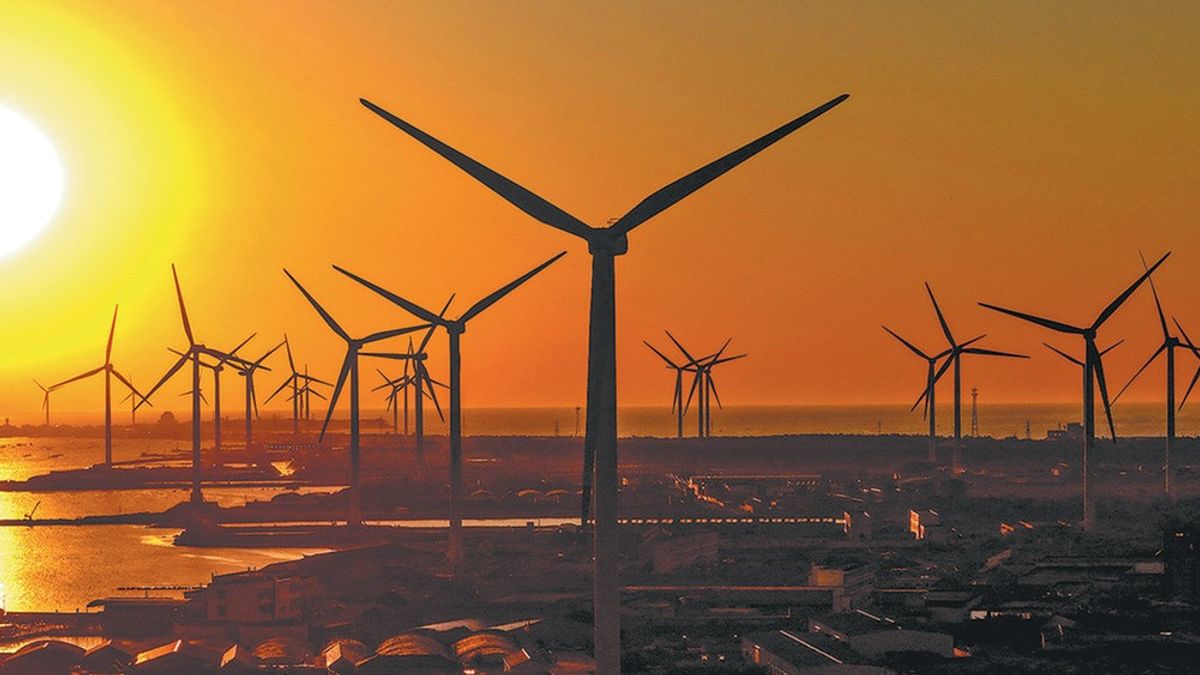


JAKARTA - China is flooded with green electricity. Solar and wind power capacity is soaring rapidly. The problem is, clean electricity is not enough just to be built. It also has to be able to be absorbed by the network.
Citing a report by China Daily, Thursday, May 28, industry experts encouraged China to use a more targeted energy consumption strategy. This is because the challenge of using new energy will be more difficult in the 15th Five-Year Plan period, namely 2026-2030.
Gan Mengying, a researcher at the State Grid Energy Research Institute, said China's new energy consumption and utilization requires different measures in each region.
"Different and targeted steps are needed to encourage consumption," said Gan.
According to Gan, the electricity system must be made more flexible. Not only the plant, but also the network, load, and energy storage.
This is important because electricity from solar and wind power is not always stable. The sun does not shine all day. The wind also does not always blow. Therefore, the electricity grid must be ready to absorb large supplies that come up and down.
China's National Energy Administration or NEA said new solar and wind power capacity in China exceeded 430 million kilowatts in 2025. The figure rose 22 percent from the previous year and set a record.
The surge brings the total capacity of wind and solar power connected to the grid to 1.84 billion kilowatts. The share is equivalent to 47.3 percent of China's total installed power capacity.
For the first time, wind and solar capacity surpassed thermal power plants, including fossil-fuel plants.
However, this record comes with a big homework. According to a report from the State Grid Energy Research Institute, the rapid addition of clean energy is beginning to raise issues of network stability in various regions.
The old uniform approach for all regions is no longer suitable. Each province has different conditions: some are rich in wind and sun, some are densely industrial, and some need large electricity but do not have enough clean plants.
According to China Daily, the report suggested that the role of coal plants began to shift. Coal is no longer just the backbone of the base load, but more serves as a reserve that responds quickly to system needs.
Water power also needs to increase its role. Not only supplying electricity, but also helping to regulate supply during peak loads and maintaining system stability.
Nuclear power is directed to continue to ensure basic supplies, while being used more widely in the energy system.
Regional differences are key. In a number of eastern provinces with high electricity needs, renewable energy restrictions only occur at certain times, such as holidays or midday. These types of areas need to optimize existing plants.
The situation is different in the western region. There, renewable energy supplies are huge. In order for green electricity not to be wasted, large investments are needed in pumped hydroelectric power plants, electrochemical energy storage, and interprovincial transmission lines.
The pumped hydroelectric power plant works like a "giant battery". When there is excess electricity, water is pumped to a higher place. When electricity is needed, water is drained down to turn the turbine.
China is preparing a jumbo investment of 5 trillion yuan, or about 722 billion US dollars, for the electricity grid in the next five years. This fund is aimed at breaking down barriers to renewable energy and helping China pursue its peak carbon emissions target by 2030.
China has been racing to build green plants. Now the next test is to ensure that the electricity actually enters the network, is used, and is not wasted.
The English, Chinese, Japanese, Arabic, and French versions are automatically generated by the AI. So there may still be inaccuracies in translating, please always see Indonesian as our main language. (system supported by DigitalSiber.id)
Most Popular Tags
#Prabowo Subianto #donald trump #Febrie Adriansyah #8791 #giias 2026Popular


