

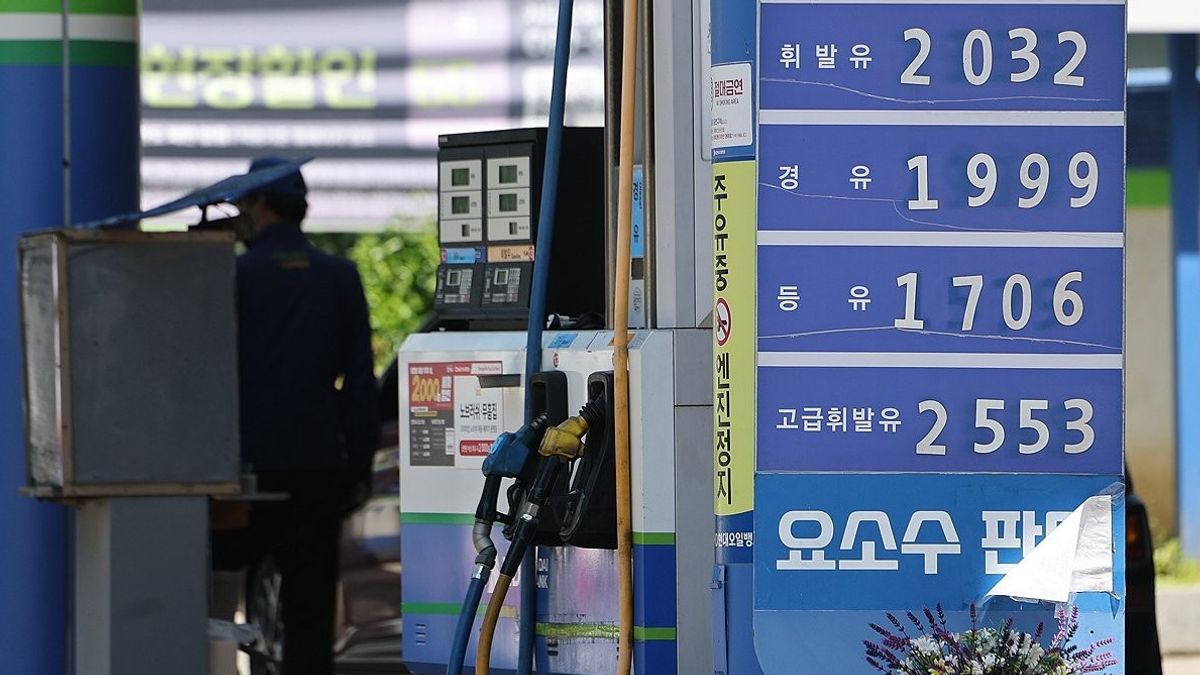


JAKARTA - High oil prices have led the Bank of Korea (BOK) to predict that South Korea's inflation will rise again in May. The pressure comes from oil turmoil amid Middle East tensions and the basic effect of sharply falling prices for agricultural, livestock and fishery products last year.
Yonhap reported on Wednesday, May 6, that the Senior Deputy Governor of the Bank of Korea, Yoo Sang-dai, said that oil prices were still the main source of pressure for inflation this month.
"With high oil prices, inflation in May is expected to rise further," Yoo said at an inflation monitoring meeting on Wednesday, May 6.
Government data showed South Korea's consumer prices rose 2.6 percent in April compared with the same period a year earlier. This is the fastest pace since July 2024.
One of the main triggers is petroleum products. Prices jumped 21.9 percent year-on-year, close to the highest rise in four years.
The price of solar increased by 30.8 percent. Gasoline increased by 21.1 percent. Both recorded the largest increase since July 2022.
Yoo said food prices have recently been relatively stable. The government is also implementing price stabilization measures to mitigate the impact of oil spikes.
However, the BOK remains vigilant. The central bank is still monitoring developments in the Middle East, the direction of oil prices, and their impact on non-oil goods.
Global oil prices have soared after the Strait of Hormuz was effectively closed since the US-Israeli attack on Iran in late February. The closure disrupted world oil supplies. South Korea is heavily reliant on imports to meet its energy needs.
The English, Chinese, Japanese, Arabic, and French versions are automatically generated by the AI. So there may still be inaccuracies in translating, please always see Indonesian as our main language. (system supported by DigitalSiber.id)


