

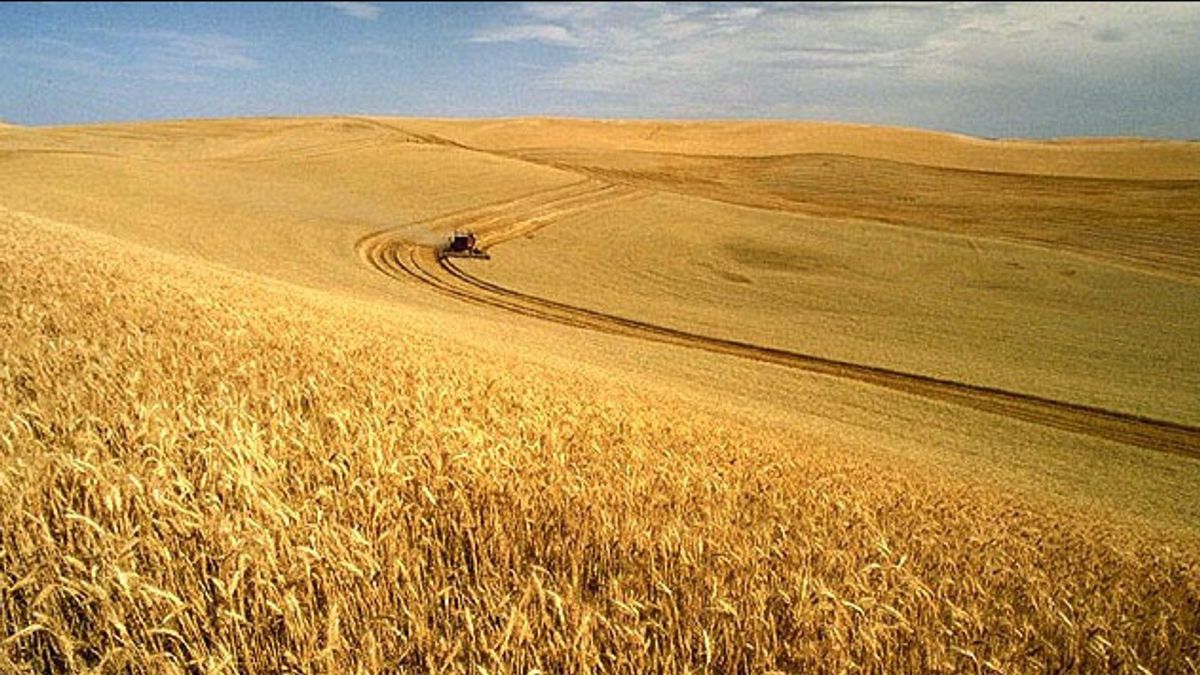


JAKARTA - Soybean farmers in the Midwest, United States, are facing a difficult growing season. Citing a Kyodo News report, Wednesday, April 15, soybean prices have not recovered, but fertilizer, solar, seed, agricultural tools, and land rental costs continue to rise amid the impact of the trade war with China and the Iran war which disrupted global energy and fertilizer supplies.
The pressure was felt directly by Doug Bartek, a fifth-generation farmer in Nebraska. On his 2,000-acre land or about 809 hectares, Bartek faces production costs that continue to swell ahead of the planting season. "Our biggest difficulty is the cost of inputs, from fertilizer, seeds, chemicals, to spare parts. The price increase is very drastic," said Bartek, Chairman of the Nebraska Soybean Association.
Bartek's complaint represents many soybean farmers in the Midwest. Soybean prices continue to be depressed as global supplies abound, especially from Brazil, which has surpassed the US as the world's largest soybean producer. At the same time, production costs continue to rise, from seeds and pesticides to land leases.
Still according to the Kyodo News report, the pressure is getting heavier after President Donald Trump in April 2025 imposed large tariffs that triggered a trade war with China, the main buyer of US soybeans. China retaliated with tariffs and practically closed the market for American soybeans. As a result, farmers lost an important export market and soybean prices fell deeper.
The US and China then reached an agreement. Beijing bought US soybeans again, and the federal government disbursed temporary assistance worth 12 billion US dollars. However, the impact has already been felt. According to the American Soybean Association, farmers are still losing nearly 75 US dollars per acre in the 2025 harvest. US soybean exports are also still around 15 percent to 20 percent below normal conditions.
The problems did not stop there. The US and Israeli attacks on Iran on February 28 slowed down shipping in the Strait of Hormuz. The impact quickly spread to oil and fertilizer prices. Urea, a nitrogen fertilizer widely used for corn, jumped sharply. This is an additional blow because most soybean farmers in the US also grow corn.
The ceasefire had given hope, but shipping traffic has not fully recovered and fertilizer prices remain high. Farmers who did not have time to buy fertilizer early must now face increasingly expensive planting costs. "Many producers are quite uneasy entering this year. It looks like we're going to face another year with negative results," said Justin Sherlock, a soybean farmer and president of the North Dakota Soybean Growers Association.
The impact is beginning to be seen in the financial condition of farmers. Agricultural bankruptcies in the US rose in 2025, although they are still at a relatively low level. A survey of 400 farmers by Purdue University at the end of March also showed that almost half of the respondents admitted that their business conditions were worse than a year ago.
For many farmers, the problem now is not just the harvest. Low selling prices, rising costs, and global political turmoil add to the burden in the field. After 43 years of farming, Bartek even began to wonder if he had made the right decision when helping his son enter the agricultural world.
The English, Chinese, Japanese, Arabic, and French versions are automatically generated by the AI. So there may still be inaccuracies in translating, please always see Indonesian as our main language. (system supported by DigitalSiber.id)
Popular


