

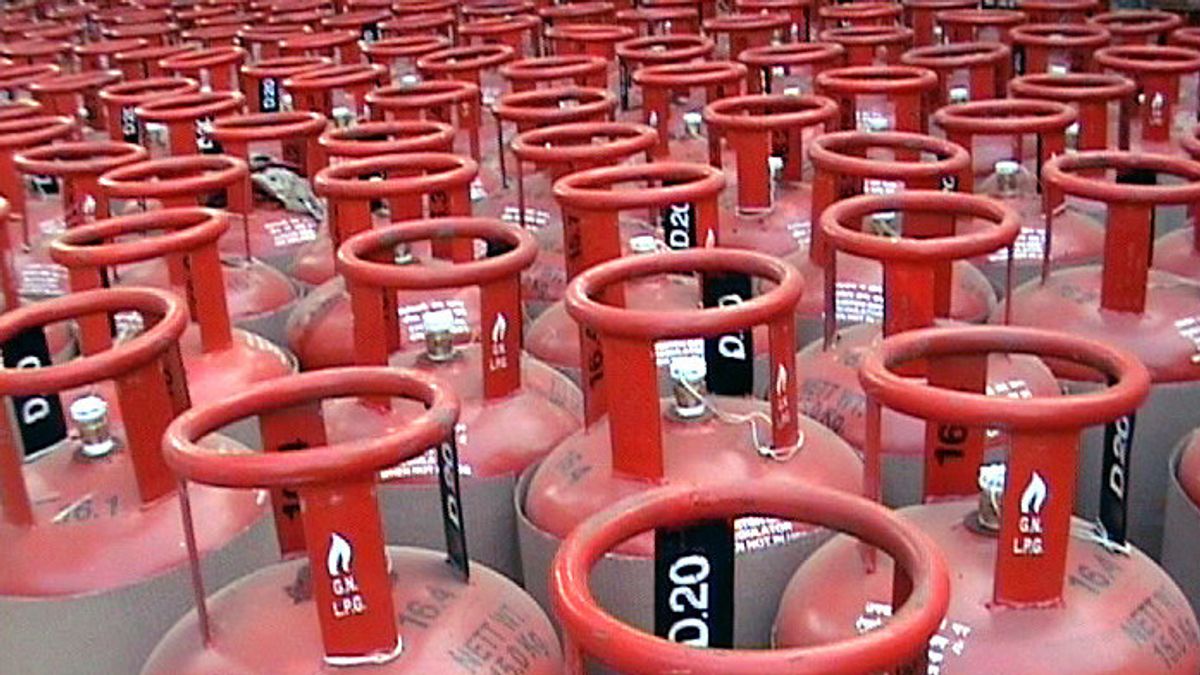


JAKARTA - The price of gas for cooking in Singapore has started to rise along with the surge in fuel costs due to the conflict in the Middle East. The increase has not stopped. However, the burden for some people's food centers or hawker centers is still held back so that traders are not hit.
The Straits Times, quoted Wednesday, April 1, reported that households in Singapore use two types of gas, namely city gas through pipes and LPG in cylinders. Both are now pushed up, but with different price mechanisms.
For LPG, Union Gas and Esso LPG are now setting prices at 37 Singapore dollars and 38 Singapore dollars for 12.7 kilogram cylinders commonly used by households. Union Gas Chief Executive Officer, Teo Hark Piang, said the current price increase was mainly driven by higher transportation costs.
According to Teo, further increases are still possible, although for the time being the impact is considered to be contained because one standard tube is usually enough for household needs for about a month. However, he warned, the increase could be "very significant" if the war continues.
In the midst of the increase, Union Gas chose not to change the price for the hawker center they serve. The company absorbed the cost increase to support traders. A small adjustment will be imposed on private coffee shops and food courts that are considered to have stronger margins.
Union Gas currently serves around 50 to 60 government-owned hawker centres in Singapore and has not raised prices for that segment for the past 10 years. "If hawker centres raise prices, consumers have few cheaper options," Teo told The Straits Times. He added that eating at hawker centres is often cheaper than cooking for a small family.
The Straits Times reported that the increase will also be felt by city gas users. City Energy on March 31 said the city gas tariff rose 0.24 Singapore cents per kWh to 21.92 Singapore cents per kWh before GST for the period April 1 to June 30.
However, this figure only reflects part of the impact of the conflict. The April-June tariffs are calculated from the average fuel price from January 1 to March 15, while the Middle East conflict broke out on February 28. This means that the city's gas tariff in the next quarter still has the potential to rise again when the full impact of fuel prices begins to enter the calculation.
The English, Chinese, Japanese, Arabic, and French versions are automatically generated by the AI. So there may still be inaccuracies in translating, please always see Indonesian as our main language. (system supported by DigitalSiber.id)
Popular


