

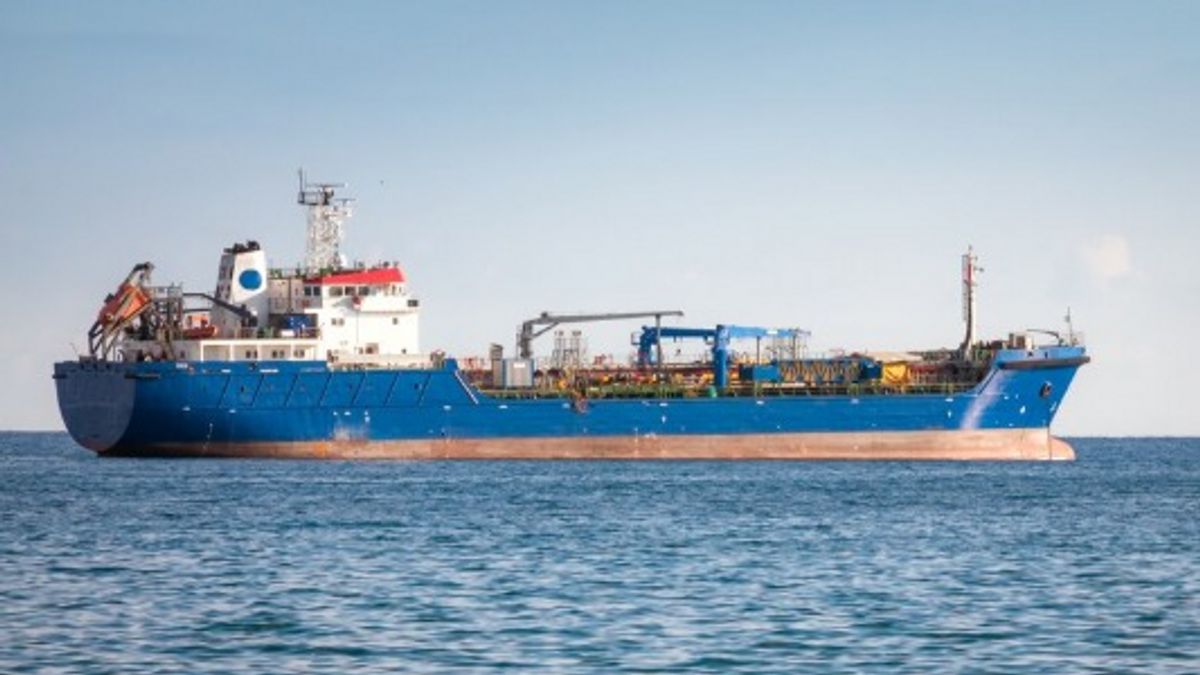


JAKARTA - Oil prices fell on Friday after US President Donald Trump said Iran had allowed 10 oil tankers to pass through the Strait of Hormuz this week as a "gift" to the US. A CNBC report on Friday, March 27, said the statement signaled a easing of tensions, albeit temporary, in one of the world's most vital energy shipping routes.
The benchmark Brent crude fell 1.92 percent to 105.94 dollars per barrel. Meanwhile, U.S. West Texas Intermediate (WTI) crude weakened 1.76 percent to 92.82 dollars per barrel.
In a cabinet meeting on Thursday, Trump called the move a gesture of goodwill from Tehran amid a diplomatic track that, according to him, is still underway. He said Iran was originally going to pass eight oil tankers, then the number increased.
"They then apologized for something they said, then said, 'We'll send two more ships.' And it ended up being 10 ships," Trump said, as quoted by CNBC.
According to a CNBC report, the statement also explained Trump's remarks earlier this week that Iran had given "gifts" related to oil and gas, although at that time he had not revealed the details.
Markets are closely monitoring developments in the Strait of Hormuz to see signs of disruption or escalation. Tensions between Washington and Tehran continue to trigger energy price volatility. The Strait of Hormuz itself is an important route for the world's crude oil flows.
Trump's remarks indicate that at least some oil shipments are still moving through the route. CNBC said that this condition has the potential to ease market concerns about supply in the short term.
Even so, analysts remind the oil market in general remains fragile even though shipments are back on track. The head of oil analyst Rystad Energy, Paola Rodriguez-Masiu, quoted by CNBC said the oil market did not underestimate the disruption in the Strait of Hormuz, but so far it has still been able to absorb the impact.
He said that for almost four weeks the market has survived because it is supported by the surplus before the war, crude oil still at sea, as well as policy reserves that serve as temporary support and hold prices. However, that phase is considered to be coming to an end.
According to Rystad's estimates, the global supply system has shifted from a condition that still has a cushion to a fragile one after weeks of supply losses and inventory shrinkage. Almost 17.8 million barrels of oil and fuel per day that normally flow through the Strait of Hormuz are said to have been disrupted. The total loss of energy fluids so far is estimated to be close to 500 million barrels.
The English, Chinese, Japanese, Arabic, and French versions are automatically generated by the AI. So there may still be inaccuracies in translating, please always see Indonesian as our main language. (system supported by DigitalSiber.id)


