

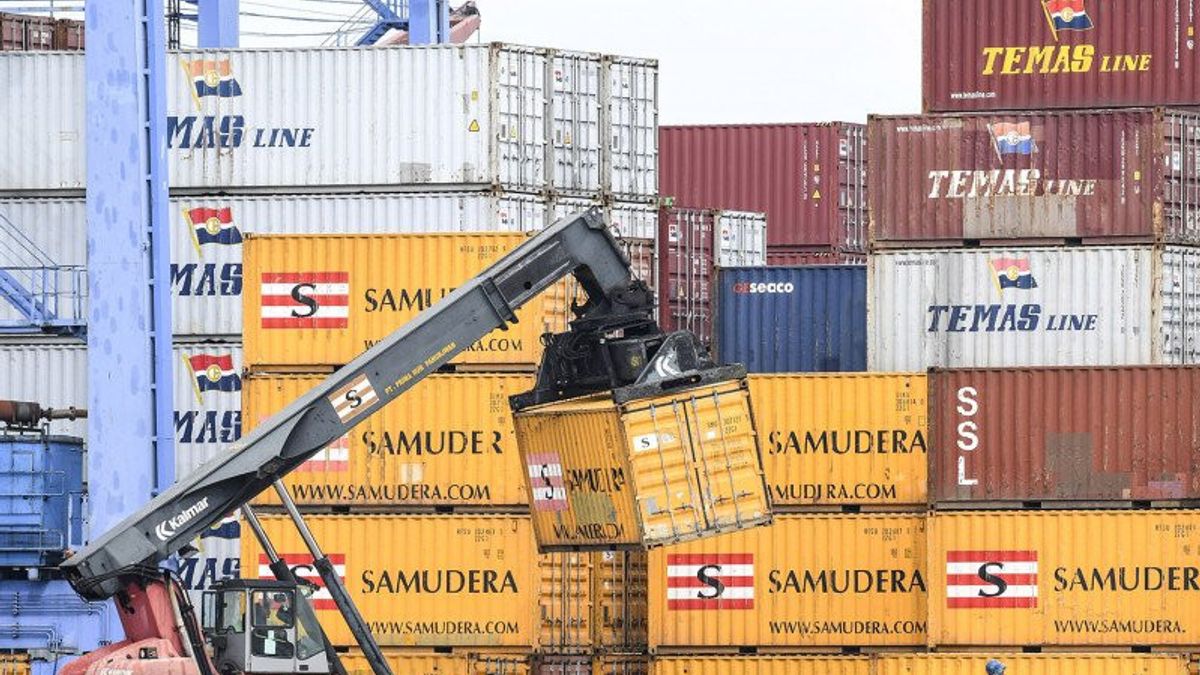


JAKARTA The uncertainty over tariffs and geopolitical dynamics has made the ASEAN region increasingly the main target of Indonesian corporate trading activities.
This is reflected in the HSBC Global Trade Pulse survey, which shows that 92 percent of Indonesian business actors are optimistic and plan to expand internationally in the next two years.
Regional Head of Global Trade Solutions Asia HSBC Aditya Gahlaut explained that 58 percent of Indonesian companies place ASEAN as a priority for business development, while 54 percent are expanding the supply chain network in the region.
The survey also revealed that Indonesia has the potential to benefit from current global conditions, with 69 percent of companies believing that the trade war will have a positive impact in the next two years higher than the global average of 57 percent.
He explained that the findings were in line with the trend in Asia, where the company began to show an adaptation and stabilization process more than six months after the implementation of the Liberation Day tariffs.
According to him, one of the important results of the HSBC survey is the reduced anxiety in the business world over the influence of the trade war on income, as well as the formation of new trade patterns.
"Along with the easing of tariff uncertainty, Asian companies estimate the impact of supply chain disruptions on revenue will decrease compared to six months ago," he said in his official statement, Monday, December 9.
He added that Asian companies projected the impact of supply chain disruption on revenue to fall to 13 percent, from a position of 18 percent in the HSBC Global Trade Pulse survey six months earlier.
Our data shows that companies in Asia are starting to adapt to new conditions. Concerns are slightly easing, but the company remains alert to various risks. The easing of tariff uncertainty enables Asian companies to make more appropriate decisions and plan businesses in the future," he said.
He conveyed that Southeast Asia emerged as a strategic area for companies in Asia and globally and with the uncertainty of rates starting to subside, the new trade direction is increasingly clearly visible.
As many as 41 percent of Asian companies are focused on strengthening trade relations in ASEAN, followed by 34 percent in East and North Asia, and 29 percent in South Asia.
In line with that, Indonesian companies also place ASEAN as the main market, followed by 36 percent in East and North Asia, 29 percent in South Asia, and 27 percent in Europe and Oceania/Pacific, respectively.
Meanwhile, the transportation and industrial sectors dominate the focus of Indonesian companies, with 61 percent of them planning to strengthen trade relations.
The survey also noted that Indonesian companies are targeting an increase in sales to the five largest markets, namely Singapore (42 percent), Malaysia (32 percent), Japan (27 percent), Australia (24 percent), and Thailand (22 percent).
In addition, confidence in growth is also quite high, namely 67 percent of Indonesian companies are optimistic that they can increase revenue in the next two years, outperforming the global average of 58 percent.
SEE ALSO:
-
 | EKONOMI
BI Perkuat Diplomasi Ekonomi untuk Jaga Ketahanan di Tengah Risiko Global
09 Desember 2025, 15:45 -
 | BERITA
Trump Siapkan Bantuan 12 Miliar Dolar AS untuk Petani AS Terdampak Tarif
08 Desember 2025, 22:48
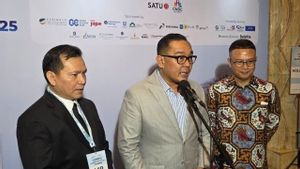
Similarly, HSBC Indonesia Country Head Global Trade Solutions Delia Melissa said that in the midst of the expansion plan, liquidity needs are an important concern for Indonesian corporations.
According to him, 72 percent of companies reported an increase in working capital needs due to trade and tariff uncertainty, greater than the global average of 62 percent.
He added that the role of international banking is increasingly important as the expansion into the ASEAN market increases the complexity of cross-border trade.
According to him, Indonesian companies need liquidity support and risk management to continue to develop amid uncertainty
"As the bank with the number one trade finance service solution in Indonesia and more than 140 years of experience, we have a strategic position and are ready to help clients understand the dynamics of trade and prepare clients to face all changes in the future," he explained.
The English, Chinese, Japanese, Arabic, and French versions are automatically generated by the AI. So there may still be inaccuracies in translating, please always see Indonesian as our main language. (system supported by DigitalSiber.id)


