
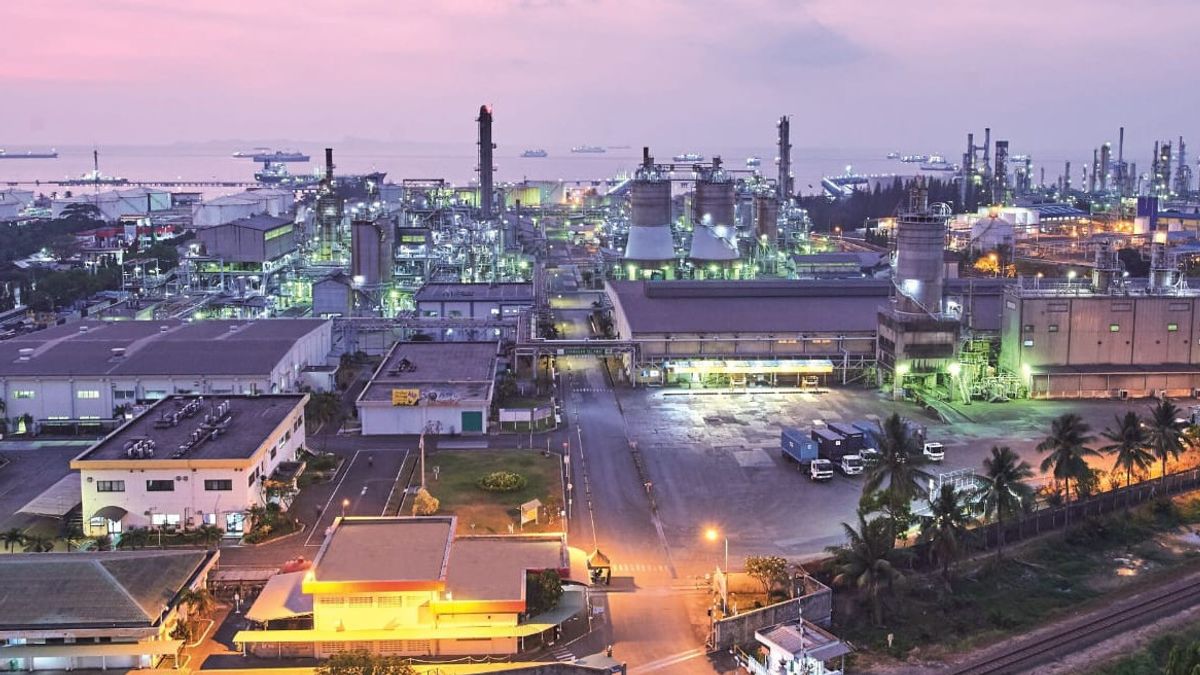


CILEGON - Lintas Citra Pratama (LCP), a petrochemical investment company from Cilegon, continues to expand its business coverage by expanding the Polyethylene Terephthalate (PET) plant development project with a capacity of up to 720 thousand tons per year (720 KTA).
The investment value of the project reaches around 300 million US dollars or equivalent to Rp5.01 trillion (exchange rate of Rp16,700) and will be built on land owned by a subsidiary of LCP, PT Merak Chemical Indonesia (MCCI), as part of a long-term strategy to strengthen the downstream of the national petrochemical industry.
MCCI President Director, Anang Adji Sunoto said that the construction of the PET factory is an important momentum for companies in the midst of industrial conditions that still depend on imports. At the same time expanding LCP's contribution to the economy, and supporting President Prabowo Subianto's commitment to integrated downstreaming.
"This irradiation will provide added value for the company while strengthening Indonesia's position in the regional industrial chain," he said, in a written statement, Monday, November 24.
With the presence of this PET factory, it does not only increase the added value of the Purified Terephthalic Acid (PTA) product. However, it is also expected to reduce Indonesia's dependence on PET imports which are still high, especially for needs, the food and beverage packaging industry, as well as plastic products based on PET or recycling.
According to him, the integration between PTA and PET production will create supply chain efficiency, ranging from raw materials to final products, thereby increasing the competitiveness of the domestic industry towards imported products.
By utilizing the available land and facilities, this USD 300 million investment will be more optimal. In addition to increasing efficiency, PTA-PET integration will improve the company's performance and increase our competitiveness in the market," he added.
Furthermore, Anang said that this project also has the potential to create a multiplier effect for the economy, including absorption of local labor both in the construction and operational phases.
"In addition to strengthening downstream industries such as packaging, and PET resin-based products, this project is expected to be able to absorb direct and indirect labor, as well as encourage the growth of MSMEs around industrial areas," he explained.
The construction of the PET factory will also strengthen the downstream industrial structure, such as polyesters, food and drink packaging, as well as various plastic products based on PET resin. LCP emphasized that this investment is the company's long-term commitment to supporting national industrial growth.
BACA JUGA:

LCP is committed to continuing to invest in Indonesia. The development of this PET factory is an important step to create a more integrated and competitive chemical industry," said Anang.
"We believe that the government will provide support to the upstream-downstream PET and polyester industries so that they can compete with imported products," he continued.
Currently, LCP is entering the tender process for the construction of the factory. The project is targeted to start being executed in the second semester of 2026 and start commercial operations in 2028. With the operation of this facility, Indonesia is expected to be more independent in meeting the needs of PET raw materials as well as strengthening its position as a major player in the Southeast Asian regional market.
The English, Chinese, Japanese, Arabic, and French versions are automatically generated by the AI. So there may still be inaccuracies in translating, please always see Indonesian as our main language. (system supported by DigitalSiber.id)
Popular


