


JAKARTA - PT TBS Energi Utama Tbk (FFB) announced its financial performance and strategic development for the third quarter of 2025. After completing the initial phase of portfolio transformation and divestment of two steam power plants, TBS is now entering the consolidation and operational strengthening stage to build a more solid, efficient, and sustainable green business foundation.
During the first nine months of 2025, the Company recorded consolidated revenues of US$288.2 million, a decrease of 14 percent compared to the same period the previous year due to the dynamics of coal prices. On the other hand, the transformation of FFB towards a green business portfolio is getting more solid, with achievements that are starting to look real.
The waste management segment is now the largest contributor with around 39 percent of total revenue, a significant increase of 1,048% from the same period in the previous year. Meanwhile, electric and renewable energy vehicles continue to show positive growth in non-coal portfolios.
FFB's financial performance during this period was influenced by one-time and non-recurring losses, mainly from divestment transactions of two steam power plants (PLTU) as well as acquisition costs of green businesses. On the other hand, the PLTU's divestment proceeds provide additional funds for FFB to strengthen its expansion into sustainable business.
When excluded from the impact of one transaction as well as the performance of the coal mining business due to the decline in commodity prices, FFB recorded a profit of around USD 1.8 million. This achievement is in line with EBITDA's Adjusted EBITDA of USD 31.8 million and reflects operational efficiency and significant progress in the transformation of FFB green business.
FFB closed the third quarter with a solid cash position of 89 million US dollars, up significantly from 68 million US dollars at the end of 2024, supported by divestment results as well as the issuance of Sukuk Wakalah instruments and Shelf-Registered Bonds I of 2025. With total controlled debt, FFB's financial structure is in a healthy position to support the next green pillar expansion.
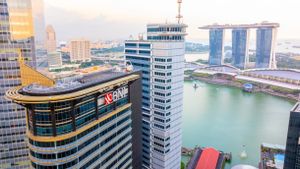
One of the important milestones in the second half of 2025 is the launch of a new identity of CORA Environment, replacing Sembcorp Environment in Singapore. Through CORA, TBS expands its waste-to-energy capability at the regional level and accelerates technology transfer to Indonesia. CORA is now supported by more than 700 employees and 300 operational fleets, runs collection, recycling, insinuation services, as well as digital-based resource recovery to improve environmental efficiency and compliance.
In the future, CORA will prepare an investment of more than S$200 million in the next five years to strengthen its waste management network, including the development of the recycling infrastructure which is targeted to be completed by 2026.
The FFB waste management business has started in 2018 and has shown increasingly promising results, especially since its expansion into the Singapore market. The success of this pillar is the capital as well as the basis for FFB to target an expansion of reach to other international markets in Southeast Asia such as Thailand, Vietnam, and Malaysia, with a focus on developing waste-to-energy infrastructure, recycling and cross-district policy collaboration.
Aspiration to become a regional player in the waste and clean energy management sector emphasized the transformation of FFB towards a company that is fully focused on a sustainable green business, as well as bringing Indonesia's name to the international arena in the clean energy transition.
At the same time, Electrum continues to expand its emission-low transportation ecosystem. As of September 2025, more than 6,400 electric motors have been operating with the support of more than 360 battery exchange stations (BSS), an increase of 25 percent compared to the previous semester.
The available BSS has also supported battery exchange activities more than 850 thousand times per month. This growth helps reduce carbon emissions by more than 25 tons of CO2 per day, while increasing the efficiency of driver partner operational costs.
SEE ALSO:

In the renewable energy pillar, PLTMH Sumber Jaya (6 MW) which began operating in early 2025 made a stable contribution to the Company's clean energy mix. Meanwhile, the Tembesan Floating PLTS project in Batam which was carried out with PLN Nusantara Power has achieved a significant construction progress and is scheduled to achieve a commercial operation date in mid-2026.
Director of TBS Energi Utama Tbk, July Oktarina, said that 2025 is an important momentum to strengthen the foundations of the green business.
"We have completed the transformation phase and are now focusing on strengthening operations in all green pillars. With strong cash, healthy financial structure, and clear direction of strategy, FFB is ready to move into the optimization phase of profitability and synergy between pillars in 2026," he said, in a written statement, Tuesday, October 28.
Juli also emphasized that performance resilience is maintained amidst fluctuations in coal prices.
"Our EBITDA remains strong, mainly thanks to the contribution of the waste management segment and electric vehicles. This shows that the green portfolio of TBS is not only growing, but also fully mature operationally," he explained.
With a stronger foothold in the three main pillars of 'management of waste, electric vehicles, and renewable energy', FFB is moving steadily towards the carbon-neutral target of 2030 with a commitment to create sustainable growth, economic value, and have an impact on society.
The English, Chinese, Japanese, Arabic, and French versions are automatically generated by the AI. So there may still be inaccuracies in translating, please always see Indonesian as our main language. (system supported by DigitalSiber.id)


