

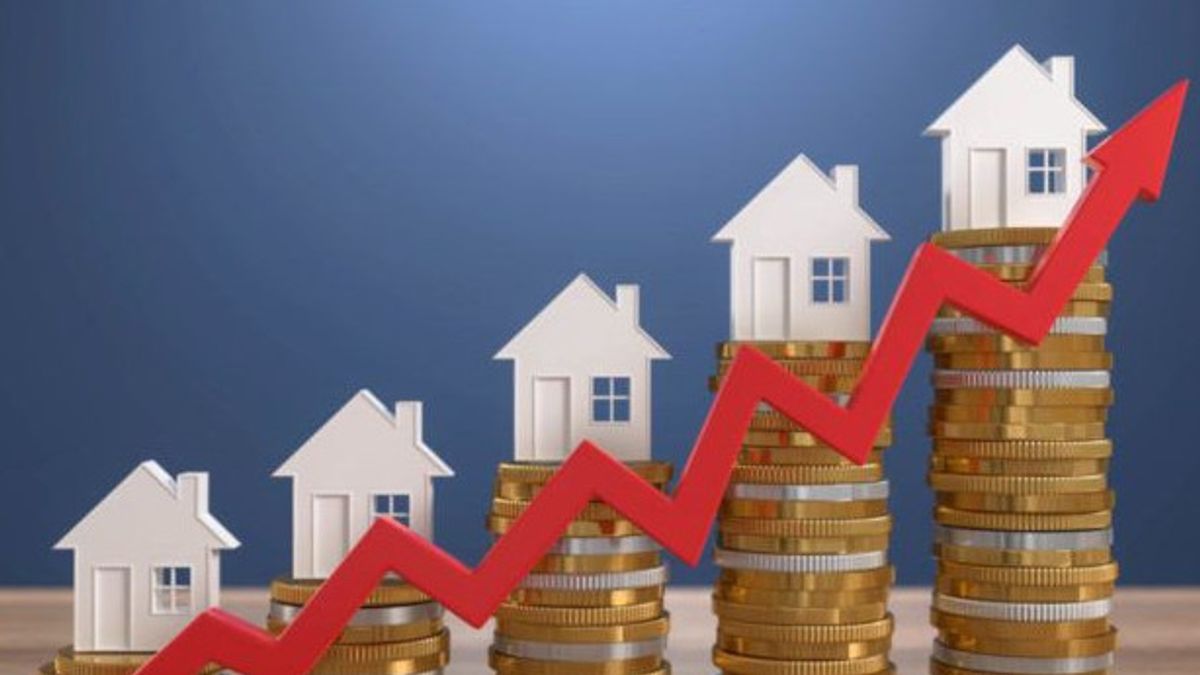


YOGYAKARTA - Property investment has long been known as one of the promising investment instruments. The property value that tends to increase over time makes many people choose it as a safe asset for the long term.
Although it looks simple, the world of property investment actually has its own complexity. Many terms are used to describe the concepts, strategies, and risks that exist in it.
For beginners, these terms are often confusing. Meanwhile, if you misunderstand the term, investors can also take wrong steps that result in losses. Therefore, it is important to recognize and understand property investment terms.
By understanding the term property investment, investors can be more confident in assessing opportunities, calculating potential benefits, and minimizing risks. Here are 14 terms of property investment that you must know about.
Capital gain is the profit earned from the increase in property prices. For example, you buy a house for Rp. 500 million, then a few years later the value increased to Rp. 800 million.
The difference of Rp. 300 million is called capital gain. This term is important because most investors are eyeing long-term profits from the increase in the value of property assets.
2. Property Crash
Property crash is a condition when property prices spike up or down drastically due to changes in the fundamental economy. For example, the financial crisis can make property prices drop sharply and vice versa, when there is an economic boom, prices can soar. Investors need to understand this term to be more aware of the risk of price fluctuations.
3. Return on Investment (ROI)
ROI is used to measure how much net profit is earned compared to the issued capital. The calculation involves rental income, maintenance costs, taxes, and loan interest. By calculating ROI, investors can assess whether a property is worth buying or not.
4. Cash Flow
Cash flow is the flow of money in and out of property investment. If rental income is greater than expenditure (for example installments, maintenance costs, and taxes), then cash flow is positive. Meanwhile, if the expenditure is greater, it is called negative cash flow. Investors ideally pursue positive cash flow so that the investment is sustainable.
5. Leverage
Leverage means the use of loan funds to buy property. For example, buying a house with a mortgage and renting it out to cover installments. If the property value increases, the profits can be much greater than the initial capital. However, leverage is also risky because installments still have to be paid even though the rental income is not sufficient.
6.Flipping
Flipping is a strategy to buy property, then renovate or repair it, then resell it at a higher price. This strategy can generate fast profits, but requires large capital and market understanding. Miscalculation of renovation fees or demand trends can make flipping lose money.
7. Buy and Hold
The buy and hold strategy means buying property and then holding it in the long term. Profits come from a combination of capital gains and rental income. This strategy is suitable for long-term, capital-oriented investors.
8. Sunrise Property
Sunrise property is a term for properties that have promising potential. Generally, this property is located in a strategic location, near the activity center, has good access to transportation, and its value is likely to continue to rise. Investors who are able to identify the sunrise property usually benefit greatly in the future.
9. Sunset Property
Inversely proportional to the sunrise property, sunset property is a less potential property. Usually located in remote locations, away from crowded centers, or in areas with low population growth. The value of the sunset property tends to stagnate and even decrease so that it is less attractive for investment.
10. Booming Property
Booming property is a condition when property demand increases sharply, for example in new industrial areas or developing tourist areas. This surge in demand makes property prices soar rapidly. But keep in mind, you still have to be careful because booming can be temporary.
11. KPR (Home Ownership Credit)
KPR is a bank loan facility to buy a house in installments. In property investment, mortgages are often used as leverage. However, investors need to pay attention to interest and loan tenors so that installments do not burden cash flow.
12. Down Payment (DP)
Down payment or down payment is the initial payment before continuing the credit process, usually around 10 to 30 percent of property prices. The amount of DP will affect the amount of monthly installments or the bigger the DP, the lighter the installment. The right DP strategy can help maintain the flow of investment cash.
13. HGB Certificate (Building Use Rights)
HGB is the right to establish or own buildings on state property. HGB validity period is usually 30 years old and can be extended. Investors must pay attention to HGB status because it is different from full ownership.
14. SHM (Certificate of Ownership)
SHM is the strongest and absolute land ownership certificate. SHM owners are fully entitled to the land, either to build or resell. This certificate is more valuable than HGB because its ownership is not limited in time.
Understanding the terms of property investment above is very important before deciding to buy assets. Without adequate understanding, an investor can have a wrong strategy and end up losing money.
With this understanding of the term, you can be more confident in assessing opportunities, choosing the right investment strategy, and managing risks more wisely. So before going further into the world of property investment, you should understand the 14 terms above.
The English, Chinese, Japanese, Arabic, and French versions are automatically generated by the AI. So there may still be inaccuracies in translating, please always see Indonesian as our main language. (system supported by DigitalSiber.id)
Most Popular Tags
#Prabowo Subianto #donald trump #2026 World Cup #Febrie Adriansyah #8791Popular


