


Minister of Finance Sri Mulyani Indrawati stated that household consumption growth in the second quarter of 2025 showed a strong increase driven by people's purchasing power.
He added that the State Revenue and Expenditure Budget (APBN) contributed greatly to maintaining people's purchasing power, especially the lower middle class, such as providing incentives in the form of transportation discounts, including toll rates, as well as strengthening social assistance programs.
"APBN also makes a very significant contribution to maintaining purchasing power through export discount incentives both on toll roads and also the APBN providing thickening of social assistance. This is enough to provide support, especially for the lower middle class," he said at the Press Conference on Economic Growth in the Second Quarter of 2025, Tuesday, 5 August.
Sri Mulyani conveyed that various stimuli that have been distributed by the government, such as disbursement of social assistance (bansos), wage subsidies, to payment of the 13th salary for the state civil apparatus (ASN) and retirees, contributed to economic growth.
"The government also provides wage subsidies. This goes directly to the accounts of each formal worker and of course this immediately creates multipliers through household consumption. In addition, in the second quarter, the 13th salary disbursement will be carried out, which is quite significant, more than Rp37 trillion," he said.
However, he admitted, government consumption in the second quarter of 2025 still recorded a contraction of 0.33 percent on an annual basis.
SEE ALSO:
-
 | EKONOMI
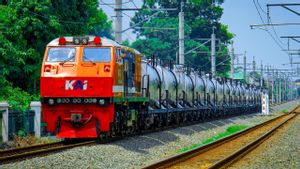
KAI Angkut 39,2 Juta Ton Barang di Tahun 2025, Dominasi Batu Bara 82,83 Persen
06 Agustus 2025, 00:27 -
 | EKONOMI
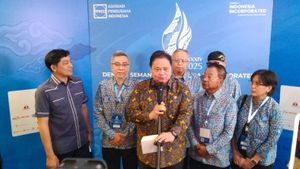
Menko Airlangga Bantah Pemerintah Manipulasi Data Pertumbuhan Ekonomi Kuartal II 2025
06 Agustus 2025, 00:18
Menurutnya, kontraksi ini bukan disebabkan oleh rendahnya belanja Kementerian dan Lembaga saat ini, melainkan karena tingginya pengeluaran APBN pada periode yang sama tahun lalu, yang dipengaruhi oleh pelaksanaan Pemilu.
"Kalau sekarang masih kontraksi itu karena baseline-nya tahun lalu cukup tinggi. Meskipun demikian sebetulnya kami mengharapkan di kuartal ke-2 sudah mulai positif," ucapnya.
Sri Mulyani juga menambahkan bahwa pada kuartal I dan II tahun ini, banyak Kementerian dan Lembaga masih melakukan penyesuaian anggaran, yang turut berdampak pada rendahnya tingkat konsumsi pemerintah.
"Estimasi kami sebetulnya di sekitar 0,2 persen. Jadi BPS mengeluarkan dengan kontraksi 0,33 ini berarti kita harus bekerja lebih keras dari seluruh kementerian, lembaga, serta pemda untuk bisa mengakselerasi belanjanya," jelasnya.
SEE ALSO:
-
| EKONOMI
KAI Angkut 39,2 Juta Ton Barang di Tahun 2025, Dominasi Batu Bara 82,83 Persen
06 Agustus 2025, 00:27 -
| EKONOMI
Menko Airlangga Bantah Pemerintah Manipulasi Data Pertumbuhan Ekonomi Kuartal II 2025
06 Agustus 2025, 00:18
According to him, this contraction is not due to the current low expenditure of Ministries and Institutions, but because of the high expenditure of the State Budget in the same period last year, which was influenced by the implementation of the General Election.
"Now it is still contracting because the baseline last year was quite high. Even so, we actually hope that in the 2nd quarter it will start to be positive," he said.
Sri Mulyani also added that in the first and second quarters of this year, many Ministries and Institutions are still making budget adjustments, which also have an impact on the low level of government consumption.
"Our estimate is actually around 0.2 percent. So BPS issued with a contraction of 0.33, which means we have to work harder than all ministries, institutions, and local governments to accelerate their spending," he explained.
The English, Chinese, Japanese, Arabic, and French versions are automatically generated by the AI. So there may still be inaccuracies in translating, please always see Indonesian as our main language. (system supported by DigitalSiber.id)
Most Popular Tags
#Prabowo Subianto #donald trump #2026 World Cup #venezuela #konflik timur tengahPopular


