

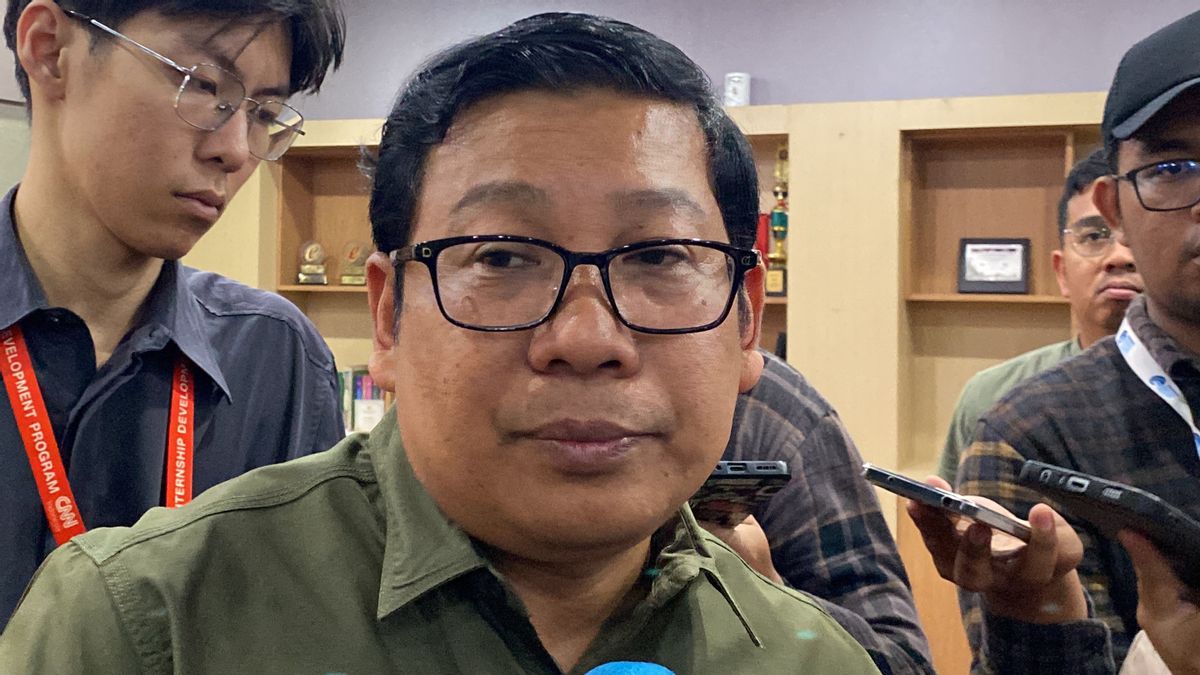


JAKARTA - Head of the National Food Agency (Bapanas), Arief Prasetyo Adi, ensured that the government's latest policy regarding quality standards, types, and prices of rice upper limits would be implemented in stages through a transition period and price adjustments based on regional zoning.
He said, after the policy was established, the government would provide a transition period to provide adaptation times for business actors and the community. However, accelerating implementation is still needed to reduce rice price fluctuations in the market.
"Indeed, it cannot be changed to a policy, then it will be executed immediately without a transition period. But this must also be rushed. So more or less, later it will be in between premium and medium (rice quality standard)," he explained through an official statement, Monday, August 4.
"Then as information, between prices in production centers and prices in Central Indonesia and Eastern Indonesia, there is a price difference. We also have to regulate that later, because it is impossible in an area like Indonesia, which is wide at one price without imposing a zone," he added.
His party continues to coordinate intensively with various stakeholders, including ministries/agencies as well as business actors in the expansion sector to ensure that the policy can be accepted and implemented effectively.
"So we have given several alternatives to the Coordinating Minister for Food to consider. Hopefully this is really needed, because this must be fast, it must also be rushed so that it can calm the market conditions today," said Arief.
Regular Rice Regulated, Special Rice Follows Market Mechanism
Furthermore, Arief explained that this new policy will focus on regulating regular rice, namely the type of rice consumed daily by the community. Meanwhile, special rice will continue to follow the market mechanism but must meet the requirements for quality certification.
"For regular rice, it's rice that we usually eat, both long and round rice. The price will still be limited by the government. The quality requirements are also prepared with various criteria, but what is absolutely 95 percent of the figure and 14 percent of the water level. How many points have been broken, it will be conveyed later," he said.
Arief mentioned several types of special rice, namely glutinous rice, black rice, and red rice. There is also rice with a low glycemic index. Glikemic itself is a carbohydrate substance in blood sugar. "The second is for special rice, it is not regulated for how much it costs. But it must have certification, not arbitrary either," he said.
SEE ALSO:
-
 | BERNAS
Penghapusan Beras Premium Tak Serta Merta Menjawab Kekisruhan Dunia Perberasan
04 Agustus 2025, 11:00

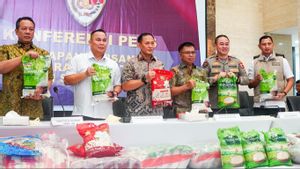
According to President Prabowo Subianto's direction, the price of unhulled rice at the farmer level must be purchased at least Rp. 6,500 per kilogram. Therefore, adjustments at the downstream level are also a must.
"This rice policy must be holistic, starting from farmers, then how about in rice pangolins, entrepreneurs until later in retail and end customers or the community. If it's upstream, Mr. President Prabowo asks for farmers' unhulled rice to be purchased at least Rp. 6,500 per kilo. Therefore, downstream we adjust it," concluded Arief.
For information, the policy currently being finalized by the government is a revision of the National Food Agency Regulation Number 2 of 2023 concerning the classification of rice quality (premium, medium, submedium, and broken) as well as the National Food Agency Regulation Number 5 of 2024 regarding the highest retail price (HET) of rice.
The English, Chinese, Japanese, Arabic, and French versions are automatically generated by the AI. So there may still be inaccuracies in translating, please always see Indonesian as our main language. (system supported by DigitalSiber.id)
Most Popular Tags
#Prabowo Subianto #donald trump #Febrie Adriansyah #8791 #giias 2026Popular


