


JAKARTA - Controversy related to the status of driver-partner partnerships and demands for the provision of holiday allowances (THR) from online transportation application companies continues to be in the spotlight in various Indonesian media.
As the digital economy develops, debate arises about whether driver-partners should be categorized as workers or continue to be treated as partners according to the current scheme? This is a polemic that continues to be questioned and highlighted by various parties.
Despite the good intentions of providing protection and welfare for driver-partners, this must be done systemically, otherwise it is counterproductive.
According to Gadjah Mada University (UGM) Professor of Manpower Law Ari Hernawan, if the government imposes a change in the status of this partnership without the support of the sub-system in it, the impact will not only hit the ride-hailing industry, but also risk damaging the investment ecosystem, hampering the growth of the digital economy, and ultimately threaten the welfare of millions of driver-partners and their families.
"In addition, other sectors that rely heavily on ride-hailing services such as MSMEs, tourism, and logistics will also feel the negative impact. In the midst of the government's push to digitize the economy, inconsistent policy policies feel ironic because they will have the potential to limit the innovation and flexibility of work which is the main attraction of the digital industry," he said in a written statement, Sunday, March 2.
Partnership Vs Work Relations
Juridically, he continued, the relationship between driver-partners and application companies has been regulated as a partnership relationship, not a working relationship. Article 15 Paragraph (1) Regulation of the Minister of Transportation Number 12 of 2019 explicitly states that drivers on ride-hailing platforms are partners, not workers.
Although the authority of the Ministry of Manpower includes everything related to the workforce, in the authentic interpretation and article by article in Law Number 13 of 2003 and Law Number 6 of 2023 and its implementation regulations it does not actually cover this partnership issue, but only work relationships between workers and employers based on work agreements that have elements of work, wages, and orders.
However, the government seems inconsistent in enforcing this regulation. On the one hand, the government recognizes that driver-partners are not workers and therefore have no right to protection as workers such as THR.
But on the other hand, there is an impetus to treat partners such as workers in certain aspects, such as demands for social protection and welfare.
"This inconsistency shows that the government wants to take advantage of the gig economic model, but is reluctant to provide legal clarity that protects the sustainability of this ecosystem," he said.
Do Driver Partners Meet Formal Worker Criteria?
In the Civil Code, the agreement to carry out work can be in the form of: (1) The Trade Agreement, (2) Agreements to Perform Certain Services or (3) Work Agreements, so that even if you do work, it cannot be interpreted that what arises is a work relationship based on a work agreement. Based on Law Number 13 of 2003 concerning Manpower, some of the articles in it have been revoked or changed through Law Number 6 of 2023, employment must fulfill three essential elements, namely work, orders, and wages cumulatively.
If you look at this regulatory perspective, the relationship between driver-partners and application companies does not meet these three elements:
1. Work: Driver partners do transportation work, but they work independently with all the flexibility of working hours by applying a partnership agreement.
2. Order: No direct instructions from application companies, instructions are obtained from consumers. Driver partners have full freedom to receive or reject orders from consumers.
3. Wage: No fixed salary from app companies, but a profit-sharing system, where driver-partners pay app rental fees to access customers.
By looking at the business process, this kind of work scheme is more like a partnership business model, compared to work relationships subject to labor law, although some mention pseudo partnerships.
Even if there is a will to make driver-partners included in the worker category with a work relationship in it, then there needs to be a systemic change, starting from the definition of workers, elements of employment and others. Unfortunately, instead of clarifying this legal position, the government actually lets the polemic drag on without certainty, creating instability for driver-partners and industry as a whole.
The Government Must Be Consistent And Visionary
In many countries, in terms of employment, the government, one of which acts as a regulator that ensures a balance between workers' rights and industrial sustainability. However, in Indonesia, in the context of driver-partners, the government seems gamang and reactive in responding to the development of the digital economy. If the government seriously wants to support the welfare of driver-partners, the solution is not to impose policies that are contrary to existing legal regulations, but for example by providing more relevant incentives for example, through social protection programs, easier access to financing, as well as productivity-based incentive schemes.
Even if you want to give workers the right to driver-partners, it must be done systemically. That must also be done with an in-depth study, not to damage the existing ecosystem and it is counterproductive. This driver-partner issue involves many institutional stakeholders, who coordinately should sit down together to solve problems without creating new problems.
SEE ALSO:
-
 | BERITA
Bukan THR! Ojol Jaksel Bongkar "Permainan" Aplikator yang Bikin Penghasilan Merosot!
27 Februari 2025, 14:23 -
 | MEMORI
Wacana THR Pengemudi Ojol: Kemnaker Plin-plan, Rakyat Kecil Kena Getahnya
18 Februari 2025, 06:30
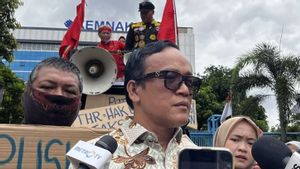
If the government continues to be ambiguous and let the legal uncertainty drag on, it is not impossible that Indonesia's ride-hailing and digital economy will lose its competitiveness. Instead of attracting investors and supporting innovation, this inconsistent policy can actually make digital companies and talents look for opportunities in other countries that are more friendly to the gig economy industry. In the midst of unbalanced supply and labor demand, of course this will trigger its own problems.
In the end, the question is not only limited to THR or worker status, but how can the government be more consistent and visionary in creating regulations that support the digital work ecosystem without sacrificing the flexibility that has become the main attraction of this industry while still providing protection to gig workers in it.
The hasty policy results are inexplorable. As good as the concepts offered, it is necessary to support the ecosystem in it and in-depth studies so that operations and non-comproductive, especially from target group stakeholders, because they are the ones affected and must implement the policy.
The English, Chinese, Japanese, Arabic, and French versions are automatically generated by the AI. So there may still be inaccuracies in translating, please always see Indonesian as our main language. (system supported by DigitalSiber.id)
Most Popular Tags
#Prabowo Subianto #donald trump #Febrie Adriansyah #8791 #giias 2026Popular


