


JAKARTA PT Krakatau Steel (Persero) Tbk continues to seek strategic steps in facing global trade challenges.
One of the strategic steps taken by the company is to strengthen synergy and collaboration with similar industries, especially the steel industry that is engaged in the downstream sector.
This step is also taken to support the downstream program and sustainable industry that has been launched by the Government of the Republic of Indonesia.
Krakatau steel as a state-owned holding company will continue to encourage our subsidiaries such as PT Krakatau Baja Industri (KBI) to be able to carry out synergies and collaborations with other steel industries downstream.
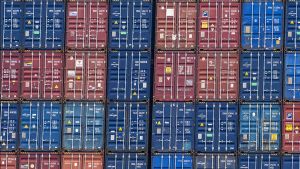
On Tuesday, February 25, 2025, PT Tata Metal Lestari, part of the Tatalogam Group and PT Krakatau Baja Industri, a subsidiary of Krakatau Steel exported 5,000 tons of Nexalume, Nexium, and Nexcolor armored steel to the US.
"We also play a role in managing national stakeholders, then convince regulators to always provide support, be it domestic protection or protection, as well as with regulations to encourage our national steel industry ecosystem," said President Director of PT Krakatau Steel (Persero) Tbk, Muhamad Akbar Djohan.
Akbar explained that the two companies were able to export armored steel to the United States (US) when sluggish global trade conditions were not an easy matter.
However, thanks to the synergy and good collaboration between PT Krakatau Baja Industri as the provider of raw materials and PT Tata Metal Lestari (Tatalogam Group) as a layered steel producer in the downstream sector, this steel product export activity was successfully carried out.
"What we are doing today by exporting to the US is not an ordinary thing. Honestly, our steel industry is not in a good condition. But with the exports carried out by PT Tata Metal today, it is enough to give a very clear and concrete message, our national steel products are still very much taken into account in the global market. Today is certainly an implementation of the President's hashtag, namely prioritizing downstreaming and sustainable domestic industries, "explained Akbar.
Meanwhile, the President Director of PT Krakatau Baja Industri, Arief Purnomo, added that KBI has a production capacity of up to 90 thousand tons of armored steel raw materials per year.
The product also contains 60 percent of the total domestic content.
With such a high production capacity and a significant level of domestic components, his party is committed to continuing to support the development of a layered steel industry downstream so as to be able to produce high-quality products that are able to compete not only in the national market, but also to penetrate the global market.
Our hope is that the downstream steel industry continues to grow and it is supported. So, all industrial forces, especially steel in Indonesia, are strengthened from upstream to downstream. This Hilir is becoming vulnerable because many imported products enter downstream. The impact will be that upstream production can stop. Therefore, strengthening the downstream industry must be prioritized," explained Arief.
Vice President of PT Tata Metal Lestari Stephanus Koeswandi appreciated the collaboration carried out by PT Krakatau Steel (Persero) Tbk and PT Krakatau Baja Industri.
This is because, he continued, thanks to the collaboration provided by them, the downstream steel sector is again visible and more stable in producing quality products so that it is able to compete in local and global markets.
"This shows that the national steel industry has grown to become increasingly important for the national economy and the economy in the world. So we see progress, especially in the downstream sector of the steel industry," he said.
"All of this proves that the quality of steel from Krakatau Steel produced in Indonesia is no less qualified than products that exist abroad and can be accepted throughout the world by following existing standards," said Stephanus.
Stephanus explained that PT Tata Metal Lestari's own export maneuvers began after his party read the existing geopolitical compass.
First, export maneuvers were carried out due to supply chain disruptions with the cessation of trade wars between China and the United States, logistical disturbances, as well as fluctuating demand in Indonesia, especially in the first quarter which decreased somewhat which was then accompanied by exports.
Second, there is also government policies and regulations to support increased exports.
SEE ALSO:
-
 | EKONOMI
BPS Catat Neraca Perdagangan Indonesia Surplus Capai 3,45 Miliar Dolar AS
17 Februari 2025, 12:35

As part of its global expansion strategy, Tata Metal Lestari has also opened representative offices in Sidney Australia and Singapore to expand its business network and strengthen partnerships with international partners.
We are increasingly confident that to increase the share of the export market, from last year it was only around 30 percent. This year we are trying to increase it again to 40 percent of our production capacity, which after investment can only reach 500,000 tons per year," he added.
The English, Chinese, Japanese, Arabic, and French versions are automatically generated by the AI. So there may still be inaccuracies in translating, please always see Indonesian as our main language. (system supported by DigitalSiber.id)
Most Popular Tags
#Prabowo Subianto #donald trump #Febrie Adriansyah #8791 #giias 2026Popular


