

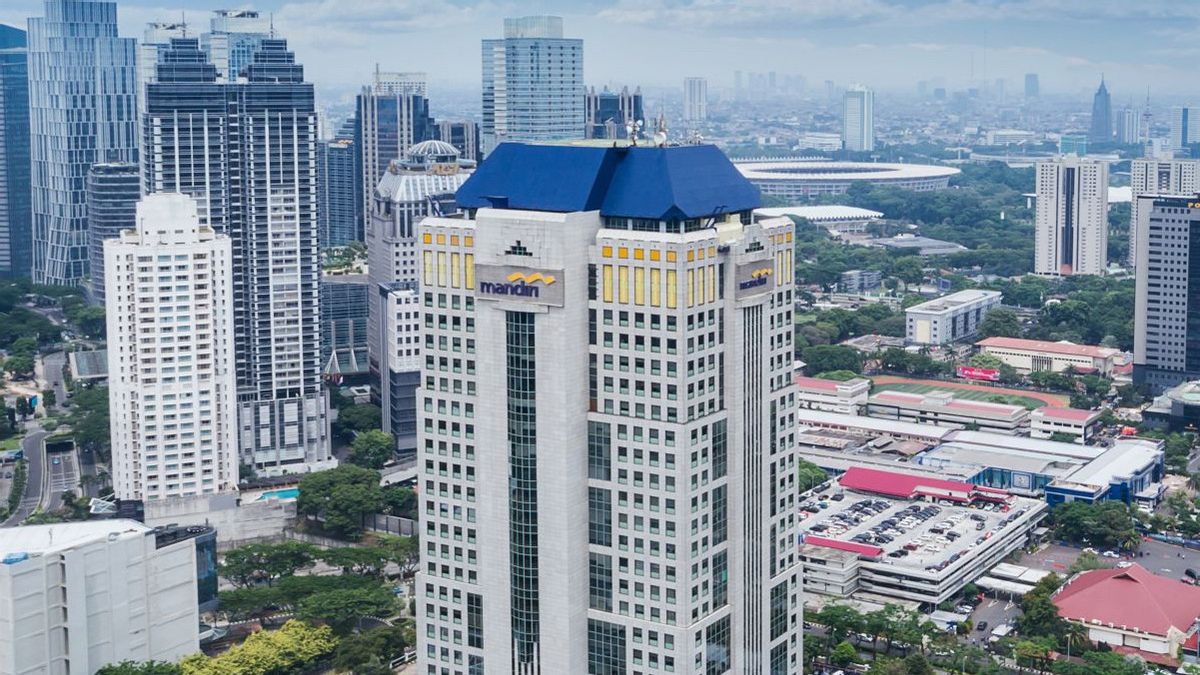


JAKARTA - PT Bank Mandiri Tbk (BMRI) announced that it has succeeded in realizing credit on a consolidated basis of IDR 1,670.55 trillion, an increase of 19.5 percent throughout 2024.
President Director of Bank Mandiri, Darmawan Junaidi explained, the wholesale credit which is the company's core business continues to be the main driver of lending.
Bank Mandiri's credit and savings growth continued Darmawan, spread evenly in various regions of Indonesia which are part of our commitment to supporting national economic growth.
"Throughout 2024, Bank Mandiri has been able to encourage growth in both credit and savings to more than 2 times the growth of the industry, and this excellent growth is spread evenly throughout Indonesia," said Darmawan, Wednesday, February 5.
Meanwhile, credit quality remains the main concern of Bank Mandiri, as reflected in the company's efforts to maintain the ratio of non-performing loans (NPL) to remain under control at 0.97 percent at the end of 2024, down 5 basis points (bps) from the previous year period.
"We continue to strive to optimize potential in the wholesale sector in order to reach more economic sectors that require access to capital. This ecosystem not only provides growth opportunities for businesses but also supports wider economic stability," Darmawan continued.
Darmawan added, in a credit expansion strategy, Bank Mandiri remains focused on strategic sectors such as agriculture & plantations, energy, telecommunications, the food and beverage industry, as well as labor-intensive sectors spread across various regions.
Credit disbursement in the corporate segment remains the main contributor with growth reaching 25.5 percent yoy to IDR 913.3 trillion by the end of 2024.
In addition, the micro, small and medium enterprises (MSMEs) segment also continues to get attention with growth reaching 6 percent yoy to IDR 135 trillion by the end of 2024.
SEE ALSO:
-
 | EKONOMI
Pertumbuhan Ekonomi di Kuartal IV-2024 Didorong Industri Pengolahan dan Perdagangan
05 Februari 2025, 13:05 -
 | EKONOMI
Laba Bank Mandiri Naik Tipis 1,31 Persen Mencapai Rp55,78 Triliun Sepanjang 2024
05 Februari 2025, 12:40
In more detail, based on the sector, Bank Mandiri's largest increase in lending was recorded in the transportation, warehousing and communication sector which reached 44.9 percent, far above the industry which only reached 16.1 percent.
Then followed by business services which reached 36.3 percent, then social services by 31.3 percent, the mining sector 29.2 percent, the industrial sector by 19.2 percent. Meanwhile, distribution to the trade sector, restaurants and hotels reached 18.6 percent and finally the agricultural sector by 7.98 percent.
The English, Chinese, Japanese, Arabic, and French versions are automatically generated by the AI. So there may still be inaccuracies in translating, please always see Indonesian as our main language. (system supported by DigitalSiber.id)
Most Popular Tags
#Prabowo Subianto #donald trump #2026 World Cup #Febrie Adriansyah #8791Popular


