
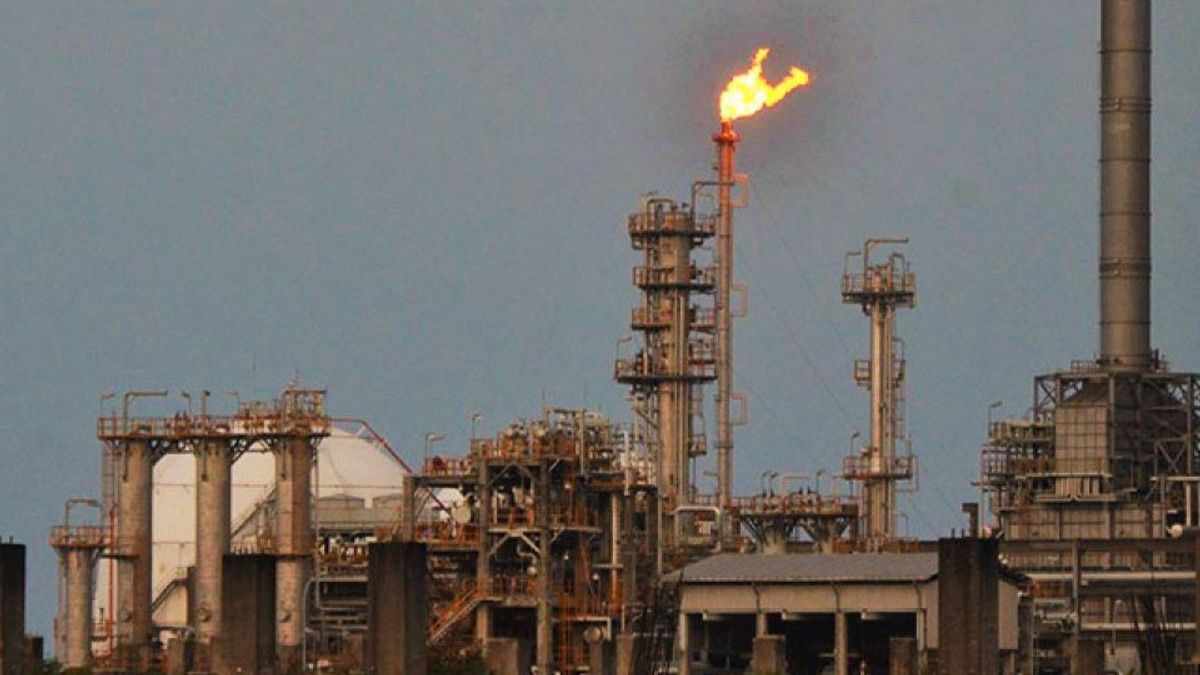


The Ministry of Industry (Kemenperin) is preparing a petrochemical industry import monitoring strategy through the maturation of commodity balance instruments to monitor the needs (demand) and supply (supply) of the sector.
"If we can see the balance of commodities, we will always see by supply data and demand, if the supply is low, the demand is lower, meaning that there is still potential for imports," said Director of Chemical Industry Hulu of the Ministry of Industry Wiwik Pudjiastuti in a statement in Jakarta, quoted from Antara, Tuesday, December 10.
He said the system was needed because petrochemical products and their derivatives were still dominated by imported products. In fact, the domestic petrochemical industry is struggling to strengthen the supply chain of production.
In his note, national petrochemical products include olefines which have a production capacity of 9.72 million tons, while aromatic products are 4.61 million tons, and methanol C1 products and their derivatives are 980 thousand tons.
As for strengthening the structure of the petrochemical sector, integration between upstream and downstream is also needed.
"For strengthening the industrial structure, one of which is to strengthen one of them is to integrate the upstream and downstream industries," he said.
Meanwhile, Chairman of the Standing Commission for Chemical, Pharmaceutical and Textile Industries (IKFT) of the Indonesian Chamber of Commerce and Industry (Kadin) Hari Supriyadi stated that the petrochemical industry was under great pressure due to the rise of imported products.
As a result, local industries are struggling to stay competitive, considering that cheaper imported products have caused local product prices to not compete.
SEE ALSO:



"In Southeast Asia, one of the petrochemical factories from Thailand is closed due to losing to Chinese import products," he said.
Referring to the Association of Indonesian Olefin, Aromatics and Plastic Industries (Inaplas), it is estimated that the petrochemical industry will face a 50 percent decline in factory utilization rates, as well as a potential investment of IDR 437 trillion in this sector.
However, according to him, there are policies that are expected to be able to support the performance of this sector, including certain natural gas price incentives (HGBT) to fiscal incentives.
The English, Chinese, Japanese, Arabic, and French versions are automatically generated by the AI. So there may still be inaccuracies in translating, please always see Indonesian as our main language. (system supported by DigitalSiber.id)
Most Popular Tags
#Prabowo Subianto #donald trump #2026 World Cup #bgn #konflik timur tengahPopular


