



JAKARTA - The Ministry of National Development Planning/National Development Planning Agency (PPN/Bappenas) encourages the development of biodiversity credit as an innovative financing instrument to support biodiversity conservation while strengthening sustainable development financing in Indonesia.
Based on the Biodiversity Expenditure Review, the funding needs for Indonesia's biodiversity management are estimated to reach Rp118.5-Rp163.8 trillion per year, while the current available financing capacity is only around Rp21.6 trillion per year, reflecting a gap of up to 82-87 percent.
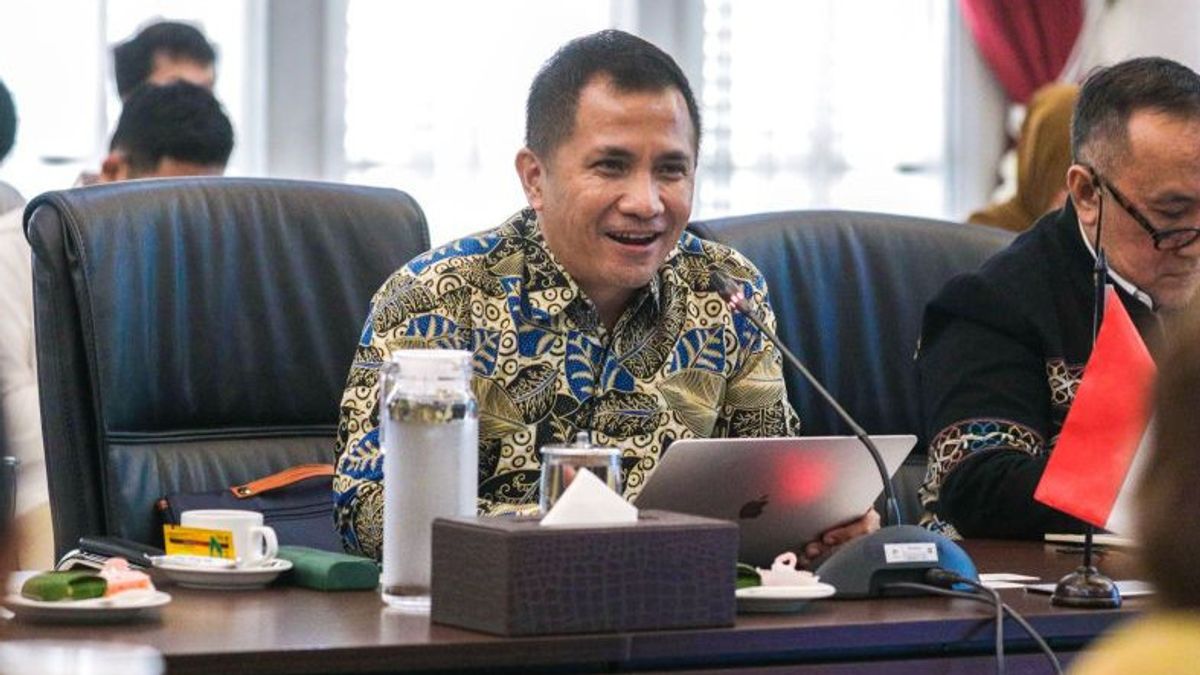
"To answer this challenge, the Ministry of PPN/Bappenas encourages the development of biodiversity credit as an innovative financing instrument that can strengthen biodiversity conservation while supporting development financing," said Deputy Head of Food, Natural Resources, and Environment at the Ministry of PPN/Bappenas Leonardo A. A. Teguh Sambodo in the event of Biodiversity Credit Policy Dialogue: Indonesia-Australia, as quoted from an official statement, Jakarta, Saturday.
Teguh said that Indonesia's biodiversity is not only an ecological asset, but also an important foundation for national development that plays a role in supporting food security, as well as opening up great potential for green and blue economies for the welfare of the Indonesian people.
As a tangible manifestation, he continued, the government is developing biodiversity credit in line with the national development agenda, especially the implementation of the National Medium-Term Development Plan (RPJMN) 2025-2029 and the Indonesia Biodiversity Strategy and Action Plan (IBSAP) 2025-2045. IBSAP encourages the development of various financing strategies, including market-based instruments, expanding the role of the business world through blended finance schemes, and strengthening government-private partnerships.
Teguh emphasized that biodiversity credit is an innovative financing instrument that represents the positive results of measurable, verifiable, and evidence-based biodiversity. This instrument is designed to generate additional benefits for biodiversity beyond the business as usual scenario.
There are three main types of biodiversity credit, namely uplift through active ecological restoration, conserve to keep the ecosystem intact, and avoided loss through efforts to prevent biodiversity loss.
"Currently, Bappenas and relevant Ministries/Institutions through the support of the UNDP Biodiversity Finance Initiative (BIOFIN) are initiating 3 (three) pilot projects and drafting a white paper on biodiversity credit, which is expected to provide policy recommendations to support the development of a credible and sustainable market," he said.
The Expert Staff of the Minister for the Sustainability of Biodiversity Resources and Social Culture of the Ministry of Environment, Noer Adi Wardojo, conveyed the importance of the high-integrity biodiversity credit approach, strengthening stakeholder involvement, developing pilot projects, and establishing a biodiversity credit task force.
"The development of biodiversity credit in Indonesia must be based on high integrity, inclusive stakeholder involvement, and a strong governance framework so that this instrument can really have a real impact on biodiversity," said Noer.
Meanwhile, the Australian Government shared its experience in developing the biodiversity credit market through the Nature Repair Market to generate high-integrity biodiversity protection through a transparent and scientific process.
This scheme is in line with the Australian carbon market framework through the Australian Carbon Credit Unit Scheme (ACCU), and specifically recognizes the important role of First Nations communities in biodiversity protection.
Through this dialogue, Indonesia and Australia are committed to strengthening collaboration, increasing capacity, and sharing knowledge in supporting the development of a credible and integrated biodiversity credit market. Bappenas hopes that this cooperation will support the implementation of the IBSAP 2025-2045, the agenda for sustainable development in Indonesia, as well as the achievement of the Kunming-Montreal Global Biodiversity Framework (KMGBF) and the Paris Agreement.
The English, Chinese, Japanese, Arabic, and French versions are automatically generated by the AI. So there may still be inaccuracies in translating, please always see Indonesian as our main language. (system supported by DigitalSiber.id)
Most Popular Tags
#Prabowo Subianto #donald trump #firearm #8791 #giias 2026Popular


