

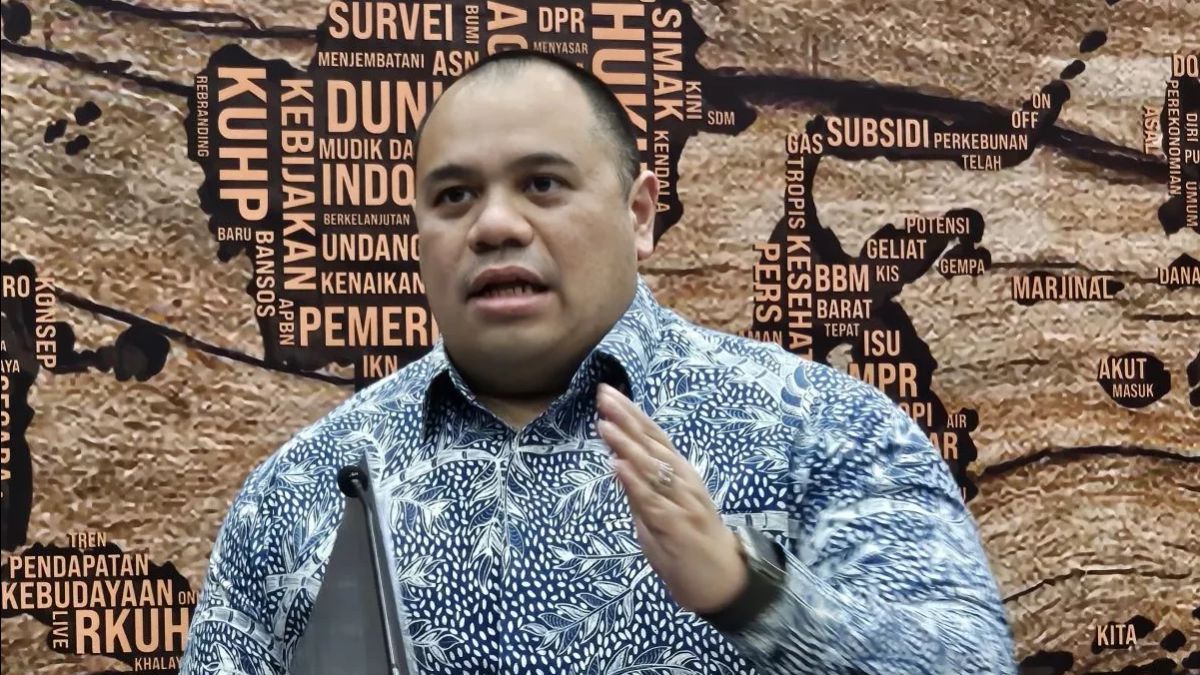


JAKARTA - PT Danantara Sumberdaya Indonesia (Persero) or DSI is confirmed to remain profit-oriented or profit even though it will later play a role as the sole exporter of Indonesia's strategic natural resources (SDA) commodities.
Danantara's Chief Investment Officer (CIO), Pandu Patria Sjahrir, said that DSI will be run with a business mindset that prioritizes profitability, in line with Danantara's position as a sovereign wealth fund or state investment fund.
"This is included in Danantara. Well, in Danantara itself it will be a mindset for profit. Back to Danantara as a sovereign wealth fund. This is indeed savings for the next generation. So for profit mentality," said Pandu when met in Jakarta, Tuesday, May 26.
In the initial stage of operations, PT DSI will manage the export of crude palm oil (CPO), coal, and ferrous alloys or iron alloys. The company is scheduled to start operations on June 1, 2026.
In this initial transition period, DSI will focus on recording export documents and examining the prices of commodities purchased by foreign importers.
Furthermore, starting September 1, 2026, companies that are ready can start transferring their export activities to DSI. On January 1, 2027, all exports of CPO, coal, and ferrous alloys are planned to be carried out entirely through PT DSI.
According to Pandu, the single exporter model is believed to be able to strengthen Indonesia's bargaining position in the global market so that the selling price of national commodities can be more competitive. In addition, the target of eradicating under-invoicing practices can be achieved.
"At the end of this game, I know January. Our desire is that I can buy the end game, and later sell it to the market. And the best way to look at it is the possibility that we can get a better price than now. Because it's all about bargaining power," he said.
Regarding the opportunity for the management of nickel exports by PT DSI, Pandu said the government was still focusing on the agenda of domestic downstreaming.
According to him, if the nickel downstream industry develops optimally to electric vehicle manufacturing, then domestic needs have the potential to absorb most of the national production.
"Regarding nickel, we have to process it. It has to be that it has been processed, it has gone through downstream. And if later the downstream is used all the way to the manufacture of cars or so, yes we can't export anything, yes it doesn't need to be exported because it is useful. So let's just be clear. But from the side of PT DSI itself, this is called you can't get all three on one go. Everything is step by step," he explained.
Pandu also said that the development of other commodity management will be carried out gradually according to the human resources (HR) capacity of PT DSI.
"Later, if there is another development according to the existing human resources skill set, it will be developed," he said.
Separately, Deputy Minister of Agriculture (Wamentan), Sudaryono has a different view from Pandu. He emphasized that PT DSI was not formed to take additional profits from commodity exports.
According to him, the company functions more as a manager and supervisor of the management of natural resources and energy exports so that it is more transparent and accountable.
"If there are issues as if PT DSI will make a profit, this is not. In this case, PT DSI does not make a profit, but he manages and oversees the export of our natural resources. So it does not take additional costs or take additional profits," said Sudaryono.
The English, Chinese, Japanese, Arabic, and French versions are automatically generated by the AI. So there may still be inaccuracies in translating, please always see Indonesian as our main language. (system supported by DigitalSiber.id)


